Key Takeaways
- The first few months with your puppy are a big deal. This is when trust starts to form and basic habits begin to stick. Simple things like saying their name and asking for a sit before meals can go a long way in setting the tone.
- Every puppy is different. Some need extra encouragement, especially if they are shy or unsure. Others thrive with structure and a little direction. Learning how your pup responds makes training smoother for both of you.
- Everyday moments like asking for a quick wait at the door or rewarding quiet behavior are some of the best chances to teach and build a solid connection.
Why Calm, Consistent Leadership Matters
As your puppy gets used to the world, it is likely curious, energetic, and testing a few boundaries. While that is normal, it can be tricky to know how to guide them without harsh discipline or mixed messages.
Calm, consistent leadership helps. When your puppy knows what to expect, they feel secure and more open to learning. If confusing or concerning behaviors arise, consult your veterinarian. For extra support, PetHealthMD provides reliable resources on behavior, wellness, and everyday pet care. You can also explore helpful training aids in the Behavior and Training category on 1800PetMeds.
How Puppies Learn and How to Guide Them
Like children, puppies learn through social interaction and repetition. The first few months shape how they relate to humans and other dogs. Puppies are especially receptive to training between 8 and 10 weeks, a key window for simple routines and positive experiences.
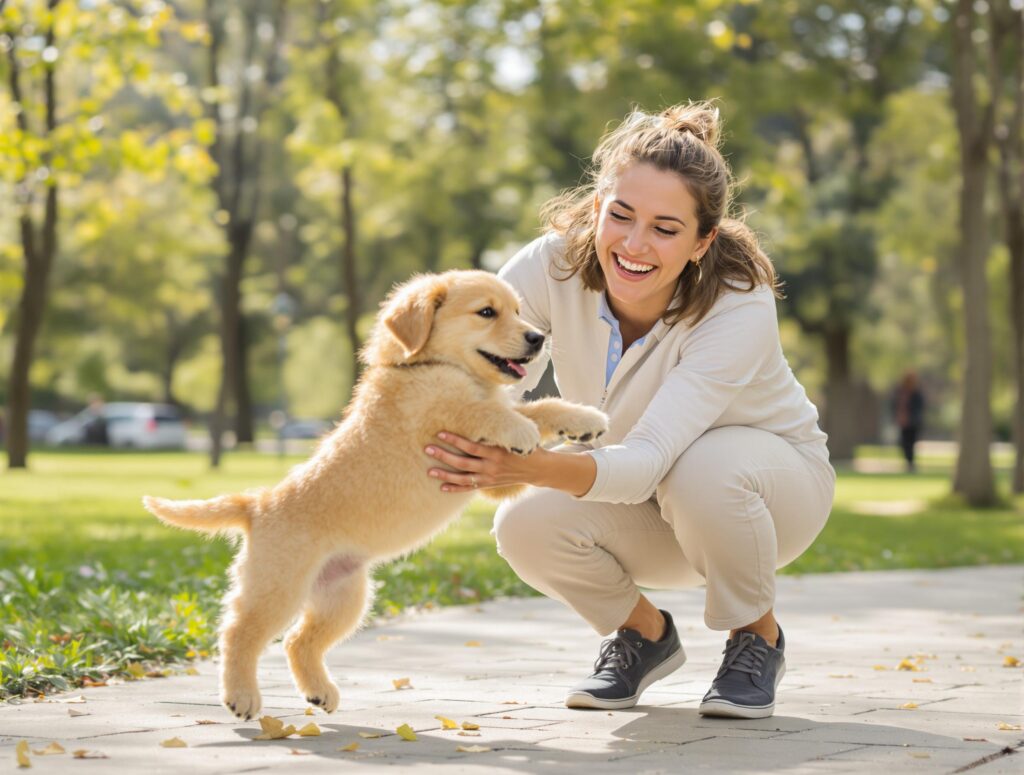
Play teaches social cues like taking turns, showing submission, and learning bite control. These lessons help puppies understand boundaries and develop communication skills that carry into family life.
Helpful early activities include:
- Responding to their name
- Sitting before meals
- Waiting calmly at doors or gates
These interactions show that paying attention leads to good outcomes, building long-term trust and communication. Training treats from the Treats category can help reinforce these early lessons.
Adapting Your Leadership to Your Puppy’s Personality
Some puppies are bold and eager, while others are cautious or sensitive to change. Understanding your puppy’s personality helps you adjust your training style.
If your puppy is shy or easily startled, give extra time to adjust to new environments, people, or commands. Use a calm tone, avoid sudden movements, and celebrate small steps such as approaching new objects or confidently entering a room.
Energetic or confident puppies may test boundaries more often but respond well to gentle structure. Channel their energy into short tasks requiring focus, like new tricks or scent games. Avoid power struggles and use consistent expectations and positive reinforcement.
For additional training tools, explore the Dog Supplies section on 1800PetMeds.
Teaching Through Trust and Consistency
Training happens during daily interactions, not just scheduled lessons. Leadership is about clarity and calm repetition. Consistency creates a safe environment for learning.
Try these trust-building strategies:
- Sit quietly during playtime and let your puppy approach you
- Reinforce calm behavior with praise and a small treat
- Ask for down before settling on furniture, or wait before exiting the house
- Practice leash cues before heading outside
Use real-life moments, such as preparing food or putting on shoes, to reinforce stay, leave it, or come. Avoid rushing new situations or using intimidating gestures.

Reading Your Puppy’s Signals
Good communication goes both ways. While you teach cues like sit or stay, your puppy communicates through body language.
Watch for signs of stress such as lip licking, yawning, looking away, or sniffing the ground without reason. These often appear before more obvious reactions like barking or ignoring commands.
Not all excitement is positive. If your puppy is jumping, zooming, or nipping nonstop, it may be overstimulated and need a calm reset.
By reading your puppy’s cues, you can adjust your approach and support their learning.
Common Puppy Training Questions
How can I be a leader that my puppy wants to follow?
Build engagement. When your puppy learns that your cues bring rewards like food, attention, or play, they will stay more focused and responsive.
What should I do when my puppy misbehaves?
Turn challenging moments into teachable ones. For example, if your puppy jumps on guests, ask for a sit and reward that behavior instead.
How do I know this approach is working?
Look for signs such as improved relaxation, better response to cues, and willingness to follow guidance.
What mistakes should I avoid?
Avoid raising your voice, punishing late, or sending mixed signals. These can confuse your puppy and weaken trust.
Strengthening Your Bond Through Positive Guidance
Training creates a foundation for trust, confidence, and communication. Every calm correction, well-timed reward, and clear cue reinforces that bond.
Positive leadership builds a relationship based on mutual understanding. Over time, your puppy will look to you for reassurance and direction. For more support as your puppy grows, explore helpful resources and supplies in the Dog Supplies category on 1800PetMeds.