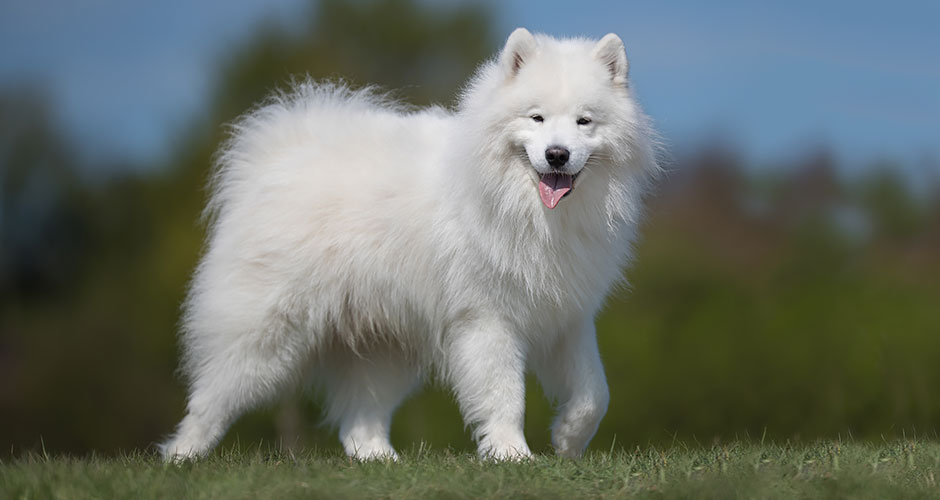
Instantly recognizable by their winning “Sammy Smile,” the Samoyed has been adored internationally for more than a century. Whether you are a long-time Sammy owner, anticipating the arrival of a Samoyed puppy, or simply a fan of Arctic breeds, you will enjoy learning more about these adventurous companions.
Learn about the Samoyed breed history, breed standard and traits, and best care practices to prevent and manage common health issues in Sammies. For grooming supplies and wellness essentials, explore the Dog Supplies category at 1800PetMeds.
How the Samoyed Came To Be
The Samoyed breed gets its name from the Samoyedic peoples of Arctic Russia, the region formerly known as Siberia in Northern Asia. These dogs were originally bred and trained to pull sleds and hunt and herd reindeer.
Off-duty, these dependable working dogs were beloved members of the family. They played with children, guarded the home, and even slept indoors, offering warmth on frigid Arctic nights.
European explorers later adopted the breed for sled-pulling during Arctic expeditions. By the early 20th century, Samoyeds reached the UK and the United States, where they became officially recognized by national kennel clubs.
Samoyed Breed Traits
The Samoyed is an ancient aboriginal breed, meaning the breed has not changed significantly since it was first recognized. Today, the modern Samoyed still demonstrates the same work ethic, playfulness, and devotion to their human family members as their ancestors.
Samoyeds have a thick, double-layered coat with a dense insulating undercoat that helps them withstand subzero temperatures. Males often have a thicker mane or “ruff.”
While early Samoyeds came in several colors, including black and black-and-white, the breed has since been selectively bred for white coats. Accepted variations include pure white, white with biscuit accents, or full biscuit coloring.
The Samoyed has a black nose, dark brown or black eyes, and stands around 21 inches at the shoulder. Ideal weight, according to the AKC breed standard, is 45 to 65 pounds for males and 35 to 50 pounds for females.
Common Health Issues in Samoyeds
While Samoyeds are generally hardy and live 12 to 14 years, they are genetically prone to certain conditions.
Samoyed Hereditary Glomerulopathy
This genetic kidney disease is caused by a mutation on the X chromosome. Males are more severely affected and may show symptoms as early as three months of age. The disease is unfortunately incurable and can be fatal to males by fifteen months.
Hip Dysplasia
Common in medium to large breeds, hip dysplasia occurs when the ball-and-socket joint of the hip is shallow. Symptoms can worsen with age and may lead to osteoarthritis and chronic pain. Treatment may include pain management medications or surgery.
Diabetes
Samoyeds are significantly more likely than other breeds to develop diabetes. Dogs diagnosed with insulin-dependent diabetes need lifelong insulin injections but can otherwise live normal, healthy lives.
Eye Issues
Samoyeds may develop Posterior Lenticonus, a congenital condition in which cataracts form in one or both eyes. Cataracts may also develop later in life as a complication of diabetes.
How To Care for Your Samoyed
Samoyeds should not have their coats clipped. Instead, they need consistent brushing to manage shedding and maintain coat health. Regular grooming tools can be found in the Dog Grooming category on 1800PetMeds.
These intelligent dogs require plenty of mental stimulation and physical exercise. Without it, they can become destructive or take up digging as a hobby. Providing an appropriate digging area, such as a sand pit, can be a helpful outlet.
Feed your Samoyed high-quality dog food that meets or exceeds AAFCO standards. Puppies should eat complete and balanced puppy food until one year of age before transitioning to adult food. Fresh water should always be available.
Samoyeds should see their veterinarian at least once a year. Monitor for signs of diabetes such as changes in appetite, weight, thirst, or urination. Samoyeds are prone to adverse reactions to sulfa drugs, so make sure this information is included in your dog’s medical records.
Why We Love Samoyeds
Samoyeds are gentle, playful, and highly social. They love being close to their family and excel in activities like agility, skijoring, dog sledding, and treibball.
If you hope to adopt a Samoyed, look for a reputable breeder who screens for genetic conditions including hip dysplasia, hereditary glomerulopathy, and cataracts. You can also explore breed rescues and national clubs for reputable adoption options.
For all your Samoyed wellness needs, visit the Dog Supplies page at 1800PetMeds.