All dogs experience anxiety from time to time. Whether your dog is a scaredy cat or they are usually brave and confident, there is usually something that can turn them into a whining, quivering ball of anxiety whether that is a vet visit, thunderstorm, other dogs, or even a plastic bag blowing in the wind. Learn what you can do in the moment when your dog is experiencing anxiety, and how what you do influences the way your dog reacts to stressful situations over time.
10 Ways to Calm Your Anxious Dog
1. Take a Deep Breath
Before you do anything to calm your anxious dog, take a moment to check in with yourself and take a deep breath. Dogs look to their humans for guidance when it comes to reacting to potentially scary situations. Studies show that pet parents who suffer from anxiety are significantly more likely to have an anxious dog. Take a moment to get into a calmer state of mind, and you will be ready to help your dog feel calmer too.
2. Stay Close to Your Dog
You may have once been told not to comfort your dog when they are anxious, but professional trainers and veterinary behaviorists consider this advice outdated. There is no evidence that comforting your dog will make anxious behaviors worse. By providing comfort and stability in scary situations, your dog will learn to feel at ease and depend on you to keep them safe.
3. Massage Calming Pressure Points
Certain acupressure points on your dog’s body are believed by Tellington TTouch therapy practitioners to induce feelings of calmness. Try gently massaging the base of your dog’s ears, stroking their ears from base to tip, or using “belly lifts” to help release tension. An integrative vet or trainer can teach you more techniques.
4. Avoid Trigger Stacking
Trigger stacking describes when multiple sources of anxiety push a dog over the edge. A dog that normally tolerates petting from a stranger might suddenly become reactive if exposed to a combination of triggers like unfamiliar people, dogs, loud noises, and crowds.
5. Stay in Motion
When the situation allows, keep your dog moving. When dogs are forced to sit or stand still in a frightening situation, they may feel trapped. Many dogs feel more secure when they can move around, sniff, and process their surroundings at their own pace.
6. Safely Confine Your Dog
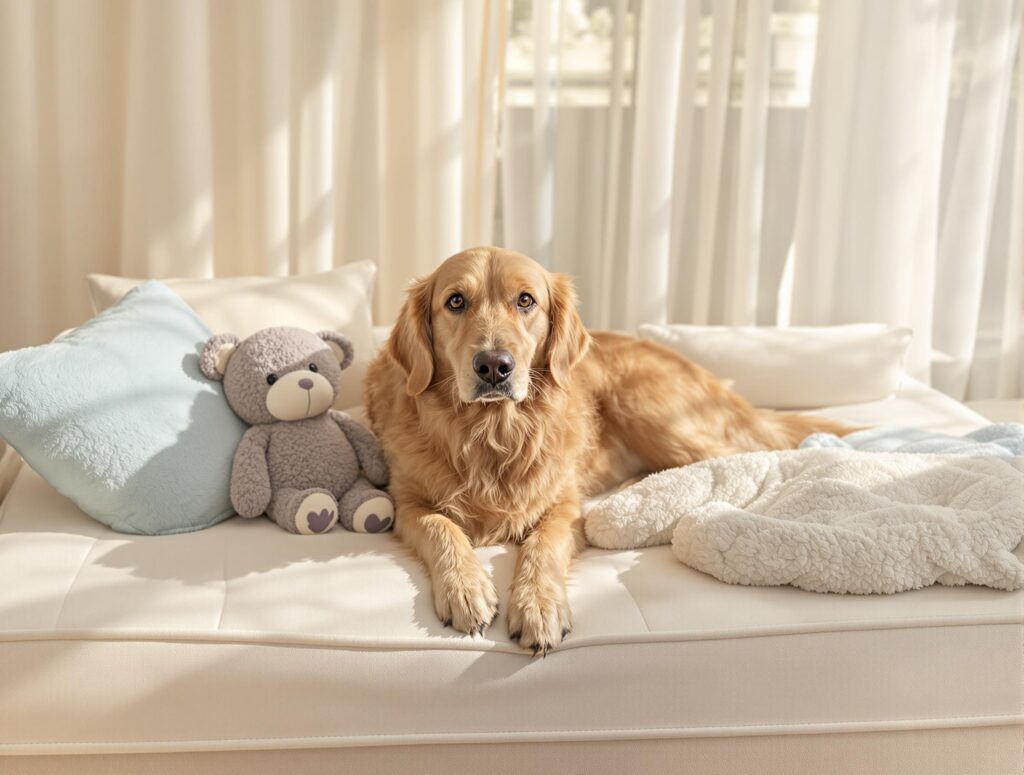
In some situations, confinement can be comforting. At home, a crate with a comfy bed and blanket can help. If your dog is anxious in the car, a crash tested harness or carrier can make them feel more secure. If outdoors, keep your dog on leash to prevent panic driven running.
7. Create Distance
If you can, move your dog away from the anxiety inducing stimulus. Dogs are not able to learn in a panicked state. Even a few steps back can help them relax and become more receptive.
8. Desensitize with Baby Steps
When your dog is extremely anxious, it is not a good time to train. Instead, work on desensitization and counterconditioning when your dog is calm. Slowly introduce your dog to whatever scares them while offering treats and creating positive associations. Professional guidance is recommended.
9. Offer Treats
Food can help create a positive emotional shift during stressful moments. If your dog refuses a normally irresistible treat, it is a sign they are overstimulated and not in a learning frame of mind.
10. Use Calming Treats and Tools
Calming chews with natural ingredients can help dogs that experience anxiety, but they may take ten to thirty minutes to work. Prepare for stressful events like vet visits, storms, or car rides by giving your dog a calming chew in advance. Other aids like calming sprays or calming collars can also help.
Shop Dog Anxiety Relief Products
Helping Dogs with Chronic Anxiety
If anxiety is significantly impacting your dog’s daily life, or they experience severe episodic anxiety, talk to your veterinarian. Your vet may recommend prescription anxiety medication to use alongside training and behavioral modification. Medication can be an integral part of an effective anxiety relief plan. Explore Dog Health & Wellness Essentials.
Frequently Asked Questions
What are common signs of anxiety in dogs?
Common signs include trembling, panting, pacing, whining, hiding, destructive behavior, and excessive barking. Some dogs may also experience digestive upset.
Can calming supplements help every anxious dog?
Calming supplements can help many dogs, especially in mild to moderate anxiety situations. However, dogs with severe or chronic anxiety may require a combination of supplements, training, and veterinary prescribed medication.
How long does it take for desensitization training to work?
Desensitization is a gradual process that can take weeks or months depending on your dog’s triggers and sensitivity. Consistency and working at your dog’s pace are key.