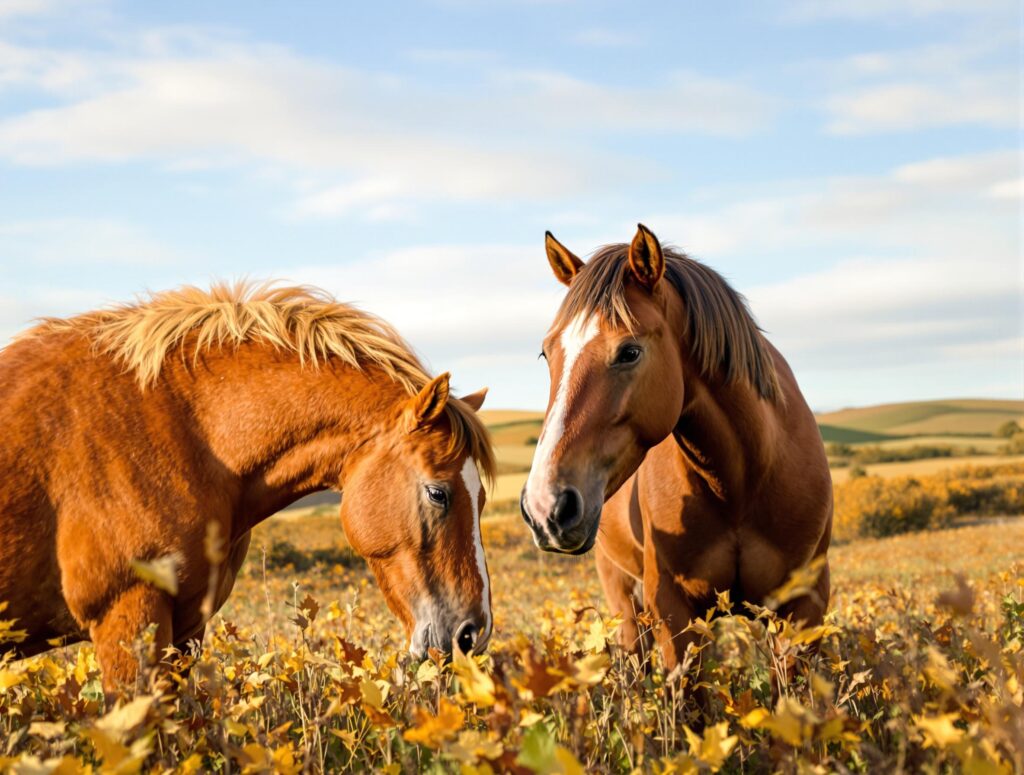
As summer comes to an end and the leaves start to change color, it is time to start thinking about fall deworming for horses. Most horses, even those found to be low-risk carriers, should be dewormed in the fall after the first frost for a fresh start in the following seasons. Using appropriate deworming products and monitoring parasite levels can help keep your horse healthy throughout the year. You can explore a range of equine parasite treatments in the PetMeds horse dewormers category.
Pests To Eliminate In The Fall
As your horse spends the summer grazing in the pasture, they will inevitably pick up strongyle eggs shed by other horses through their feces. Horses can also inadvertently eat mites infested with tapeworm eggs. Botflies are another pest to target. During the summer, they lay eggs on the horse’s body that are later ingested, allowing the parasite to continue its lifecycle within the digestive tract.
After the first frost in late fall, many of these pests die off. This is the best time to deworm your horse. Once dewormed, the horse is unlikely to be reinfected, helping keep them protected until spring. Many owners use seasonal parasite control along with products found in the horse health supplies category to maintain overall wellness.
Fall Deworming Protocol
Before deworming your horse, it is important to do a fecal egg count FEC to determine their parasitic load and what type of dewormer to use. You can save money on FECs with the at-home Equine Worm Test Kit.
The FEC will also determine if your horse is a low, medium, or high risk carrier for parasites. Most horses fall into the low-risk category and can be dewormed just twice a year, once in the spring and once again in the fall.
After fall deworming, a second FEC is recommended to determine if the dewormer has been effective. Parasites are becoming increasingly resistant to dewormers. A targeted approach to deworming that relies on FECs, rather than frequent deworming, can help minimize resistance. Many horse owners combine parasite control with nutritional support, such as products found in the horse supplements category.
Work with your veterinarian to create an individualized deworming schedule based on your horse’s risk level, age, and exposure to pastures with high parasite numbers. Foals, senior horses, and high-risk carriers typically have a weaker immune system, so they may need more frequent deworming to keep their parasitic load under control.
Non-Chemical Parasite Control
Along with regular FECs, pasture management is another way to avoid unnecessary use of chemical dewormers. Overstocked and overgrazed pastures tend to lead to higher parasitic loads, as the majority of parasites lurk closer to the soil.
When possible, rotate pastures or share them with other livestock. Parasites tend to be species-specific, so the pests that bother your horse will not affect goats, cows, or sheep. Many parasites can survive in pastures for years, so giving them time to die off can reduce the risk of reinfection and help maintain healthier grazing areas for your horses.
Effective fall parasite control combines strategic deworming, pasture management, and ongoing monitoring. With the right approach, you can reduce parasite pressure and help your horse stay healthy throughout the colder months.