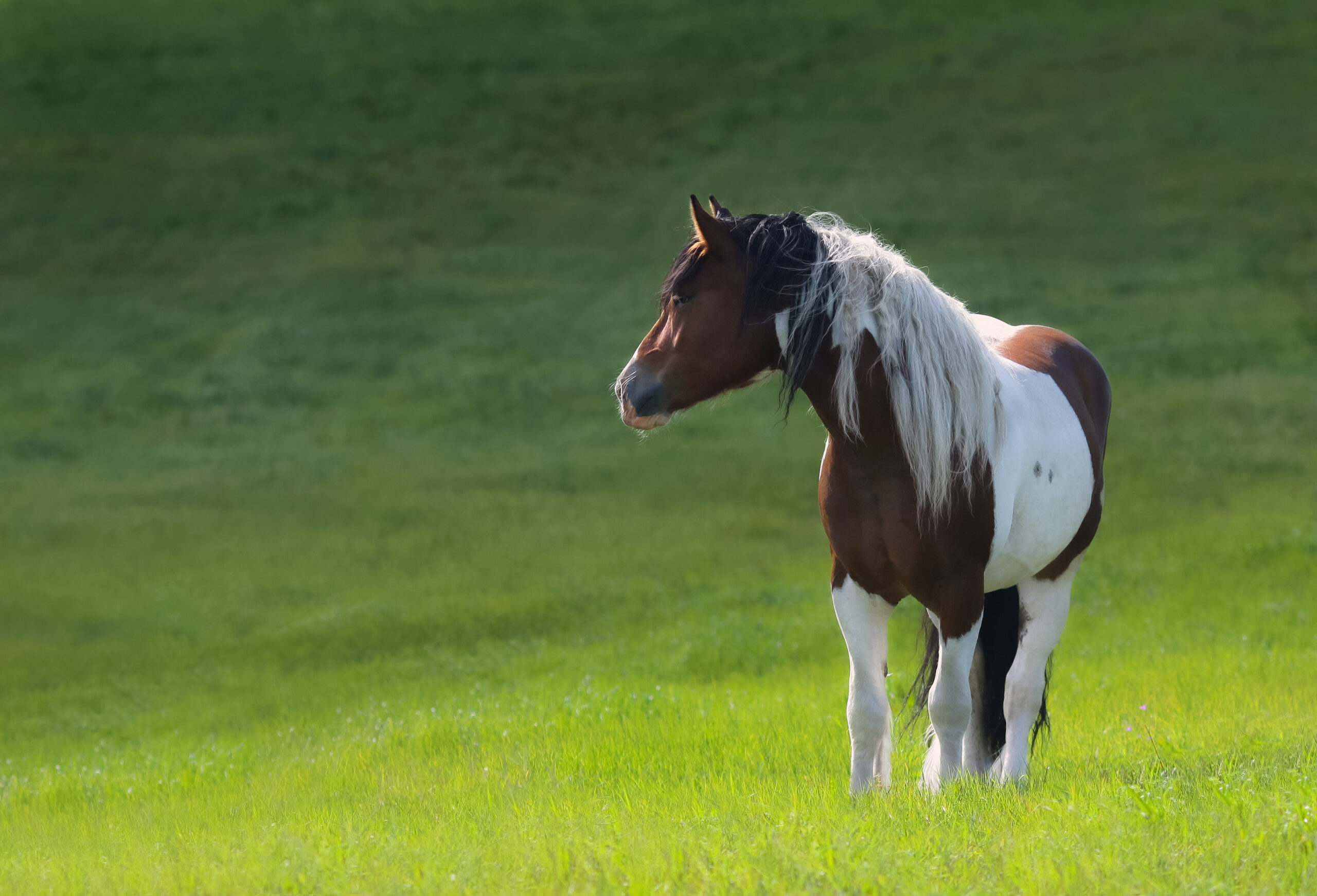
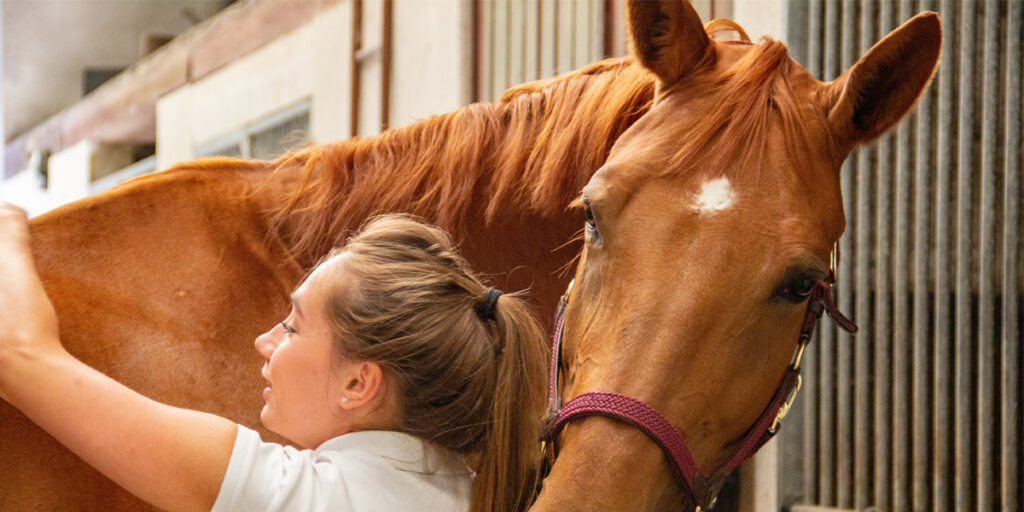
Have you ever seen a horse at a show with a silky, shiny mane and a long, luxurious tail and wondered how your horse could look like that? Whether you want to stand out at your horse’s next event or simply keep them looking and feeling their best, learning how to groom and maintain their hair is an invaluable skill.
Feeding For Mane And Tail Health
No amount of grooming will combat the effects of an unbalanced diet on your horse’s mane and tail health. A thin, brittle tail and mane may indicate that your horse is getting too much or not enough of certain nutrients.
Hair is primarily made up of a protein called keratin. A diet lacking in protein can result in poor hair growth. You can increase your horse’s protein intake by feeding more legumes and hays that are higher in protein than grass hays. Some horsekeepers supplement protein by adding alfalfa hay to their horses’ diet or a pellet feed that contains a high-quality protein source like whey or soybean meal.
Fats aid hair growth by conditioning the strand and preventing breakage, resulting in thicker,r longer hair. Vegetable oil, flaxseed, and rice bran are all good sources of dietary fat for horses.
Supplementing with biotin, also known as vitamin B7, can aid hair growth. Biotin helps convert nutrients into energy and stimulates the production of keratin in the hair follicle for faster, thicker growth. Many horse owners use supplements found in the 1800PetMeds horse vitamins and supplements category to support coat and hair. Over-supplementation of selenium can cause a dry, thin coat. While the trace mineral is essential to heart and muscle function, too much can be toxic. Horses get selenium from forage, and the amount they consume depends on the selenium levels in the soil. Ask your veterinarian to test your horse’s blood selenium levels if you are unsure.
Hormonal imbalances, internal parasites, and other illnesses can affect the growth and appearance of your horse’s mane and tail. If you do not see improvement or if you notice other concerning symptoms like brittle, cracked hooves, make an appointment with your equine veterinarian to rule out underlying health issues. Regular parasite control products available in the horse dewormers category can also help support overall health.
How To Wash Your Horse’s Mane And Tail
Before you can style your horse’s hair, you must wash and detangle it. You can wash your horse’s hair as often as once a week and as infrequently as every one to three months, depending on their hair type and the season. In hot weather, your horse will sweat more and may need more frequent washing, while in the cold, it may not be necessary or practical to wash as often.
Gently work out any large dirt clumps, tangles, and sawdust shavings with your fingers before washing. Then use a high-quality horse shampoo to cleanse the hair without stripping away natural oils. You can find a variety of grooming products in the horse grooming supplies category.
Rinse out the shampoo, then add conditioner, gently removing any remaining tangles by working your way up from the ends of the strands. You can use your fingers or a wide-toothed comb to remove tangles, taking care not to rip or tear at snags.
Leave the conditioner in for five to ten minutes, then rinse thoroughly. You may also use a leave-in conditioner if desired.
Styling Your Horse’s Mane And Tail
Braiding keeps your horse’s freshly groomed mane and tail from tangling and breaking, especially under equipment, and can also protect it from sweat in hot weather.
You can braid your horse’s mane and tail while wet or after it dries. Keep in mind that braids can cause painful tension and discomfort as your horse moves if they are woven too tightly.
Your horse’s tail is made up of two parts.
- The dock, which is the extension of the backbone, is surrounded by muscles and skin
- The skirt, which is the hair that grows from the dock
It is best to keep the braid loose close to the skin and near the dock, then tighter and more secure as you work your way down the skirt.
For the mane, a single running braid or many small braids are easy, comfortable styles that help protect the hair during turnout.
You can secure braids with
- Hair elastics
- Electrical tape
- Yarn
Overbrushing your horse’s mane and tail can lead to breakage and frizz. Some horsekeepers only brush the dock to promote circulation while avoiding the skirt, and some choose not to brush at all.
Long tails can get messy and may need to be wrapped, bagged, or tied up to keep them tidy between shampoos. Trim the tail to a manageable length and maintain it every four to eight weeks to remove split ends, promote healthy growth, and prevent tangles. Cutting the tail into a blunt, even end can make the tail look fuller and thicker.