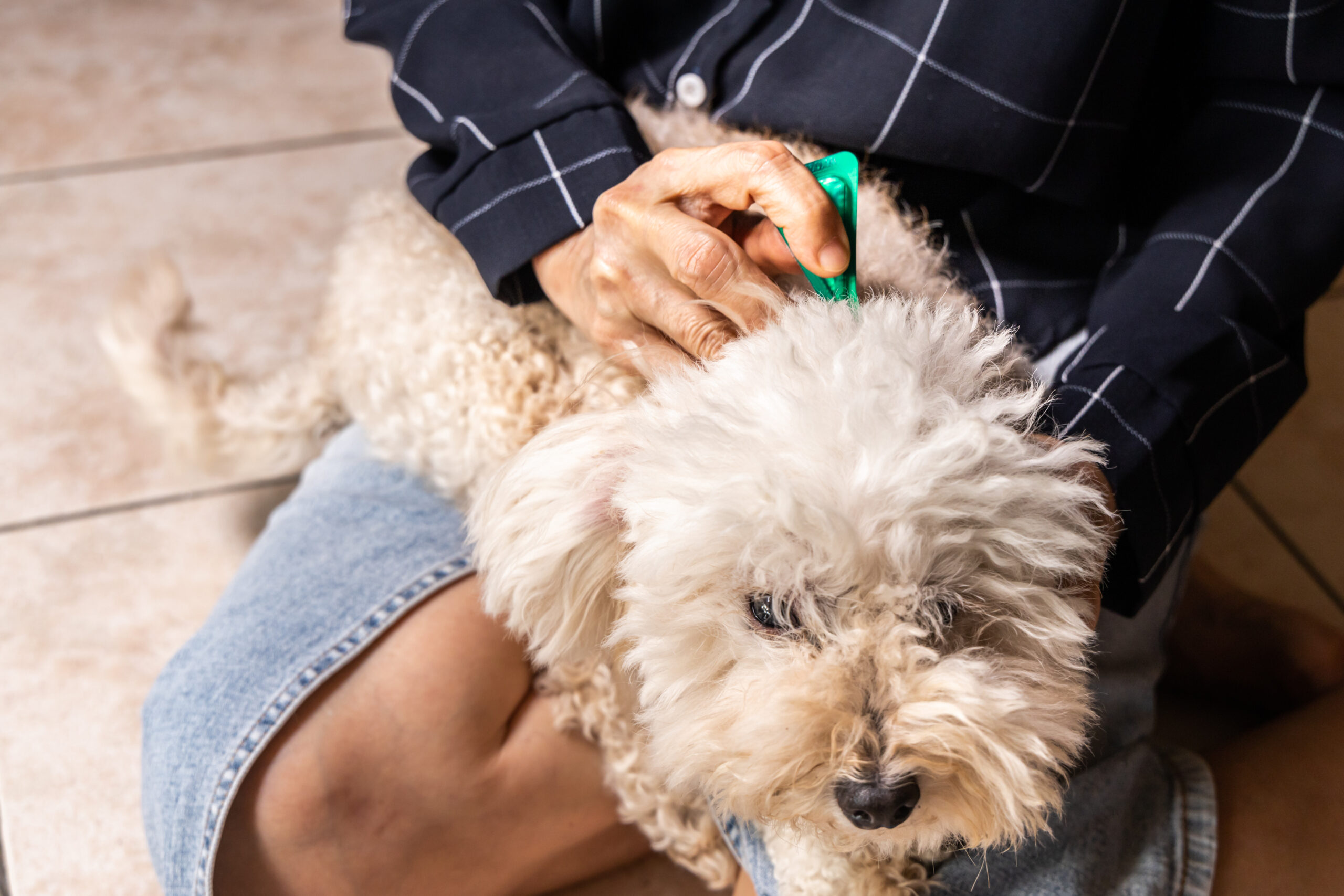

It’s springtime again, which means we are facing the start of tick season, which occurs during the warmer months of the year. Depending on where you live, that may mean all year round or primarily from March to November. Ticks become active when temperatures rise above freezing, or 32 degrees Fahrenheit. If it were a mild winter, they may become active earlier.
These eight-legged parasites need a host to feed on, such as deer, mice, birds, or your dog. They feed by sucking the blood from their host and can carry a variety of diseases that can be transmitted through biting the host within hours.
When a tick bites a dog, they can transfer any infectious disease they are carrying, such as Lyme Disease, Rocky Mountain Spotted Fever, or ehrlichiosis. They attach firmly by biting the host, feed slowly, and may go unnoticed for days while feeding, all while possibly transmitting disease. The bite may start as an itchy, irritating welt, or you may not even notice that your dog has been bitten.
How to Check a Dog for Ticks
This is why it’s so important to do routine tick checks on your dog and check them thoroughly after spending time in wooded areas, tall grasses, or areas with dead, decaying leaves. The CDC recommends checking your pet daily for ticks.
To find a tick on a dog, start by gently running your fingers over their entire body. Feel for any bumps. If you find any, part the fur and inspect the area. Look for a black or brown bug. You may see only the body, or you may see legs, too.
Some ticks can be as small as a pinhead, such as the Deer Tick. Some can be quite large when engorged, like the American Dog Tick, which can swell to the size of a small grape. You can also use a fine-tooth comb to skim through fur, but if you feel a suspicious spot, stop and look. Do not use the comb to remove the tick.
Be sure to check these areas closely:
Head and Ears
Dogs explore with their noses, making the face and head common areas for ticks. Check the ears thoroughly inside and out, and look around the eyelids, mouth, and under the collar.
Armpits and Groin
Ticks like dark, moist places, making the armpits and groin ideal hiding spots. Also check around the anus and under the tail base.
Toes and Paw Webbing
The spaces between the toes are dark, moist, and sheltered, making them another common hiding area.

How to Remove a Tick from a Dog
If you find a tick during your inspection, remove it as soon as possible. You can call your veterinarian if you’re not comfortable removing it, but it’s a useful skill for any pet parent.
Try to remove the tick in its entirety, including the body, head, and mouth parts. If the mouth parts remain, they may continue to irritate the skin and potentially transmit disease.
You will need:
- A tick removal tool or fine-tipped tweezers
- Antiseptic, rubbing alcohol, or soap and water
- Latex gloves
- A sealed container for disposal
Steps to Remove a Tick
- Gather all supplies.
- Put on gloves.
- If using a tick removal tool, slide the forked end under the tick as close to the skin as possible. Turn the tool clockwise several times until the tick lets go. If using tweezers, grasp the tick close to the skin and pull straight upward slowly and steadily.
- Place the tick in the sealed container. You may bring it to your veterinarian for identification.
- Clean the bite area with antiseptic or soap and water.
- Clean your tools with rubbing alcohol.
- Remove gloves and wash your hands.
What Not to Do
Avoid the following outdated or unsafe methods:
- Do not burn the tick.
- Do not apply petroleum jelly or nail polish remover.
- Do not crush or squeeze the tick.
Irritating a tick can cause it to regurgitate its stomach contents into your dog’s bloodstream, increasing the risk of disease transmission.

What to Do After Removing a Tick
Monitor the bite site for several weeks. Watch for redness, swelling, heat, irritation, or a bullseye pattern. Also monitor for symptoms of tick-borne illness, such as:
- Lethargy
- Fever
- Loss of appetite
- Joint pain
- Stiffness
- Lameness
Inform your veterinarian that you removed a tick so it can be noted in your dog’s medical charts. Your vet may recommend blood tests later, depending on the situation.
How to Prevent Ticks on Dogs
There are many ways to reduce the risk of finding ticks on your dog:
- Keep grass short and remove leaf litter.
- Use pet-friendly yard tick repellents.
- Keep your dog on year-round tick prevention.
Many effective products are available, including:
- NexGard (oral monthly chew)
- Frontline Plus (topical monthly treatment)
- Bravecto (oral chew lasting 12 weeks)
- Seresto Collars (effective for up to 8 months)
For more options, explore the full range of dog flea and tick treatments on PetMeds. You can also browse oral flea and tick medications and topical flea and tick solutions to find the right fit for your pet.
Final Thoughts
Now you are a tick pro. Remember to conduct daily tick checks when your dog has been outdoors. It is always a good idea to keep your dog on a tick preventative, and there are many options for every pet’s lifestyle. If you do find a tick, remove it promptly and monitor for symptoms of tick-borne disease. Notify your veterinarian if you notice any changes in your dog’s health.