
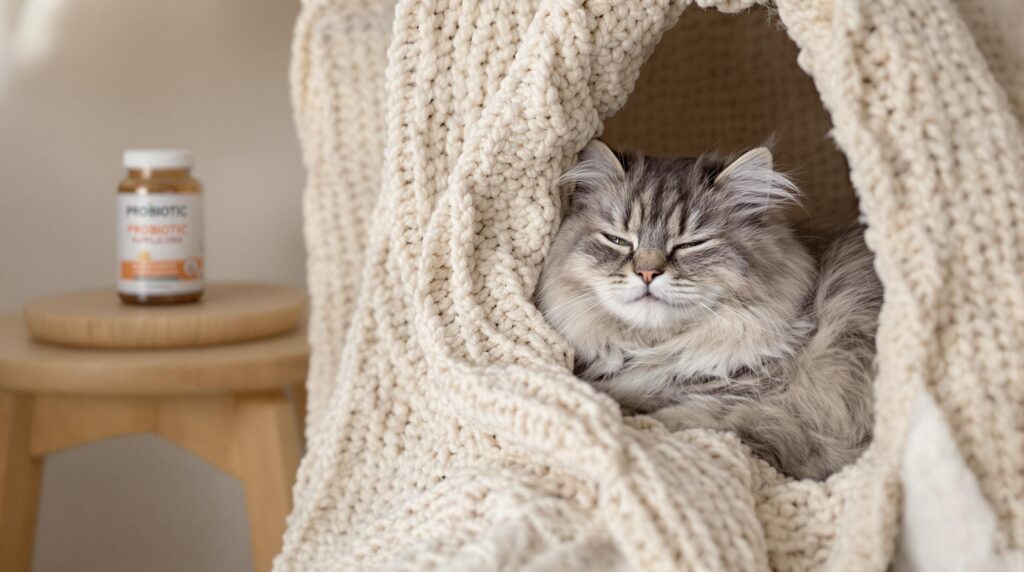
Key Takeaways About Cat Probiotics
- Probiotics support a healthy gut microbiome in cats, aiding digestion, nutrient absorption, and immune health.
- They are particularly helpful during stress, dietary changes, or post-antibiotic recovery, helping restore and maintain digestive balance.
- Choosing probiotics with scientifically backed strains and following proper dosing guidelines improves gut function and supports long-term cat health.
Why Probiotics Matter for Cat Digestive Health
Digestive issues caused by stress, diet changes, or medications can disrupt a cat’s gut health and affect their quality of life. Probiotics help restore the balance of beneficial bacteria in the digestive tract, regulating digestion, reducing stomach upset, and improving nutrient absorption. This balance often leads to better energy, mood, and coat condition due to the gut-brain connection.
A consistent probiotic routine is especially helpful for cats recovering from antibiotics or adjusting to environmental stressors. When used regularly, probiotics promote long-term wellness by improving resilience and reducing digestive discomfort.
For more resources on supporting your cat’s digestive health, explore Cat Digestive Health Products on PetMeds.
Health Benefits of Probiotics for Cats
A balanced digestive system is the foundation of a cat’s overall wellness, affecting energy levels, immune function, and mood. Probiotics regulate digestion, reduce inflammation, and strengthen natural defenses. They also provide specific benefits such as:
- Creating a protective barrier: Probiotics form a shield in the digestive tract, blocking harmful bacteria from causing infections.
- Improving nutrient absorption: They help break down food efficiently, ensuring your cat gets maximum nutritional value.
- Encouraging regular bowel movements: Probiotics normalize stool consistency, reducing diarrhea or constipation.
- Strengthening immune function: A healthy gut microbiome aids immune cell production, supporting resistance to illness.
- Easing digestive inflammation: Probiotics calm irritated gut tissues, reducing discomfort for cats with conditions like colitis.
While probiotics offer many benefits, persistent symptoms like vomiting, weight loss, or lethargy may indicate deeper issues and should be evaluated by a veterinarian.

How to Choose the Best Probiotic for Your Cat
Selecting an effective probiotic means paying attention to quality and strain selection. Well-studied strains such as Enterococcus faecium, Lactobacillus acidophilus, and Bifidobacterium animalis support healthy digestion and reduce diarrhea. Look for cat-specific formulations, since digestive needs vary between kittens, adults, and seniors.
When reviewing labels, check the colony-forming units (CFUs). Most cats do well with 1–5 billion CFUs per dose, but your veterinarian can recommend an exact amount. Proper storage is also important—many probiotics need a cool, dry place to preserve live cultures.
Frequently Asked Questions About Cat Probiotics
How can you tell if your cat might need digestive support?
If your cat’s appetite is off, their coat looks dull, or they seem more irritable or sluggish than usual, probiotics could help. Cats recovering from antibiotics or experiencing diet changes may also benefit. However, chronic digestive symptoms should always be checked by a vet.
Will there be an adjustment period when starting probiotics?
Some cats may have mild side effects like softer stools or gas during the first week. These usually resolve as the gut adjusts. If symptoms persist beyond 7–10 days, consult your veterinarian.
How long does it take for probiotics to work in cats?
Improvements like better energy or stool quality can appear within days, while coat and immune benefits often take 2–4 weeks.
Can probiotics be given with other supplements or medications?
Yes, but separate probiotics and antibiotics by at least two hours. Most cats thrive on 1–2 billion CFUs per day, though your vet can tailor the dose.
Which probiotic strains are best for cats?
Strains like Lactobacillus, Bifidobacterium, and Enterococcus faecium are among the most researched for cats. Always choose a product with clear labeling and vet recommendations.
Building a Healthy Probiotic Routine for Cats
Making probiotics part of your cat’s daily wellness plan is simple. Give the supplement about 30 minutes before meals for best results. Consistency is key—regular use supports a balanced gut and long-term well-being.
Your cat’s health journey is ongoing, and probiotics are a valuable part of it. They provide gentle, natural support for digestion and immunity, but they work best alongside regular veterinary care. Stay informed and confident as you nurture your cat’s lifelong wellness with expert-backed guidance from PetHealthMD and trusted products from PetMeds.com.