Cats and dogs can share lots of things — beds, treats, and even snuggles. But when it comes to flea treatment, each pet needs the correct product in the appropriate dose. Flea preventatives are clinically tested and proven to be safe when used as directed. It is not safe, however, to use a dog flea product on a cat.
Dog Flea Prevention Poisoning in Cats
Did you know that the second most common cause of poisoning in cats is canine flea medication containing a pyrethroid-based ingredient? The first, in case you were wondering, are plants in the lilium genus, which includes tiger lilies and Easter lilies, found in gardens and bouquets.
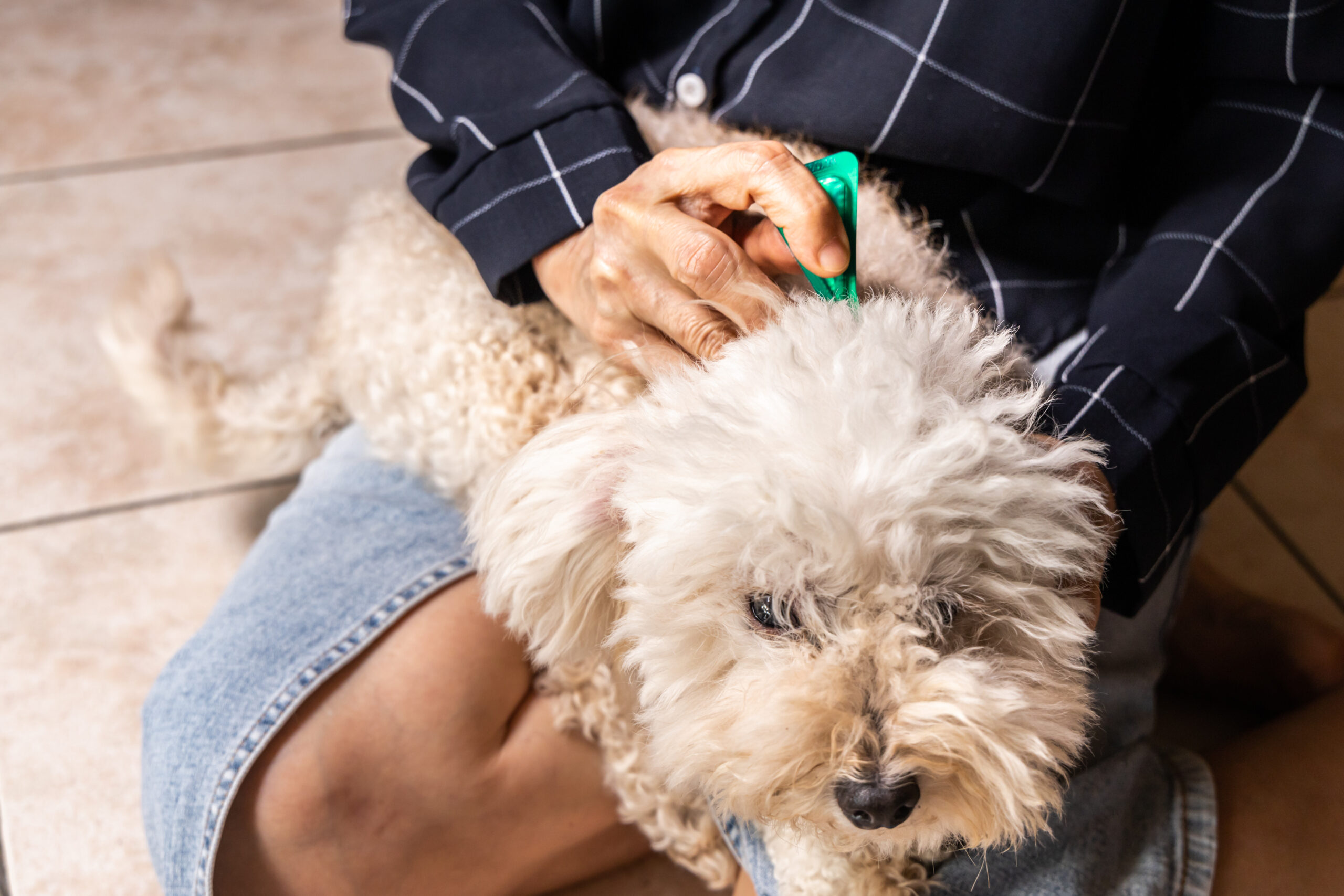
Well-meaning cat parents unintentionally poison their cats by applying dog flea medication, perhaps in hopes of saving money by splitting doses. It is also common for cats to ingest the medication when grooming their canine siblings soon after application. Cats who snuggle up to their canine pals can brush up against the medication and later lick it off their own coat.
What Is the Difference Between Cat and Dog Flea Medication?
Popular spot-on flea medications and flea shampoos indicated for dogs often contain the active ingredient permethrin, or a pyrethroid-based ingredient, which is a synthetic form of a substance found in chrysanthemum flowers. Permethrin kills fleas and ticks by paralyzing them. While permethrin is highly effective and clinically proven to be safe for dogs when used as directed, it is not safe for cats.
Dogs produce an enzyme in their liver that allows them to metabolize permethrin. Cats lack this enzyme, making it harder for their bodies to break down certain substances. Flea medications for cats contain other active ingredients, many of which are also used in dog flea products. Keep in mind, though, that even a dog flea medication that does not contain permethrin will contain a concentration of active ingredients that are approved for dogs, not cats.
What Should I Do If My Cat Is Exposed to Dog Flea Medication?
It may take a few hours for your cat to show symptoms of poisoning. If you accidentally applied dog flea medication to your cat and it has only been a few minutes, you can attempt to wash it off by bathing them thoroughly with liquid dish soap, then call your veterinarian for further guidance. If your cat may have ingested the flea product — which usually happens after close contact with a recently treated dog — seek veterinary care immediately. While awaiting care, flush your cat’s mouth with water and encourage them to drink by flavoring the water with tuna juice or canned food.
Symptoms of permethrin poisoning in cats include:
- Drooling
- Foaming at the mouth
- Tremors or shaking
- Facial twitching
- Stiff, unusual muscle movements
- Dilated pupils
- Seizures
Left untreated, permethrin poisoning in cats can be fatal.
How to Prevent Permethrin Poisoning in Multi-Pet Households
If you have both dogs and cats, you may want to consider switching your dogs to a permethrin-free flea product. Whether or not your dog’s flea medication contains permethrin, keep pets separated after application until the product has dried. Some flea products take up to 24 hours to completely dry. Make sure to keep cat and dog medications in their original packaging, clearly marked, so you do not accidentally apply the wrong product.