Are you planning to adopt a three-legged dog — or anxious about your dog’s first day home after amputation? Learn how three-legged dogs adapt, what hurdles may lie ahead, and what you can do to help your pup transition to life on three legs.
How Common Are Three-Legged Dogs?
You may have noticed that three-legged dogs are becoming less of a rarity. While social media has brought much-needed awareness — and well-deserved adoration — it is not the only reason we are seeing tripedal pups more often.
In the past, dogs affected by cancer or a traumatic limb injury were more likely to face euthanasia. Puppies born with limb differences were more likely to be euthanized at birth rather than given a chance at adoption. Now, more veterinarians and pet parents realize that recovery after life-saving amputation is possible, and dogs can live a long, happy, relatively normal life after the loss of a limb.
Advancements in veterinary medicine, resources like online support groups for tripawd pet parents, and tools like physical therapy and prosthetics have all given a second chance to dogs who have lost a leg.
Three-legged dogs and their pet parents can even get to know their community by attending meet-ups like the annual Duboce Park Three-Legged Dog Picnic in San Francisco, which hosts over 50 dogs and has been growing each year since the first picnic in 2011.
Preventing Injuries in Three-Legged Dogs
If your dog has recently lost — or will soon lose — a leg after amputation surgery, you will likely be surprised at how quickly your dog adapts. In fact, many dogs are eager to return to their usual level of activity soon after surgery, even if it puts them at risk for injury and strain to their remaining limbs.
Front Leg vs. Hind Leg Amputation
Recovery differs depending on whether your dog has lost a front limb or a hind limb, as the remaining limb shifts toward the center of the body to compensate.
- Dogs typically bear about 60% of their body weight toward the front of their body. A dog that loses a front limb will rest more than half of its total body weight on the remaining front paw.
- Dogs that lose a hind limb face slightly less strain, with the remaining hind limb carrying about 40% of the dog’s weight.
Protecting Joints and Maintaining a Healthy Weight
Due to the added strain on remaining limbs, three-legged dogs become more susceptible to developing osteoarthritis. There are two important steps you can take early:
- Maintain a healthy weight. Keep your dog on the slim side of a healthy body weight to reduce strain on their remaining joints. If your dog is overweight or gains weight easily, consider switching to a weight management dog food.
- Start a joint supplement. Ask your veterinarian about starting your dog on a joint support supplement as soon as possible. There is no need to wait until your dog shows symptoms of joint issues before beginning supplementation.
Building Core Strength and Balance
Adapting to moving around on three legs requires core strength and balance. Your dog may need your support, especially when climbing and descending stairs or getting on and off furniture.
- A supportive sling can be invaluable for helping your dog get around, particularly for larger dogs that may be too heavy to carry.
- Working with a canine physiotherapist through a structured physical therapy program can help your dog develop these essential skills.
- Core strength and balance training can reduce falls and injuries while boosting your dog’s confidence and independence.
Does My Three-Legged Dog Need a Prosthetic?
For the majority of three-legged dogs, a prosthetic limb is not necessary. Prosthetics work best for dogs with a remaining partial limb stump. Before surgery, ask your dog’s veterinary surgeon whether a partial amputation is possible or advisable.
Often, a complete amputation is recommended so the dog will adapt to relying on their remaining limbs rather than attempting to use a partial limb that can no longer support them.
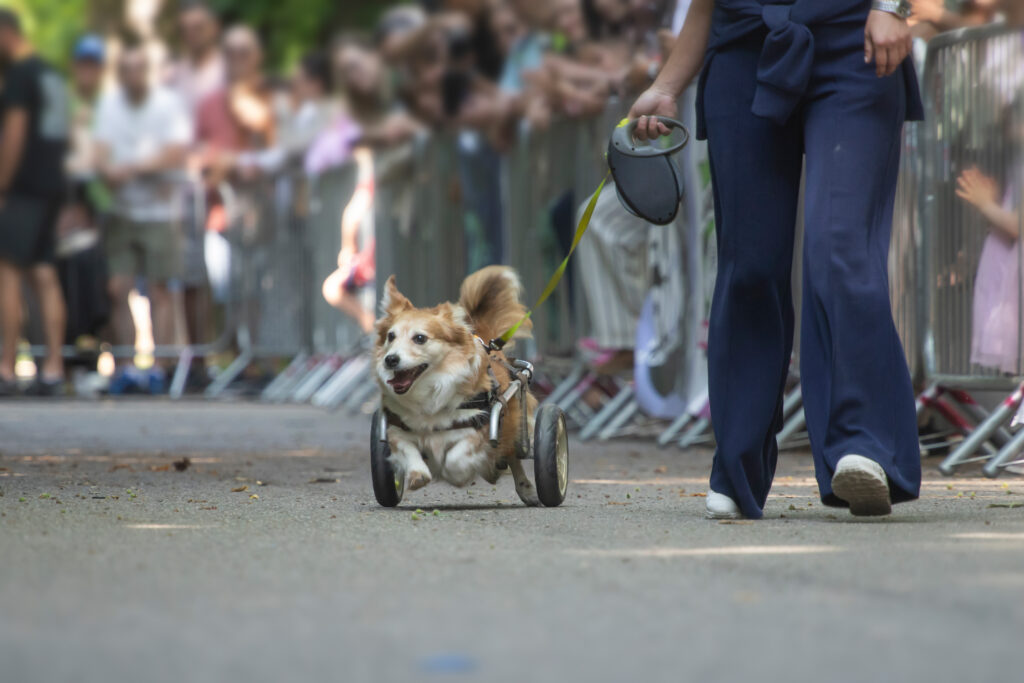
A wheelchair is another option for dogs that need additional support. Wheelchairs for dogs can be custom-designed to support either the front or hind end. Keep in mind that adapting to a prosthetic or wheelchair can be more involved and time-consuming than learning to rely on remaining limbs.
Preparing Your Home for Your Tripawd’s First Day
Whether your dog has been a tripawd from birth or has recently lost a leg, creating an accessible home environment is key to helping them feel comfortable, confident, and independent as soon as possible.
Making Your Home Tripawd-Friendly
- Ramps and steps: Climbing and descending stairs and furniture can be tricky. Even three-legged dogs that have become confident in their mobility can occasionally lose their balance. Ramps and steps significantly reduce the risk of injury, especially when getting in and out of a car or climbing down from furniture.
- Non-slip flooring: Slippery wood or tile floors can be a challenge for some tripawds. Area rugs or runners with nonslip backing can prevent your dog from losing their footing.
- Elevated feeders: Your dog may have a harder time reaching down to eat or drink from bowls placed on the floor. An elevated feeder is essential for many three-legged pets.
What to Expect Going Forward
Your dog’s specific support needs will vary. Seek a referral to a canine physiotherapist and start physical therapy right away, and follow their recommendations for helping your dog adapt and avoid injury.
Once your dog is ready to move around again, they are likely to need little help beyond the occasional boost onto the couch — and a scratch behind the ear for an itch they can no longer reach.