Key Takeaways:
- Cats and dogs have very different dietary needs. Cats need more protein and specific nutrients like taurine that aren’t found in typical dog food.
- Dog food isn’t safe for regular cat meals. A few bites here and there won’t hurt, but long-term, it can lead to serious issues like heart trouble, poor vision, and a weaker immune system.
- Stick to food made for cats. Choosing a high-quality cat food and checking in with your vet is the best way to keep your cat healthy and thriving.
We’ve all been there—you turn around to find your cat helping themselves to your dog’s dinner. That little food thief might look innocent with kibble crumbs on their whiskers, but this common household scene raises an important question: is it okay for cats to eat dog food?
While an occasional taste from the dog’s bowl won’t send your cat to the emergency vet, regular dog food consumption can lead to serious nutritional problems for felines. Their bodies have completely different nutritional needs that dog food can’t satisfy.
This guide explores why cats and dogs need different diets, what happens when cats regularly eat dog food, healthy alternatives to keep your cat properly nourished, and practical tips for managing mealtimes in a multi-pet household. To learn more about caring for your pets, check out our cat health and wellness products at PetMeds.
What Happens if a Cat Regularly Eats Dog Food?
When cats regularly munch on dog food, they can start showing signs that their diet is out of balance. This isn’t about an occasional nibble; it’s about cats who consistently eat dog food as a main part of their diet.
Your cat’s body will start showing signs when it’s missing key nutrients. Keep an eye out for these warning signals:
- Physical changes: Their coat might become dry and patchy, and you might notice weight loss or gain.
- Behavior shifts: Your normally playful cat might seem tired or less interested in activities they usually enjoy.
- Eating habits: They might drink more water than usual or show changes in their appetite.
- Vision problems: You might notice them squinting or bumping into objects more often.
The longer your cat goes without the specific nutrients in cat food, the more their health can suffer. Their eyesight could deteriorate, and their immune system might weaken. If you notice any of these changes, it’s time to talk with your vet about switching to a proper cat nutrition plan that fits your pet’s needs and age.
The Fundamental Differences Between Cat and Dog Food
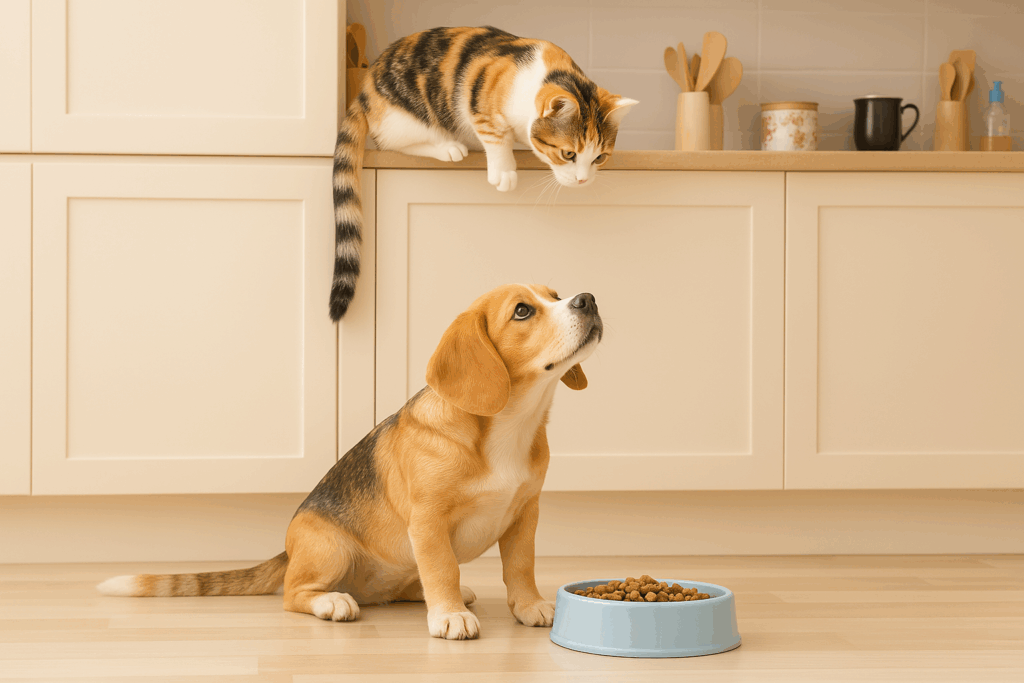
At a glance, cat and dog food might look pretty similar—brown kibble, meaty smells, maybe even the same brand on the label. But what’s inside the bag makes all the difference.
Cat food follows a completely different nutritional formula because cats are obligate carnivores—they rely on nutrients that come specifically from animal sources. Dog food just doesn’t check all those boxes.
Here’s where the big differences show up:
- Protein levels: Cats need a lot more protein than dogs do—more meat, more often. Dog food usually falls short.
- Taurine: This is a key nutrient for heart and eye health in cats. While dogs can make their own, cats can’t—so taurine has to be added to their food.
- Vitamins and fats: Cats need certain vitamins and fatty acids, like vitamin A and arachidonic acid, that must come from animal-based ingredients.
- Moisture content: Cats don’t drink as much water as dogs, so many cat foods—especially wet ones—have higher moisture to help keep them hydrated.
These differences are a big deal. Cat food isn’t just a preference—it’s a nutritional must. Feeding your cat food made just for them is the best way to keep them healthy, active, and well-nourished.
Healthy Food for Cats
Give your cat the nutrition they need with these balanced alternatives that support their unique dietary requirements:
- Choose premium commercial cat foods featuring real meat as the first ingredient to provide the high protein levels your cat naturally requires.
- Incorporate both dry and wet cat food into daily meals—wet food provides essential hydration while dry food helps maintain dental health.
- Prepare homemade meals with lean meats like chicken or fish, supplemented with taurine and essential fatty acids, under veterinary supervision.
- Include vet-approved protein sources like plain cooked chicken, fish, or eggs as occasional meal enrichments—always served without seasonings or additives.
Monitor your cat’s response when introducing new foods, maintaining a 7–10 day transition period between diets to prevent digestive issues.
Tips to Protect Your Cat’s Diet
Even with the best intentions, curious cats have a way of finding food that isn’t meant for them. A few simple changes to your home setup can make a big difference:
- Create separate dining areas for your pets—feed your cat on a counter or shelf where the dog can’t reach.
- Use different colored containers for storing cat and dog food to avoid mix-ups.
- Talk to your vet if your cat seems obsessed with dog food—there might be something specific they’re craving.
- Keep extra cat food in your emergency supplies for unexpected situations like storms or power outages.
What your cat eats truly shapes its whole life—from how much it plays and runs around to how soft and shiny its fur looks. Making sure it eats cat food instead of dog food gives it the best shot at a happy, healthy life.
Making Smart Nutrition Choices for Your Cat
Cats will be cats. They’ll climb where they shouldn’t, knock things off shelves for no reason, and sometimes snack from the dog’s bowl. But now you know why steering them toward cat food matters. Their bodies are wired differently from dogs, and they need specific nutrients to thrive.
The effort you put into feeding your cat right pays off in the long run. A well-fed cat has more energy, a stronger immune system, and generally costs less at the vet. For more tips and top-rated cat care essentials, visit 1-800-PetMeds today.