Did your dog wake up with an angry-looking red blob in the inner corner of their eye? A prolapsed tear gland, also known as a cherry eye, is one of the most common eye conditions that primarily affects young dogs. Learn what causes cherry eye in dogs, the symptoms associated with this condition, and how it’s treated.
What Is Cherry Eye in Dogs?
Dogs, cats, and many other mammals have a third eyelid — a thin membrane that, most of the time, is hidden just beyond the inner corner of the eye. Normally, it is not visible.
At times, the third eyelid rises to partially cover the eye at a diagonal, adding an extra layer of protection and lubrication. It is sometimes visible while the dog is sleeping and soon after waking. It can also appear when the dog’s eyes are sunken due to illness or dehydration.
The third eyelid houses a tear gland that plays a major role in keeping the eye healthy and lubricated. Sometimes this tear gland shifts and protrudes in front of the eye. When this happens, exposure to the air can make it enlarged and inflamed, making it difficult for it to slip back into place on its own. This is when the tear gland becomes a “cherry eye.”
What Causes Cherry Eye in Dogs?
Normally, the tear gland of the third eyelid is secured in place with a T-shaped piece of cartilage that anchors the gland to the orbital bone.
Some dog breeds — especially brachycephalic, or flat-faced, breeds — have shallow eye sockets and protruding eyes. This can make it more likely that their third eyelid tear gland will shift. They may also be predisposed to weakening of the cartilage that holds the gland in place.
In some cases, cherry eye may be triggered by an eye infection or irritation. Most of the time, though, the gland becomes inflamed with no known cause. This condition usually appears in young dogs around two years of age and can affect one or both eyes.
Symptoms and Complications of Cherry Eye in Dogs
The first sign of a cherry eye is a reddish or pinkish gland that protrudes at the inner corner of one or both eyes. At first, the condition may appear unsightly but may not be painful, or may be only slightly irritating.
However, the tear gland located in the third eyelid is responsible for about 40% of the eye’s total tear production. Tears are essential to keeping the eye lubricated and washing away irritants. When this tear gland is irritated or unable to work properly, the dog can develop keratoconjunctivitis sicca (KCS), commonly known as dry eye.
In dogs with dry eye, the eyes can become itchy and irritated. The eye also becomes more susceptible to infection, corneal scratches, and ulcers — especially if the dog paws or rubs at the irritated eye.
How Is Cherry Eye in Dogs Treated?
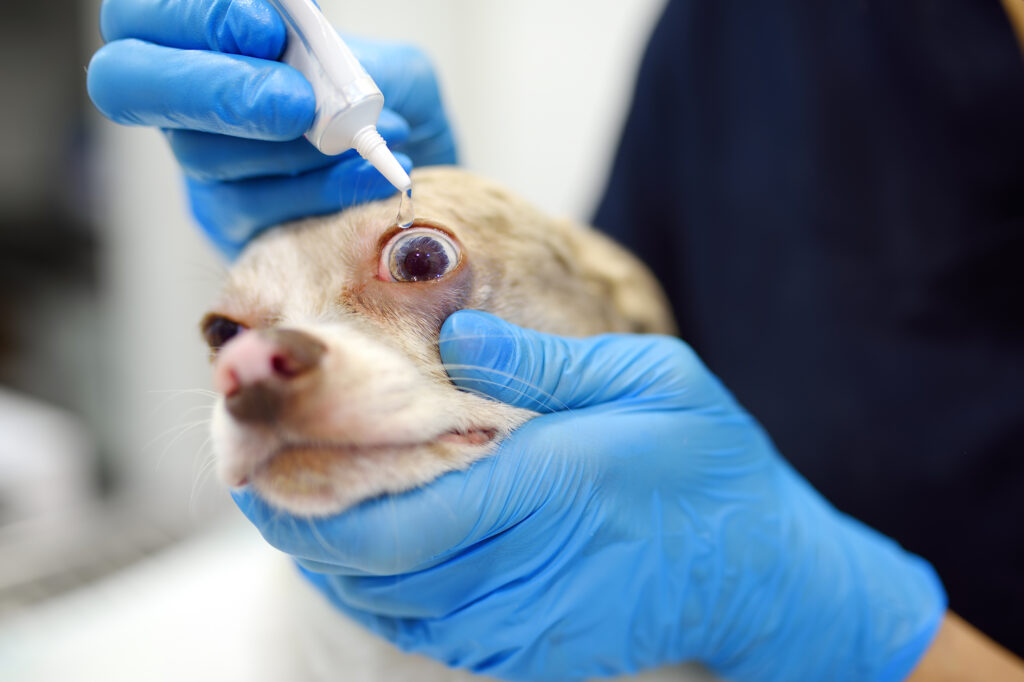
At first, a cherry eye may come and go. Sometimes the tear gland can be manually guided back into place by applying lubricating eye drops and gently massaging the gland under the third eyelid. Your veterinarian can show you how to do this safely.
Cherry eye should be examined by your veterinarian as soon as possible, but it is not necessarily a medical emergency. Signs of pain, inflammation, or infection — which may include redness, eye discharge, or swelling — should be treated right away.
A recurring cherry eye is likely to become permanent over time and will eventually require surgery to correct.
Thankfully, cherry eye can be treated with a simple surgical procedure called the “pocket” method, in which the veterinary surgeon creates two incisions along the third eyelid tissue to create a pocket and then secures the tear gland in place with dissolvable sutures.
Surgery is usually successful, but some dogs may eventually need additional procedures. In others, if one eye is affected, the other may also develop a cherry eye in the months following treatment.
Most dogs can go home the same day. Recovery time for cherry eye surgery lasts about two weeks. After surgery, your dog will need to wear an Elizabethan collar, or “cone of shame,” to prevent rubbing or scratching at the eye. You will also need to administer antibiotic eye drops and/or other medications as prescribed. Always give medications exactly as directed by your veterinarian.