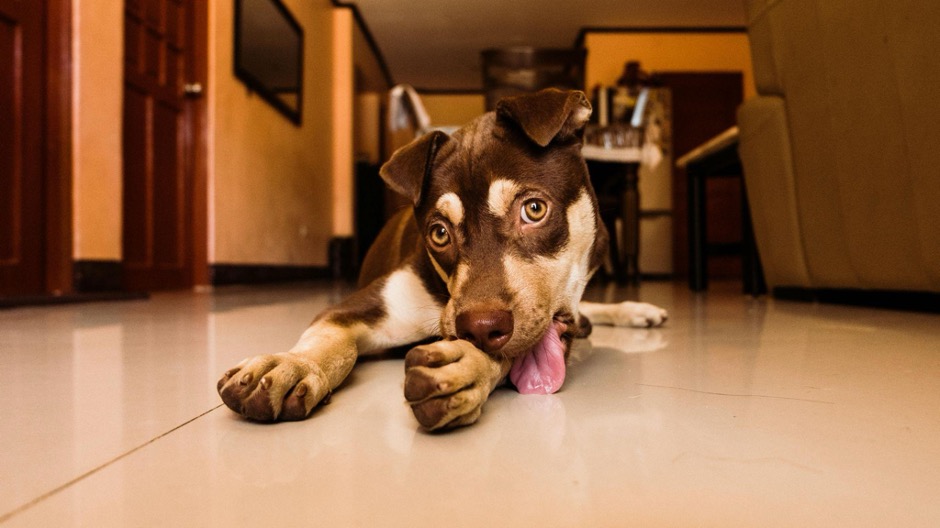
Dogs typically lick their paws as a regular part of their grooming behavior. However, if dogs frequently or intensely chew on their paws, it may indicate an underlying issue that needs addressing.
Excessive paw licking or chewing may arise from several factors, including allergies (such as flea allergy dermatitis), physical discomfort, anxiety, or infections.
Pet parents must recognize these signs and understand the potential reasons behind their dog’s behavior. This article aims to assist pet owners in identifying the causes of paw chewing and offers guidance on how to stop dogs from chewing paws.
Why Is My Dog Chewing His Paws
Pet parents often wonder, “What causes dogs to chew their paws?” To understand this behavior, they must examine their dog’s paws closely. Various factors can contribute to this issue, including the following common causes:
Allergies
Dogs experience allergic reactions to environmental factors such as pollen and grass and food sensitivities. These allergies often lead to itchiness, which results in excessive paw licking.
Skin Infections
Bacterial and fungal infections affect a dog’s skin, causing symptoms like itchiness, swelling, and redness. These often prompt the dog to chew or lick the infected areas to soothe irritation.
Parasites
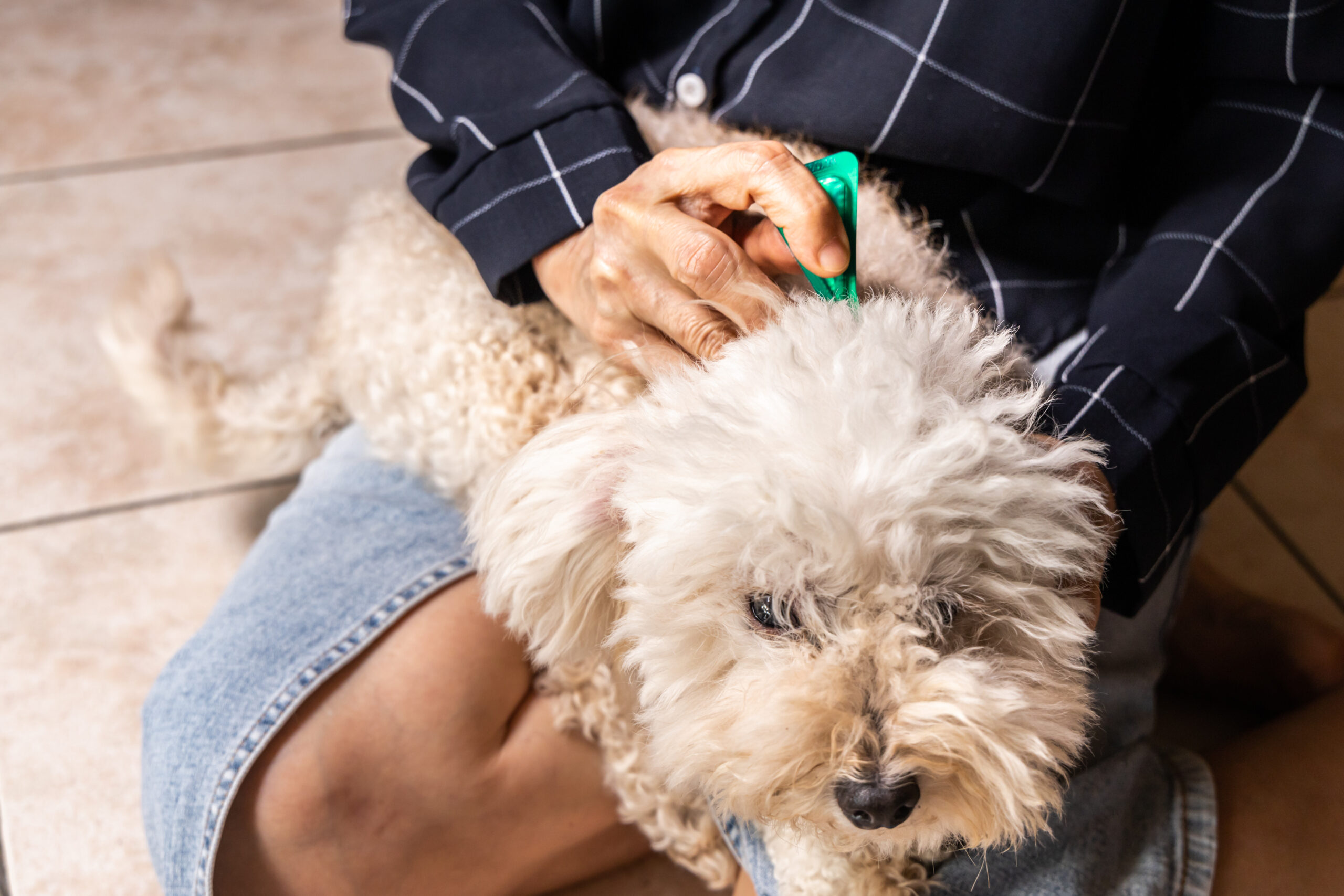
Parasites such as fleas, mites, or ticks irritate a dog’s skin, leading to discomfort that manifests as paw chewing or licking. Using consistent parasite prevention from the flea and tick products category helps reduce this risk.
Pain or Injury
Physical injuries, such as cuts or thorns, or conditions such as arthritis cause pain, prompting a dog to chew its paws to alleviate discomfort.
Anxiety or Stress
Some dogs use excessive paw licking as a self-soothing mechanism when feeling anxious or stressed.
Dry Skin
Harsh weather, frequent bathing, or nutritional deficiencies lead to dry, itchy skin. This discomfort often leads a dog to lick or chew its paws.
Identifying the specific reason behind a dog biting paws is crucial for determining how to stop this behavior and prevent a possible dog paw infection.
How to Determine the Cause of Paw Chewing
To identify the root cause of a dog chewing paws, pet owners can take the following steps:
Check for Physical Signs. Examine the dog’s paws for redness, swelling, sores, or visible parasites. These symptoms provide valuable insights into problems such as dog paw allergies, infections, or infestations.
Observe When It Happens. If chewing intensifies during specific seasons, it may indicate environmental allergies. Chewing after meals could suggest food sensitivities, while discomfort after walks might indicate contact irritation.
Monitor Behavior. Chewing that occurs when a dog is alone may suggest anxiety. Chewing after physical activity may indicate pain or injury.
Consult a Veterinarian. If symptoms persist, worsen, or remain unexplained, consult a veterinarian for accurate diagnosis and treatment.
Understanding these triggers is crucial for determining how to stop a dog from chewing paws and preventing complications like infection.
How to Stop Your Dog from Chewing His Paws
To effectively manage paw chewing, it is essential to identify and address the underlying cause.
Allergies
Implementing a hypoallergenic diet may help if allergies are suspected. Wiping your dog’s paws after walks removes environmental allergens. Consulting a veterinarian about antihistamines also helps.
Skin Infections
Dogs suffering from skin infections must receive veterinary care for appropriate antibiotic or antifungal treatments.
Parasites
Protecting dogs from parasites is essential. Using veterinarian-recommended preventatives such as Nexgard Plus, Bravecto, Credelio, and Frontline Shield significantly reduces infestations. Explore the full range of options under the flea and tick medication category.
Pain or Injury
Inspect the paws closely for wounds. If injuries are present, provide proper wound care and protection.
Anxiety
Interactive toys and increased physical activity help ease anxiety. Calming supplements may also be beneficial.
Dry Skin
Pet-safe moisturizers offer relief, and adding omega fatty acids to the diet supports skin health.
By tailoring treatment to the specific cause, pet parents can effectively manage paw chewing.
Preventing Paw Chewing in Dogs
Preventing excessive paw chewing involves proactive care and attention:
Maintain Regular Grooming. Trim fur between paw pads and keep nails short to reduce irritation.
Provide Proper Nutrition. A balanced diet prevents nutritional deficiencies that can cause skin issues.
Use Paw Balms. Pet-safe moisturizers help prevent dryness and cracking.
Minimize Allergens. Keep the home clean, use air purifiers, and wash bedding frequently to reduce exposure.
Engage Your Dog. Provide mental and physical stimulation through toys, training, and exercise.
By implementing these preventive measures, pet owners can address potential causes before they escalate.
When to See a Veterinarian
Pet owners should seek veterinary care if excessive licking causes raw, bleeding, or infected areas. Limping, fever, or significant hair loss also warrant evaluation.
If chewing persists despite home care, a veterinarian can diagnose underlying issues such as allergies or infections and provide an appropriate treatment plan.
Dog Biting Paws: The Bottom Line
Occasional paw licking is normal, but excessive chewing indicates an underlying issue. Determining the root cause—whether allergies, infections, parasites, injury, anxiety, or dry skin—is essential for treatment.
Preventative care, including grooming, nutrition, and regular veterinary visits, plays a major role in maintaining paw health.
If you are ever unsure about the cause or notice persistent symptoms, consult a veterinarian for guidance. You can also support your dog’s comfort with consistent parasite protection from the flea and tick category on PetMeds.