
Did you know that a female flea can lay over 40 eggs per day? Each female flea lays her eggs on an animal’s skin, which makes it easy for them to roll off into the nearby environment.
After some time, these eggs hatch into larvae, which seek out warm and dark areas to form a cocoon and become pupae. Once fully formed, adult fleas emerge from their cocoons and seek potential nearby hosts – and if they emerge in or near your home, that host is probably your pet.
That means that removing flea eggs is a crucial part of preventing flea infestations down the road. Just like you look for live fleas, you should check your pets and home for signs of flea eggs regularly.
But what do flea eggs look like, exactly, and what should you do if you see them? Below, we dive into the answers to these questions and more.
What Do Flea Eggs Look Like?
Flea eggs can be tricky to spot with the naked eye; at just 0.5mm, they’re about the size of a grain of salt. They’re also white or translucent in color, making them even harder to see. If you can set your sights on a flea egg, you’ll notice that it’s oval-shaped and smooth. It should also easily roll off fur.
Where Are Flea Eggs Commonly Found?
Flea populations flourish in dark, humid areas, like leafy debris piles and underneath decks. They can make their way indoors when their eggs fall off pets onto bedding, carpets, and furniture.
Shaded, humid areas also happen to be where many pets like to rest when outside, which can expose your four-legged friends to flea eggs. If fleas do make their way onto your pet, you’ll likely notice them around the neck, belly, or base of the tail.
How to Differentiate Flea Eggs From Other Debris
At first glance, the small, oval-shaped appearance of flea eggs makes them easy to mistake for other particles, namely dandruff or flea dirt.
Dandruff flakes are caused by an overgrowth of fungus on the skin. These flakes are usually irregular in shape and tend to cling to the fur. Flea eggs, meanwhile, are uniform in size and usually roll off the fur easily.
Flea dirt, or dried flea feces, can also be mistaken for eggs. But unlike flea eggs, flea dirt is dark in color and turns red when exposed to water. Flea eggs will remain white even when wet.
How to Get Rid of Flea Eggs
So, you’ve spotted flea eggs – or what you think could be flea eggs. Now what? Your next step is to eliminate the eggs from your pet and your home before they spread any further.
On Pets
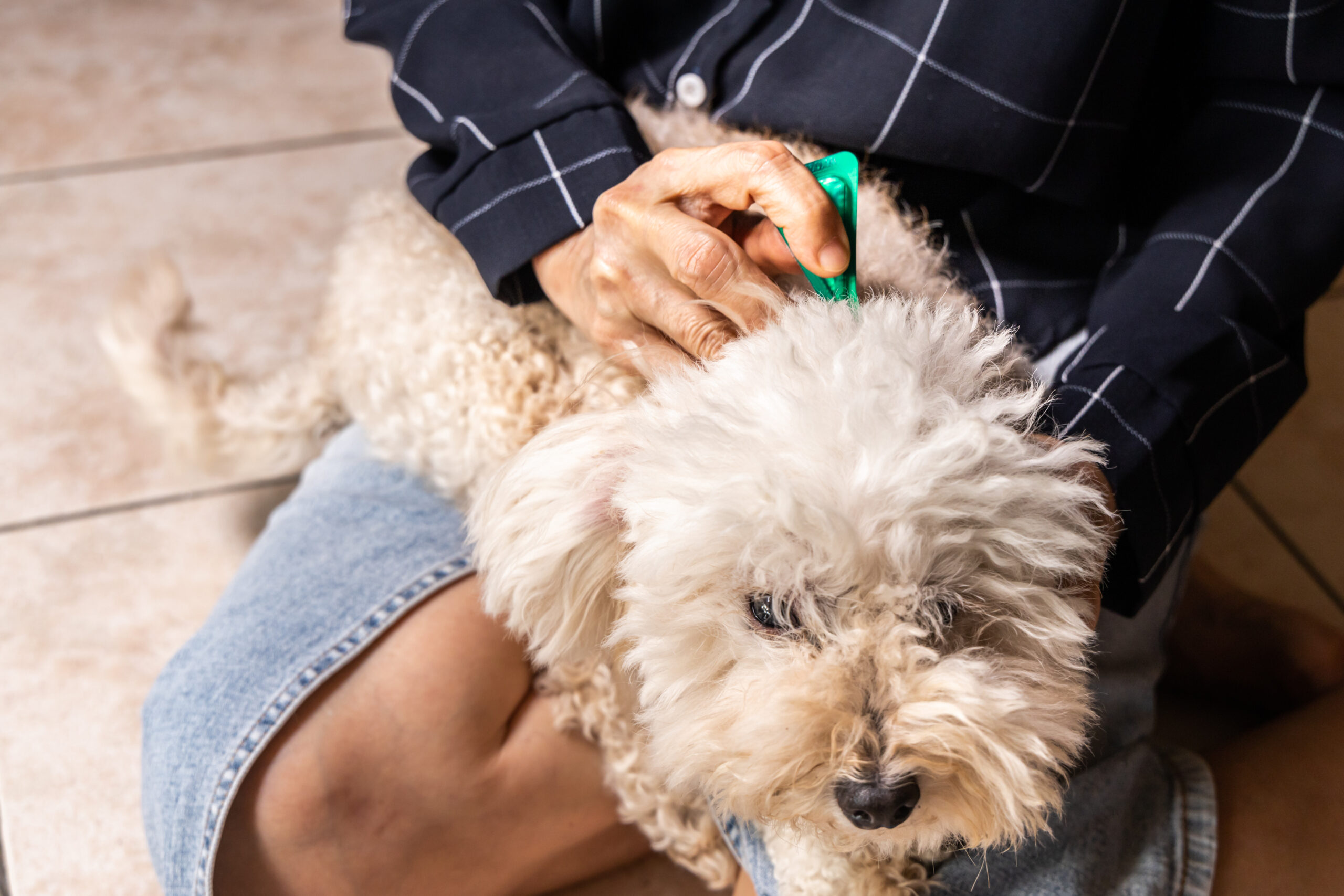
If you spot flea eggs on your pet or believe they may have been exposed, the best thing you can do is target the area with veterinarian-approved flea treatments. From topical solutions to flea shampoos and oral medications, there are plenty of options available.
You can explore flea and tick treatments at PetMeds here: Shop Flea and Tick Medications.
Additional steps include:
- Regularly grooming your pet.
- Using a flea comb to gently remove eggs and flea dirt.
- Washing all pet bedding and soft furnishings with hot water.
In the Home
Even if you don’t see flea eggs in your home, if they’re on your pet, they could be elsewhere. Vacuum carpets, rugs, furniture, and baseboards daily to remove flea eggs.
For severe infestations, professional pest control services may be necessary.
How to Prevent Flea Eggs From Hatching
You may not always be able to spot and remove every flea egg. That’s where prevention comes in.
Use Year-Round Preventatives
Protect your pets by regularly applying veterinarian-recommended flea treatments. Explore PetMeds’ full selection here:
Maintain a Clean Environment
Clutter provides places for fleas to hide. Reduce clutter and vacuum frequently. Wash pet bedding regularly.
Check Pets Regularly
Conduct routine flea checks, especially after outdoor activities. Pay close attention to:
- Tail area
- Neck and collar region
- Rear legs
- Groin and belly
Yard Maintenance
Keep grass trimmed and remove debris where fleas or their hosts might hide.
Final Thoughts
Flea eggs are much easier to manage than a full-blown infestation. Remove eggs when you see them, keep your home and yard clean, and inspect your pets regularly.
Even with great preparation, you won’t be able to prevent all interactions with fleas. That’s why year-round flea preventatives are so important.
If you are unsure whether your pet is experiencing an infestation or another issue, consult your veterinarian.