With the leaves turning colors and pumpkin spice in the air, it is time for another fall season staple: hoof care for horses. While you may take excellent care of your horse’s hooves year-round, the autumn season calls for a few special considerations. Fickle weather and rainy days bring environmental changes that can put your horse’s hoof health at risk. Use these fall hoof care tips to keep your horse’s feet in good shape so they are ready for the cold winter months.
Prevent Fall Laminitis in Horses
While we often think of spring as the time to keep at-risk horses from overgrazing in the pasture, autumn is also associated with grass that is high in non-structural carbohydrates (NSC). These starches and sugars are linked to an increased risk of laminitis.
Grass typically uses its sugar storage at night to fuel growth. Cold nights slow that nighttime growth, which can lead to higher NSC levels. Because NSC levels fluctuate throughout the day and vary between grass species, careful pasture management becomes important in the fall. For high-risk horses, you may need to limit grazing until nighttime temperatures stay consistently below freezing and the grass has become dormant.
Horses with a history of founder are at greater risk for recurrence unless grazing is controlled. Consider limiting access to pasture or using a grazing muzzle to prevent overconsumption. Supporting overall hoof health with proper nutrition and supplements can also help. Many horse owners explore options within the equine hoof care supplements category to maintain strong hooves during seasonal changes.
To make matters more complicated, horses naturally experience elevated ACTH levels during the fall. ACTH signals the body to produce more cortisol, accumulate body fat, and grow a thicker coat in preparation for winter. Increased cortisol is associated with insulin resistance. Horses with Cushing’s disease, equine metabolic syndrome, or an unexplained history of laminitis may experience flare-ups during this time.
To protect an at-risk horse from laminitis:
- Ask your veterinarian about a blood test to evaluate ACTH levels
- Monitor pasture access during periods of high NSC grass growth
- Watch for symptoms such as an altered gait or warmth in the hoof
- Consider veterinarian-recommended nutritional support
If you suspect laminitis, consult your veterinarian immediately and review supportive options available in the horse joint and pain relief category, which can help support mobility while your horse receives veterinary care.
Fall Hoof Thrush in Horses
Increased rainfall during autumn often means horses spend more time around mud and damp ground. The constant shift between cold, wet mornings and warm,m dry afternoons can cause the hoof wall to expand and contract, sometimes leading to cracks.
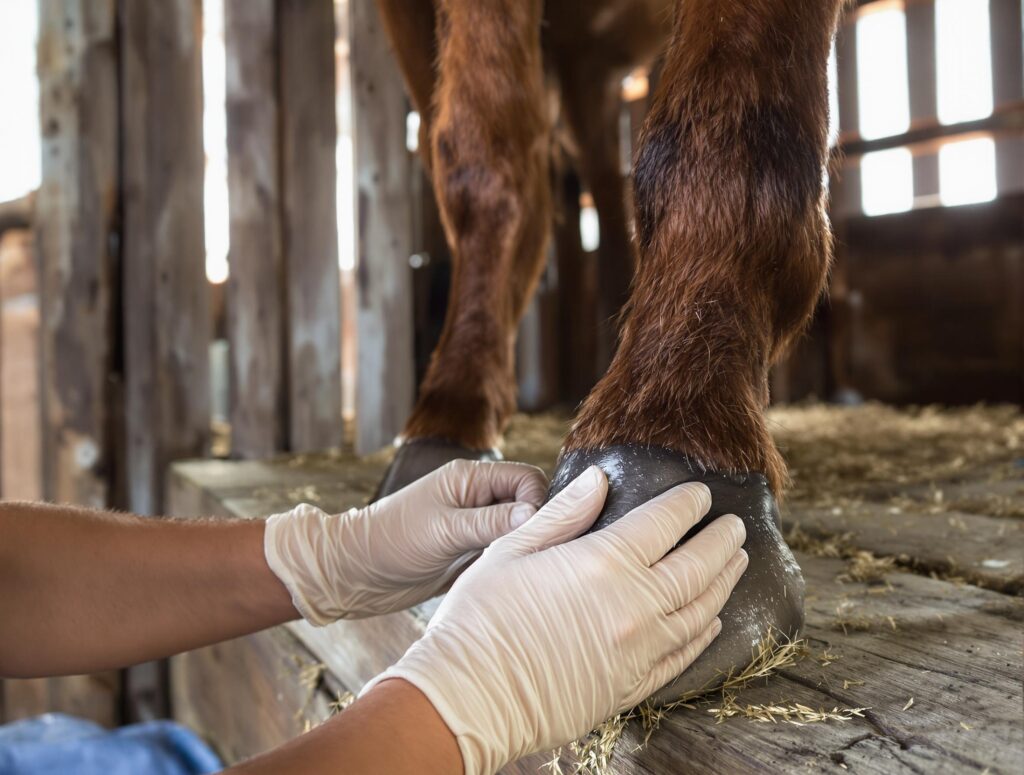
Keeping hooves clean and properly conditioned is essential during this time of year. Many horse owners rely on products found in the horse hoof care category to help strengthen the hoof wall and maintain healthy hooves throughout the season.
Excess moisture, especially when it enters small cracks in the hoof, creates the perfect environment for the bacteria and fungi that cause thrush. To reduce the risk of thrush:
- Pick your horse’s hooves daily
- Keep stalls and turnout areas as dry as possible
- Inspect the frog and hoof wall for odor or black discharge
- Treat early signs of infection with appropriate hoof care products
Regular inspection and prompt treatment can help prevent minor hoof issues from turning into painful infections.
Preparing Your Horse’s Hooves for Winter
Fall is also the ideal time to start planning for winter hoof care. Depending on your horse’s workload and environment, you may decide to remove shoes and allow the hooves to go barefoot for the season. Some horses benefit from a break from shoes, particularly if they will be ridden less during the colder months.
Other horses may require snow pads, winter boots, or continued shoeing for traction and support. Because winter supplies often sell out quickly, it is wise to plan ahead and stock up early.
A proactive approach to hoof care helps protect your horse from seasonal challenges such as laminitis, thrush, and environmental stress. With proper nutrition, regular hoof maintenance, and support from quality hoof care products, your horse’s hooves can stay strong and healthy all the way through winter.