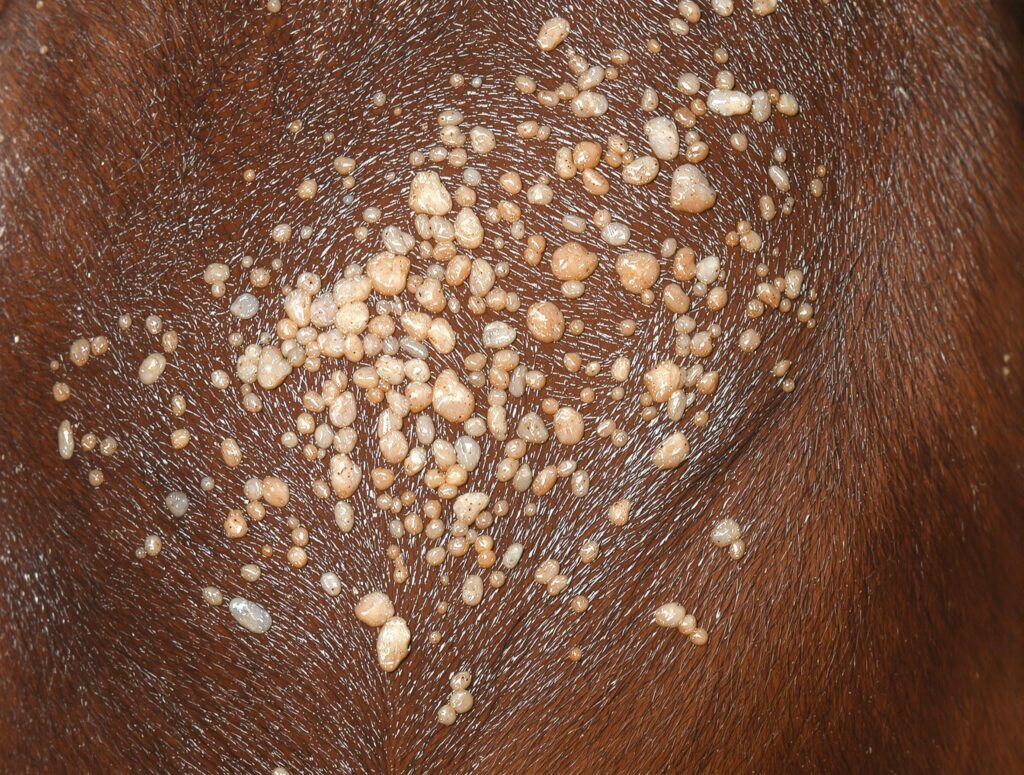
When your horse greets you with large areas of their body suddenly covered in clusters of bumps, you might wonder if they are experiencing a medical emergency. Urticaria, or hives, are flat, raised areas of skin that tend to form localized clusters. They can vary in size and appearance and may or may not itch. Hives are not uncommon in horses and generally not a cause for alarm. Here is how you can figure out what your horse’s skin is trying to tell you.
Why Do Horses Get Hives
Hives occur when your horse’s immune system falsely detects a threat, such as a food, plant, or other substance. The body produces histamine, a chemical that signals the body to try to get rid of the allergen. Capillaries dilate and leak fluid, creating bumps close to the surface of the skin. In mild cases, hives appear within minutes of exposure and vanish as quickly as they appeared.
Some cases of hives are sudden and seemingly random, never appearing again. You may never figure out what triggered them. In other cases, though, they may reappear due to repeated exposure to an allergen present in your horse’s diet or environment. Repeated exposures tend to lead to increasingly severe allergic reactions, sometimes resulting in anaphylactic shock. If your horse has recurring episodes, you will need to work with your veterinarian to figure out the cause.
Supporting your horse’s immune health can also play a role in managing allergic reactions. Many owners use products from the PetMeds horse health collection,n such as immune and digestive support supplements available at 1800PetMeds.
Identifying Allergens That Cause Hives
If your horse develops hives on a trail ride or immediately after spending time at pasture, the cause might be a plant they have come in contact with. It is also possible for bug bites to trigger this reaction. The hives are not bug bites themselves. Rather, they can be a reaction to a substance in an insect’s saliva.
Take note of any recent changes you have made to your horse’s diet or any new supplements or medications. Antibiotics can cause hives, as can vaccines. Call your veterinarian if your horse may be having a reaction to medication or a vaccine.
Fly sprays, soaps, and shampoos can also cause hives, as well as detergents used to wash equipment. You might not see them the first time you use them since allergic reactions sometimes appear after multiple exposures. Grooming products designed specifically for horses can help reduce irritation. See grooming and skin care products at 1800PetMeds.
New bedding or new tack made from unfamiliar materials can also cause hives. In many cases, horses can get accustomed to new materials over time.
If you suspect the culprit is a component of your horse’s diet, remove supplements, grains, and additives one by one with a few weeks between each change. Because horses have delicate digestive systems, they can develop colic if you suddenly remove everything from their diet besides hay.
Not all hives are caused by allergens. They can also be triggered by stress, heat, exercise, or excessive pressure from tack or overly vigorous grooming.
What To Do If Your Horse Has Hives
Hives may go away without treatment and never return, even if you never figure out the cause. If they persist and you are having trouble ruling out the trigger, it is best to call your veterinarian. Your vet can conduct an intradermal allergy test in which different allergens are injected into the skin on your horse’s neck to identify a reaction.
You can also try an at-home intolerance screening test, such as the 5Strands Pet Intolerance Test,t to check for potential allergens in your horse’s diet or environment.
It is usually not necessary or effective to administer an antihistamine without veterinary guidance. If your horse’s hives are itchy, you can help relieve discomfort by compressing the affected area with a rag soaked in cool water or diluted apple cider vinegar.
Repeated incidents of hives can escalate to angioedema, which presents as severe swelling that can affect the muzzle or eyelids. Contact your veterinarian if your horse’s episodes increase in severity or if your horse appears to have difficulty breathing.