A hoof abscess is one of the most common reasons for lameness in horses. Fortunately, they are typically not too difficult to treat, and your horse is likely to recover within a few weeks. Understanding the symptoms and how to treat an abscess can help you act quickly and support your horse’s recovery.
Symptoms Of Hoof Abscesses In Horses
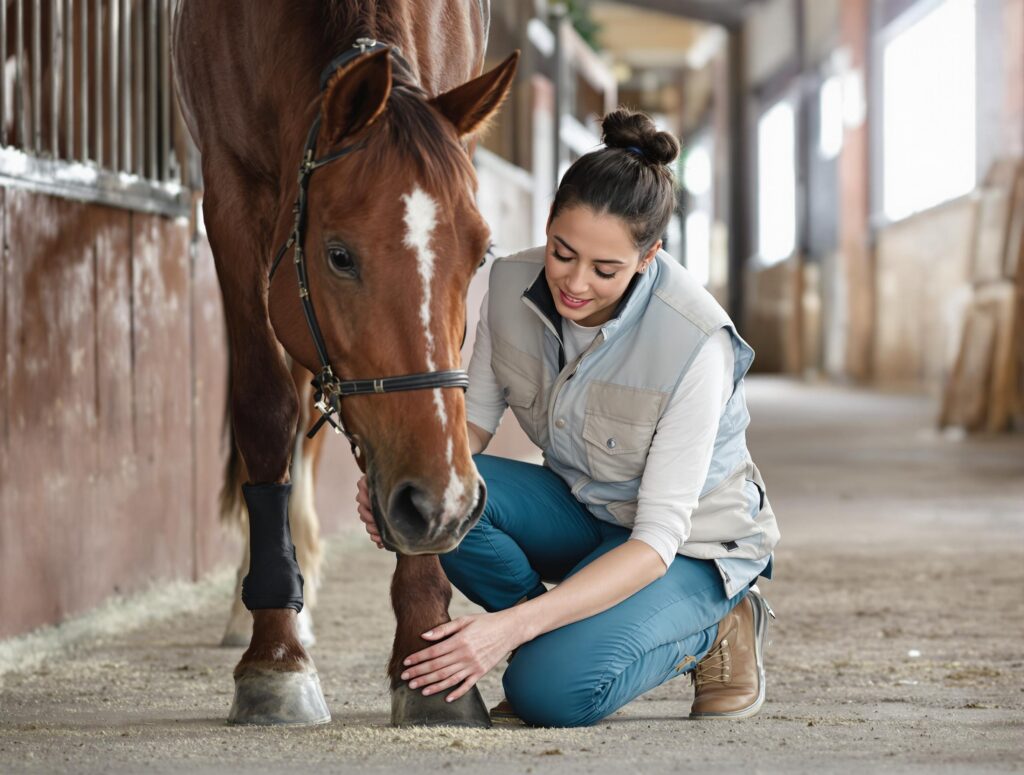
A hoof abscess causes pressure and pain in the affected hoof, so your horse will likely avoid putting weight on that leg. Upon closer inspection, you may notice heat radiating from the hoof. You may also feel a strong pulse.
You can sometimes see a crack or hole in the hoof wall where bacteria have entered. In some cases, a nail or other object may have penetrated the hoof and allowed bacteria inside.
Supporting overall hoof health can help reduce the risk of infections and abscesses. Explore hoof care products available in the PetMeds Horse Hoof Care category.
Treating A Hoof Abscess
For mild hoof abscesses, you may be able to drain the buildup by soaking the hoof in a solution of Epsom salt and warm water to help the abscess burst on its own. Your horse will feel immediate relief when it finally bursts. Then they will typically need about 7 to 10 days to heal.
During recovery, it is important to keep the hoof clean and protected.
- Apply an antiseptic to the affected area
- Bandage the hoof to keep dirt and bacteria out
- Keep your horse in a clean, dry environment
You can find helpful treatment and care supplies in the PetMeds Horse First Aid category.
If you are not able to get the abscess to drain, you will need a veterinarian to drain it for you. Call your vet right away if there is a nail or other object stuck in the hoof.
How To Prevent Recurring Hoof Abscesses
Horses are more prone to hoof abscesses in moist weather conditions, particularly in the winter and early spring. However, dry summer heat can split the hoof and allow bacteria to enter, so abscesses can happen any time of year.
Some horses are more susceptible than others, but keeping the hoof clean, dry, and healthy will help prevent recurrence. Keep your horse’s stall clean and provide dry bedding during the wet season.
Strong, healthy hooves are less likely to crack and develop an abscess. Hoof supplements and conditioners can help support stronger hoof growth and resilience. You can explore available options in the PetMeds Horse Vitamins and Supplements category.
Also, make sure your horse’s hooves are trimmed by your farrier every 6 to 8 weeks, as overgrown hooves are more prone to cracking.
Recurring abscesses can sometimes be a symptom of Cushing’s disease or chronic laminitis. Talk to your veterinarian about ruling out underlying causes if your horse seems especially susceptible to hoof issues despite a healthy diet and clean, dry conditions.