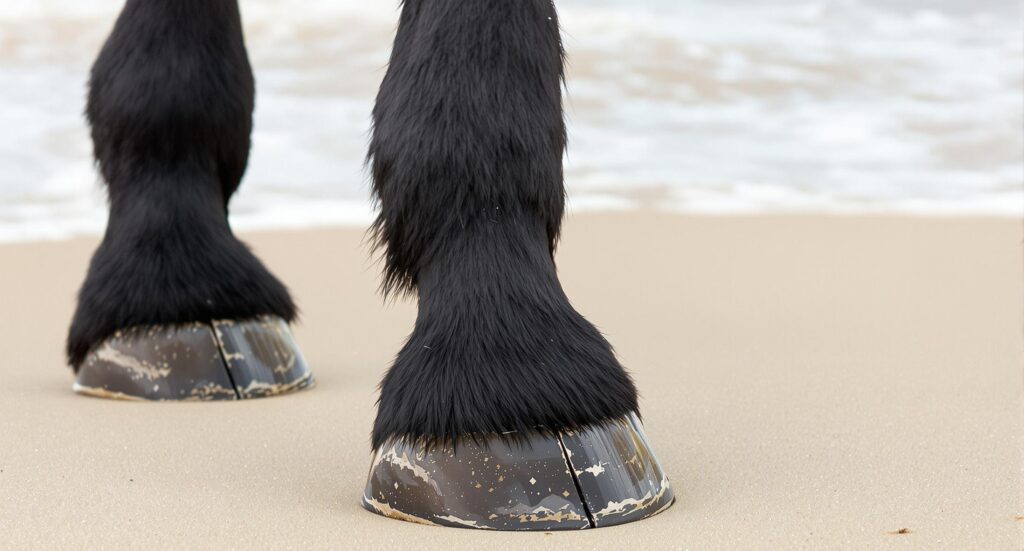
Caring for your horse’s hooves is essential to their whole body wellness. “No hoof, no horse,” as the saying goes, meaning that proper hoof care helps keep horses comfortable, sound, and ready to ride. Maintaining healthy hooves also supports your horse’s long-term mobility and overall health.
Daily Hoof Care Tips
Every time you take your horse out, make sure to pick their hooves before the ride and again before putting them away. Removing sticks, rocks, and other debris helps prevent bruising and infection while also giving you a chance to check for early signs of hoof problems.
While cleaning your horse’s hooves, look for the following warning signs:
- Thrush or foul-smelling discharge
- Cracks in the hoof wall
- Heat or tenderness in the hoof
- Discoloration or unusual moisture
If you notice discharge, unusual odor, or signs of pain or discomfort, contact your farrier or equine veterinarian promptly. You may also consider using hoof care treatments designed to help maintain healthy hooves. You can browse a variety of products in the PetMeds equine hoof care category at 1800PetMeds.
Nutrition As Essential Hoof Care
Proper nutrition plays an important role in helping your horse grow stronger and healthier hooves.
In the spring, take care not to allow your horse to overeat when turning them out to pasture after a long winter of eating hay. Fresh spring grass is high in sugar content, which can increase the risk of founder or laminitis.
A diet high in grains, especially if you suddenly increase your horse’s grain intake without allowing their digestive system to adjust, can also contribute to laminitis.
For most horses, the diet should primarily consist of grass or high-quality hay. Some horses may also benefit from nutritional support, such as supplements formulated to support hoof growth and strength. Explore equine supplements that may help support hoof health at 1800PetMeds.
Professional Hoof Care From Your Farrier
Wild horses do not require regular hoof trimming because they naturally wear down their hooves by traveling across varied and rough terrain.
Domestic horses, however, depend on routine farrier care to prevent their hooves from becoming overgrown. Find a farrier you trust and maintain a consistent schedule for professional hoof care. Most horses need their hooves trimmed every five to six weeks.
When hooves grow too long, they can become unbalanced and place extra stress on the hoof wall. Overgrown hooves may lead to cracks and can strain the joints and tendons. Pain or imbalance in the hooves can also affect posture and increase the risk of injury during exercise.
In some cases, veterinarians or farriers may recommend supportive products to help protect hoof structure or treat infections. You can explore additional equine health products at 1800PetMeds.
Common Hoof Issues
Some horses are prone to dry hooves that may crack over time. Feed supplements can sometimes help maintain healthy hoof condition, while topical conditioners can help protect the hoof wall.
You may also use conditioners such as Absorbine Hooflex Therapeutic Conditioner Ointment, which is applied to the hoof and frog with a brush-style applicator. Many hoof conditioning treatments contain antifungal and antibacterial ingredients that help protect the hoof from infection.
Overly moist hooves, on the other hand, may become susceptible to a yeast-like fungal infection called thrush. Horses with thrush often show black discharge that smells like rotten eggs coming from the frog of the hoof.
Thrush commonly develops when hooves are exposed to prolonged moisture, such as mud or standing water, especially during rainy seasons. Treatments such as Thrush Buster can help manage existing infections and prevent thrush from recurring.
Regular hoof cleaning, balanced nutrition, and consistent farrier visits all play an important role in keeping your horse’s hooves strong and healthy.