There is nothing like a clean, shiny horse right after a bath. Not only does bathing bring out your horse’s natural beauty, but it also helps keep them clean and healthy.
Bathing your horse removes trapped dirt and dried sweat that can accumulate in their coat. Your horse might feel itchy and uncomfortable when they need a bath, especially since debris can create friction between the skin and the saddle.
You can bathe your horse as frequently as biweekly, though your bathing schedule may vary with the seasons. Many horse owners skip baths during the winter and rely on frequent brushing instead, then bathe every two to three weeks during the summer.
How To Bathe Your Horse Step By Step
Prepare a bath kit before you wash your horse so you do not find yourself scrambling for tools while your horse is wet and sudsy. Your kit may include
- Curry brush
- Sponges
- Scrubber mitt
- Shampoo
- Bucket
- Sweat scraper
- Sensitive skin products, if needed
- Dry towels
- Hose with an adjustable nozzle
Tie up your horse with a quick-release knot if you are unsure how they will react to being bathed. If your horse spooks, it is best to release it quickly.
Brush your horse with a curry comb to loosen dead fur and dirt. Use a comb to gently detangle their mane and tail. Shampoo can reach the skin more easily once dirt and debris are removed, and this is also a good opportunity to check for bug bites, bumps, or other concerns. If you notice irritation or dryness, products in the Horse Skin Care category may help support healthy skin.
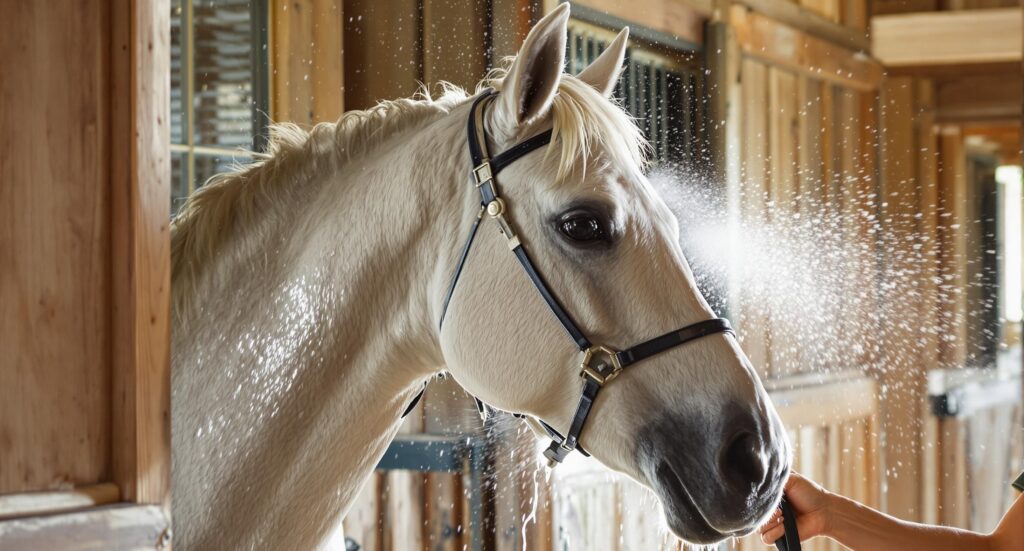
Using the hose, wet your horse’s coat starting from their hooves and working your way over their back up to their neck and shoulders. Avoid spraying your horse directly in the face or near sensitive areas around the groin.
First, lather your horse’s mane and tail with shampoo. You can do this with your hands or a comb, so you can gently work out tangles.
Next, work shampoo into the rest of your horse’s coat using a scrubber mitt to create a lather across their body. A step stool can help you reach their back and shoulders. Use a rag or a soft sponge to wash their legs, elbows, groin, and belly.
Use the hose and a sponge to rinse off the shampoo. You may need to rinse several times to ensure that no residue remains. Use a clean sponge to gently wipe your horse’s face. Avoid using shampoo on the face or near the genitals.
If your horse has skin issues, products designed for horses, such as those found in the Horse Skin Care category, can be applied after rinsing the shampoo. Some treatments can be rinsed out while others are left on the coat to help protect against bacteria and fungi.
Then use a sweat scraper to remove excess moisture. You can also towel-dry your horse. In cooler weather, you may want to cover your horse with a sheet while they dry.
Wait until your horse is completely dry before applying fly sprays or other insect repellents. These products are designed to stay on the surface of the coat. Applying them while the horse is wet may allow the product to seep into the skin,n which could cause irritation. If flies are a concern after bathing, explore solutions in the Horse Category on 1800PetMeds.