When it comes to keeping our horses hydrated, we usually think of hot summer days and long rides under the sun. But dehydration in horses is also very common during the winter months, when troughs freeze over, and lush pastures have gone dry. Ensuring your horse has consistent access to clean water, proper nutrition, and supportive care can help prevent dehydration and serious complications during cold weather.
Many horse owners also support winter health with products from trusted equine wellness categories, which can help maintain hydration, electrolyte balance, and overall digestive health.
What Happens When Your Horse Gets Dehydrated?
Did you know that dehydration is the number one risk factor for colic during the winter? Dehydration combined with winter’s dry hay diet commonly leads to impaction colic, which can sometimes be life-threatening.
Horses need to drink about 10 to 12 gallons of water per day. If you suspect your horse may be dehydrated, you can do the “skin tent test,” similar to how you might test for dehydration in humans and other animals. Gently pull up a fold of skin just above your horse’s shoulder blades with your thumb and forefinger.
- A hydrated horse’s skin will be elastic and snap back into place almost immediately.
- If the horse is dehydrated, the skin may wrinkle and take up to five seconds to settle back down.n
Other common signs of dehydration in horses include
- Stiffness or reduced performance
- Fatigue during normal exercise
- Pale gums instead of a healthy pink color
- Hard or dry manure
All of these signs indicate your horse may be chronically dehydrated. Supporting digestive health may also help horses that are prone to winter digestive stress.
Can Horses Eat Snow To Stay Hydrated?
You may catch your horse eating snow from time to time, but it will not provide adequate hydration. Even when the ground is covered in fresh snow, horses still need reliable access to fresh, unfrozen drinking water.
Water expands when it freezes, so your horse would need to eat a very large amount of snow to replace lost fluids. In addition, your horse’s body must use energy to melt the snow and warm it to body temperature. During winter, that energy is better used to maintain body heat and overall health.
How To Keep Horses Hydrated In The Winter
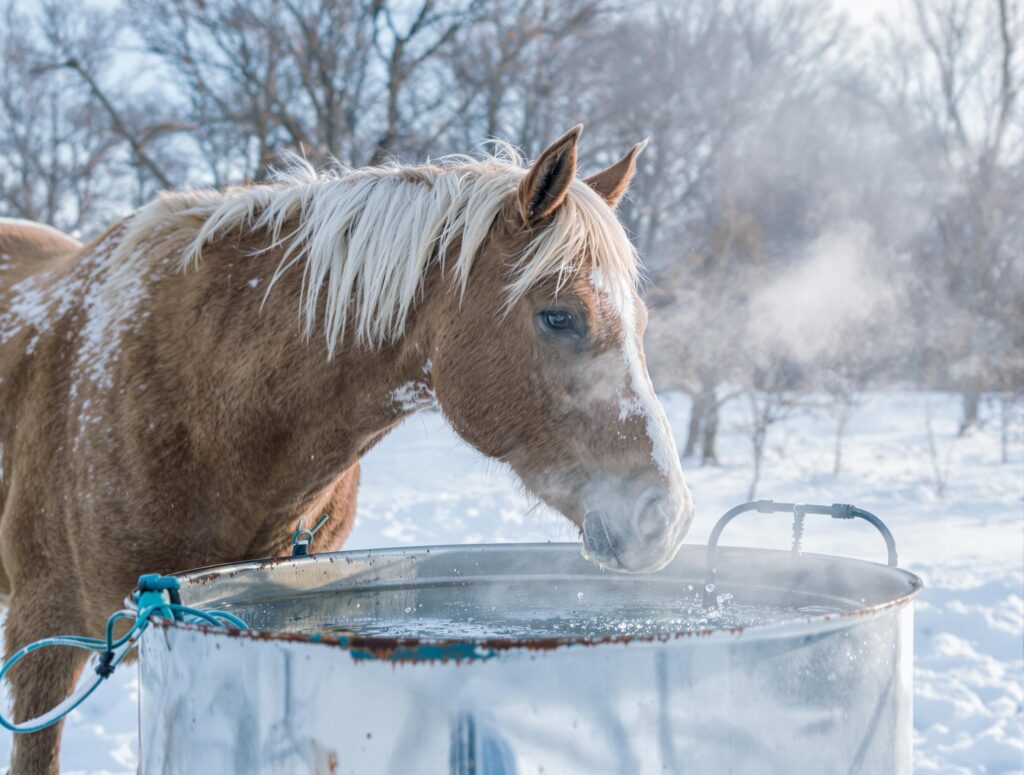
One of the biggest reasons horses do not drink enough water in winter is that their trough may become extremely cold or frozen. Horses typically drink more when their water is at a moderate temperature, and they may avoid drinking altogether if their trough freezes.
Using a heating element in your horse’s water trough helps keep water available and drinkable. Studies suggest that horses drink more water when it is warm, around 90 degrees Fahrenheit, compared to water that is just above freezing.
Additional strategies to help prevent winter dehydration include
- Provide constant access to clean, unfrozen water
- Offer a natural salt lick to stimulate thirst
- Monitor water intake daily
- Consider electrolyte support if recommended by your veterinarian
Flavorings such as electrolyte additives or small amounts of sweet feed can sometimes encourage drinking, but fresh, clear water should always be available at all times.
Keeping a close eye on hydration throughout the winter helps reduce the risk of colic and supports your horse’s overall health and performance during colder months.