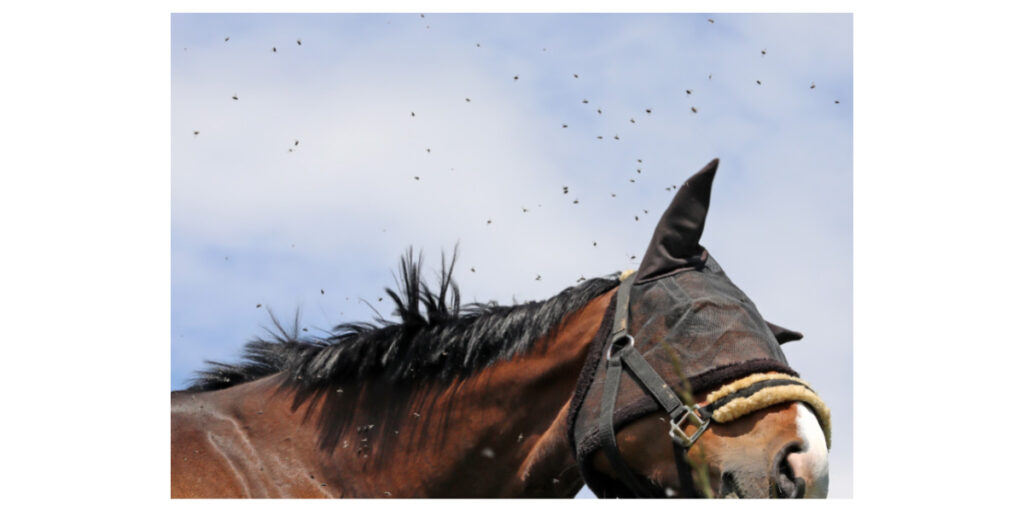
It’s that time of year again. Flies are attacking our horses in large numbers, shooed momentarily by the swish of a tail or the flick of an ear, only to bite again and again. For horses that suffer insect bite hypersensitivity, also known as summer seasonal recurrent dermatitis (SSRD) or sweet itch, flying bugs that bite are more than an annoyance.
What Causes Sweet Itch in Horses?
Many flying, biting pests produce substances in their saliva that make their victims itchy. Some horses develop an allergy to the saliva of certain insects, causing their immune system to overreact when they are bitten.
Horses with sweet itch are usually triggered by Culicoides biting midges, sometimes called no-see-ums, but the condition can also flare up when horses are exposed to mosquitoes, black flies, gnats, and deer flies.
Managing insect exposure is an important part of preventing sweet itch. Horse owners often rely on protective gear and repellents from the horse fly control products category to reduce biting insects around their horses.
What Are the Symptoms of Sweet Itch in Horses?
Biting flies bother most horses occasionally, but horses with sweet itch experience a much stronger reaction. The condition usually affects the mane and base of the tail. These areas may develop bald, crusty patches of skin that appear grayish and may weep or bleed.
In severe cases, a horse may spend much of the day biting, scratching, and rubbing their skin instead of grazing. As a result, some horses may even lose weight.
Another key indicator is that sweet itch is usually seasonal. The flies that cause it are most active from March through November. Symptoms usually improve in the winter when insect populations decrease.
Skin irritation caused by sweet itch can sometimes require soothing treatments and medicated shampoos available in the horse skin and coat care category.
Which Horses Are at Risk for Sweet Itch?
Sweet itch is the most common allergy in horses and also the most common cause of itching. Onset typically begins after two years of age and often becomes more severe each summer as the horse gets older.
It affects at least 5 percent and as many as 60 percent of horses in some regions, particularly areas with warmer climates and larger populations of biting insects.
How Is Sweet Itch Treated?
Unfortunately, there is no known cure for sweet itch. Some emerging treatments, such as immunotherapy, aim to help build the immune system’s tolerance to components in biting midge saliva, but these treatments are not yet widely available.
Supplementation of omega-3 fatty acids from ground flaxseed has shown some promise in supporting immune function and skin health, although it does not provide fast-acting relief.
For mild cases, you can wash your horse with EQyss Micro Tek Equine Shampoo and apply Micro Tek Equine Spray as needed to help minimize inflammation and support healthy skin.
In more severe cases, veterinarians may prescribe steroids or antihistamines to bring symptoms under control so the skin can heal. Left untreated, a severe flare-up can lead to complications such as skin infections.
Many horse owners also support skin health with supplements available in the horse supplements category.
Preventing Sweet Itch in Horses
Your horse’s best defense against sweet itch is effective fly control. Reducing exposure to biting insects can significantly decrease the severity of symptoms.
You can help protect your horse from biting flies by:
- Using fans in the stable to help blow flies away
- Using protective gear such as a fly rug and fly mask
- Applying Absorbine UltraShield EX Fly Spray to your horse’s coat
- Eliminating standing water where flies breed
- Planting natural repellent plants such as lavender, lemongrass, and basil
- Stabling your horse during peak insect activity, usually at dawn and late afternoon
Consistent fly management using products from the horse fly control category can greatly reduce irritation for horses prone to sweet itch.