Choking in horses occurs when there is an obstruction in the esophagus, the tube that carries food from the mouth to the stomach. Not to be confused with choking, which is when food blocks the trachea or windpipe, choke in horses does not interfere with their ability to breathe. However, it does prevent them from eating and drinking water, so it should be considered an emergency.
What Causes Choke in Horses?
Horses can choke if they attempt to swallow grain, hay, beet pulp, apples, carrots, or other foods too quickly without chewing properly. It is more common in overenthusiastic eaters as well as horses with dental issues that prevent them from chewing their food thoroughly. Horses can also choke while recovering from sedation if they are fed before the effects of the medication have worn off.
Maintaining proper nutrition and digestive support can help reduce feeding-related issues. Many horse owners use products found in the equine supplements category to support overall digestive health.
Signs of Choke in Horses
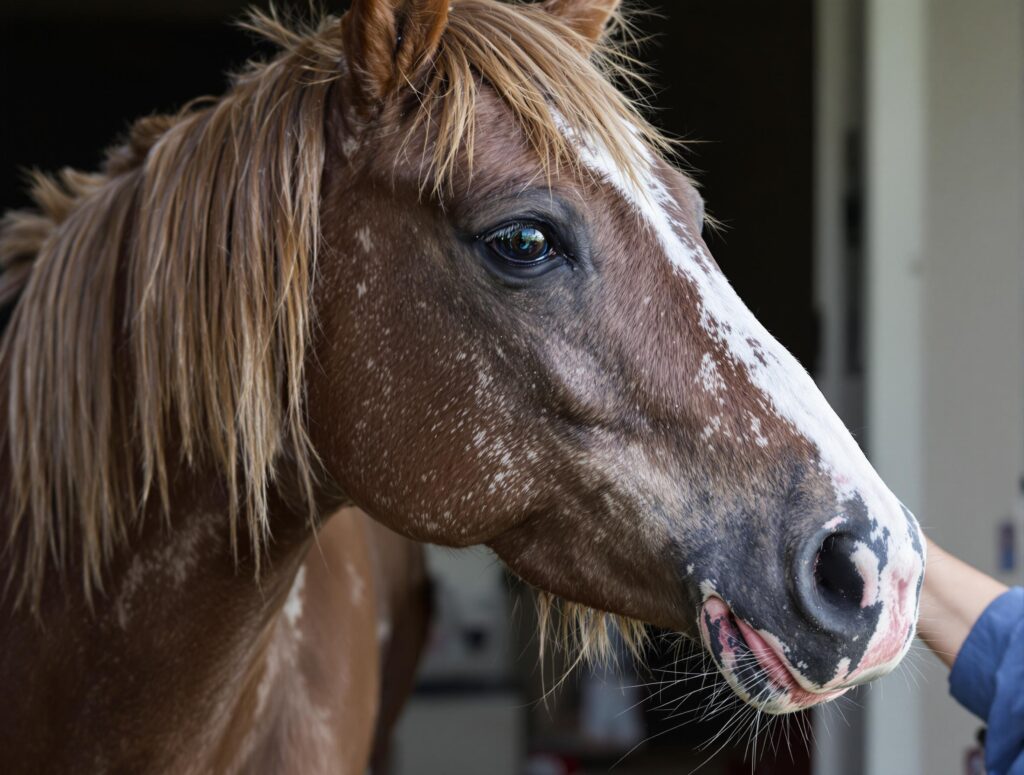
If your horse is eating and suddenly stops and seems to panic, they may be experiencing choke. In attempts to dislodge the stuck food, they may stretch out their neck, gag, cough, shake their head, and paw at their mouth. As the blockage prevents swallowing, you may also see excessive drooling and nasal discharge that contains particles of chewed food.
If these symptoms appear, remove all feed immediately and monitor your horse closely. Providing proper wellness support products, such as those found in the horse health supplies category, can help horse owners stay prepared for common health concerns.
How Is Choke Treated in Horses?
Most of the time, your horse will be able to cough up or swallow the obstruction on their own. In the meantime, you can move your horse to a quiet area to help them calm down so the esophageal muscles can relax, allowing the food to pass through.
If the episode lasts longer than 30 minutes, you will need to call your veterinarian right away. A horse suffering from choke will not be able to drink water and can become dehydrated if the condition is not resolved.
Your veterinarian may administer a sedative to help relax the esophageal muscles. If needed, they can use a nasogastric tube to flush out the obstruction. It is important that you do not attempt to treat a choke without guidance from a veterinarian. At-home treatment can lead to complications such as aspiration pneumonia, in which particles of food enter the lungs.
Once the blockage has been cleared, your veterinarian may use an endoscope to see if your horse has sustained any damage to their esophagus. If your horse has repeated episodes of choke, your veterinarian may check for underlying causes. Tumors and scar tissue from old injuries can narrow the esophagus and make horses more susceptible to choke.
Preventing Future Choke Episodes
For horses prone to choke, soaking or adding water to feed can sometimes help. If your horse gulps their food without chewing, you can use a slow-feeder hay bag to slow them down or place large rocks in their feeding tray that they will have to eat around.
Good management practices can reduce the risk of choke episodes.
- Always provide access to clean, fresh water
- Monitor horses that tend to eat too quickly
- Avoid feeding immediately after sedation
- Ensure feed is appropriate for your horse’s age and dental health
You can also support overall digestive and nutritional balance with products from the horse digestive supplements category.
Poor dental health can make it harder for your horse to chew their food. Your horse should have their teeth floated at least once each year or up to twice a year if your horse is older or prone to dental issues.