Has your horse been in contact with a horse with strangles? This highly contagious bacterial infection spreads through airborne droplets when an infected horse snorts or sneezes, through direct nose-to-nose contact, or by sharing equipment such as buckets, tack, and grooming tools.
It can take an average of two weeks for symptoms to develop in your horse after exposure to an infected horse. To ensure that a potentially infected horse does not expose others in your stable, it is best to quarantine for three to four weeks. You should also quarantine any new horse that comes to your stable.
If your horse does develop strangles, they can shed the bacteria for up to a month following recovery, so a longer quarantine may be necessary.
What Is Strangles in Horses?
Strangles is a bacterial infection caused by Streptococcus equi. The disease primarily affects the lymph nodes and upper respiratory tract of horses. Because it spreads easily between horses, quick identification and isolation are essential to prevent outbreaks in barns and boarding facilities.
Horse owners should monitor their animals closely after possible exposure and maintain strong, stable hygiene practices. Using proper horse care products and maintaining clean equipment can help reduce the risk of spreading bacteria. You can find supplies that support horse health and hygiene in the Horse Supplies category on 1800PetMeds.
First Signs of Strangles in Horses
As with many infections, the first symptom of strangles is often a fever. Because a fever may appear before any other symptoms, it is sometimes overlooked.
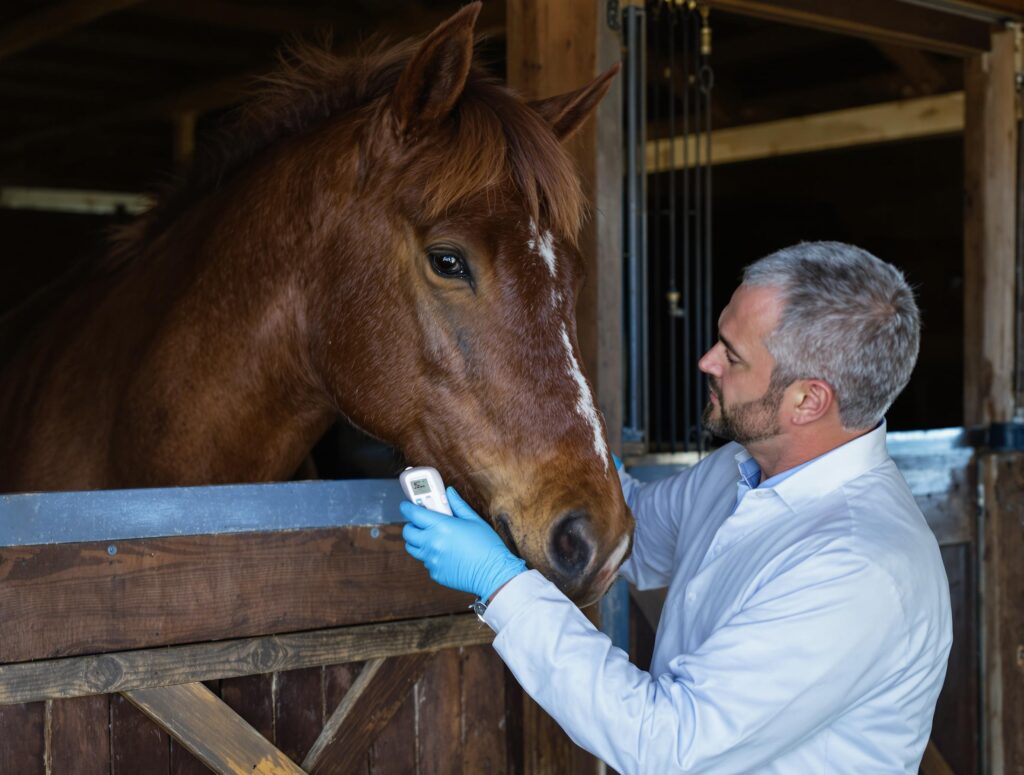
If your horse has been exposed to strangles, check their temperature two to three times per day. A healthy horse typically has a body temperature of about 99 degrees Fahrenheit, and a temperature of 102 degrees or higher indicates a fever.
Monitoring your horse closely during this period can help you catch early warning signs and respond quickly. Regular health monitoring and supportive products found in the Horse Health category on 1800PetMeds may help you stay prepared.
Other Signs of Strangles in Horses
Besides a fever, your horse may show other early signs of strangles.
You may notice decreased appetite, and your horse may seem to have less energy. As the infection progresses, your horse will likely develop a cough and thick yellow nasal discharge.
Your horse may also have swollen lymph nodes around the jaw or throat that can compress their airways and make breathing more difficult. These lymph nodes can develop into abscesses that may burst, releasing bacteria-laden fluids into the environment and potentially infecting other horses.
Maintaining proper barn sanitation and using equine health supplies from the Horse First Aid and Wellness category on 1800PetMeds can help horse owners manage symptoms and protect other horses.
Severe Symptoms of Strangles
For some horses, a strangles infection can lead to serious complications, although most cases resolve with minimal treatment within about six weeks.
You may need to provide daily support, such as warm compresses,s to help abscesses drain. Some horses have difficulty swallowing because swollen lymph nodes press against the esophagus and may need moist or softened food during recovery.
Work closely with your veterinarian to determine the severity of your horse’s infection and whether treatment such as antibiotics or surgical drainage of abscesses is necessary.
In rare cases, abscesses can develop on internal organs due to a complication known as bastard strangles. Symptoms may include colic and weight loss. Bastard strangles can be life-threatening and typicallyrequires veterinary treatment.
Foals, older horses, and other vulnerable individuals are at greater risk of severe complications from strangles. Contact your veterinarian immediately if you suspect an infection in an at-risk horse or if your horse shows worsening symptoms.
Using appropriate horse health products and maintaining a clean environment can help support recovery and reduce the spread of infection. You can explore additional horse health and wellness products in the Horse Care category on 1800PetMeds.