During the coldest months of the year, your horse relies on their slow digestive process to generate enough body heat to keep them warm. Without access to lush, green pastures, your horse depends on you to ensure they are getting enough calories to get through the winter. Here is how you can adjust your horse’s winter diet to help them stay warm and maintain a healthy body condition.
How to Increase Your Horse’s Winter Caloric Intake
Though winter dietary requirements vary between horses, climates, and living situations, on average, a horse will need to increase their caloric intake by about 25 percent during the coldest months. Aim to feed about 1.5 to 3 pounds of quality hay per 100 pounds of body weight.
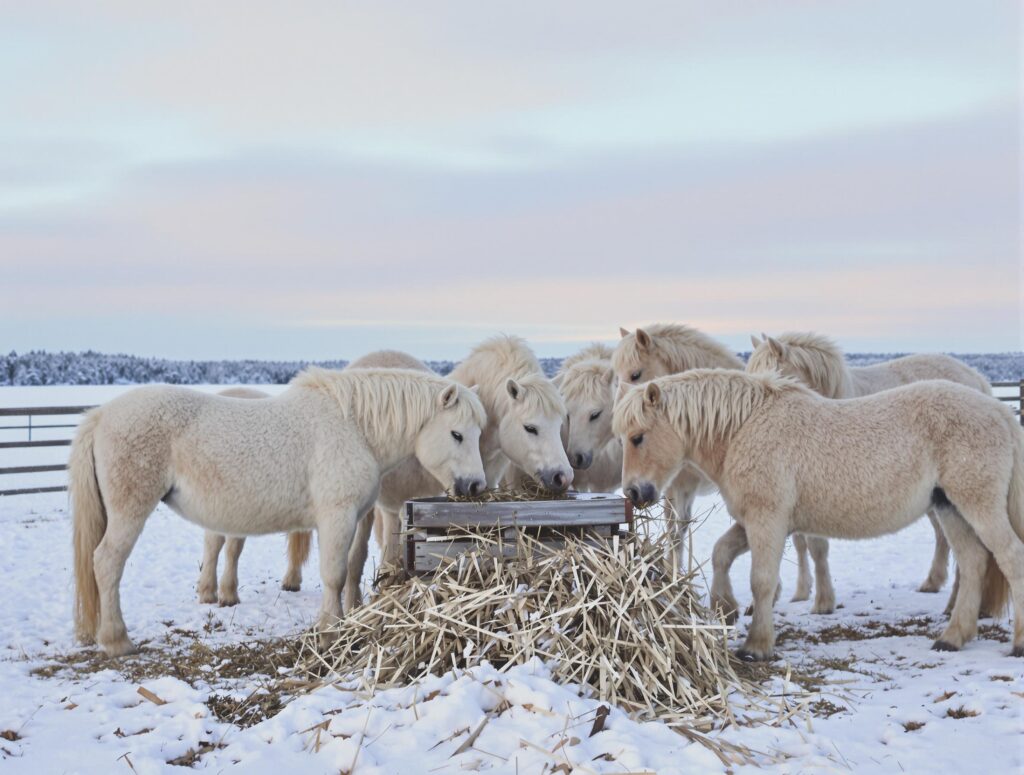
Horses are designed to spend most of their day eating. Foraging and eating for up to 18 hours a day allows your horse to continuously generate body heat through the digestive process. Free feeding with a hay feeder can be a great way to ensure your horse has enough to eat and encourages all-day feeding while reducing waste.
A quality hay can help your horse maintain weight in the winter and support heat production through digestion. Monitor your horse’s body condition regularly. If they do not seem to be maintaining weight on hay alone, you can supplement with a high fiber grain feed or consider products from the Horse Vitamins and Supplements category to help support overall nutrition.
Adding fats to your horse’s diet is another effective way to increase calories without dramatically increasing meal size. Many owners also explore options within the Horse Digestive Health category to help maintain proper gut function during seasonal diet changes.
Supporting Digestive Health in Cold Weather
Because your horse produces body heat through fermentation in the hindgut, digestive health is especially important in winter. Consistent forage intake keeps the digestive system moving and helps reduce the risk of colic.
To support digestive function during colder months, consider the following:
- Provide continuous access to high-quality forage
- Make dietary changes gradually over 7 to 10 days
- Monitor manure consistency and appetite
- Use appropriate supplements if recommended by your veterinarian
If your horse is prone to digestive upset, you may find additional support products in the Horse Supplies category.
Keeping Your Horse Hydrated in the Winter
While your horse should always have access to fresh, clean water, staying hydrated is even more critical during the winter months when your horse cannot graze on moisture-rich grass.
Dehydration in the winter can lead to decreased eating and can increase your horse’s risk for impaction colic. Monitor your horse’s water intake and watch for signs such as dry stools or reduced manure output.
You can help your horse stay hydrated in the winter by:
- Ensuring water troughs do not freeze over
- Removing ice as it forms
- Offering slightly warmed water if your horse avoids very cold water
- Using a heated water bucket to maintain a comfortable drinking temperature
A balanced winter feeding program, combined with proper hydration and digestive support, will help your horse maintain a healthy weight and stay comfortable throughout the colder months.