Long, sunny days mean more time to spend outdoors with your horse. Just like humans, horses can sweat to help manage their body temperature in the heat. But even with their ability to sweat, they can suffer from heatstroke, a life-threatening medical emergency.
When temperatures rise above 80 degrees Fahrenheit or when the heat index, which combines temperature and humidity, climbs above 150, you will need to monitor your horse closely and limit physical activity. Proper hydration, electrolyte balance, and cooling strategies can help protect your horse during hot weather.
What Is Heat Stroke In Horses?
When it is hot outside, one of the ways your horse naturally regulates internal body heat is through vasodilation. This occurs when blood vessels close to the surface of the skin expand, allowing excess body heat to be released through the skin into the surrounding air.
However, when a horse becomes overheated, this process can no longer maintain a normal body temperature. Increased circulation of blood to the skin also diverts blood away from the digestive tract, kidneys, and eventually the brain. In severe cases, heat stroke can lead to organ failure and death.
Keeping your horse properly hydrated and replacing lost electrolytes can help support normal thermoregulation during hot weather. You can explore hydration support options in the Horse Health Care Supplies category at 1800PetMeds.
Symptoms Of Heat Illness And Heat Stroke
If you monitor your horse for signs of heat exhaustion, you may be able to intervene before it progresses to heat stroke, which is always a medical emergency.
Signs of heat exhaustion include
- Excessive sweating
- Rapid heart rate
- Rapid breathing
- Muscle spasms
- Decreased urination
- Dehydration using the skin tent test
Heat exhaustion can quickly progress to heat stroke. Sweating may stop, and the horse may stumble, collapse, experience convulsions, or even go into a coma.
If you suspect your horse is experiencing heat exhaustion or heat stroke, contact your veterinarian immediately. In the meantime
- Move your horse into the shade
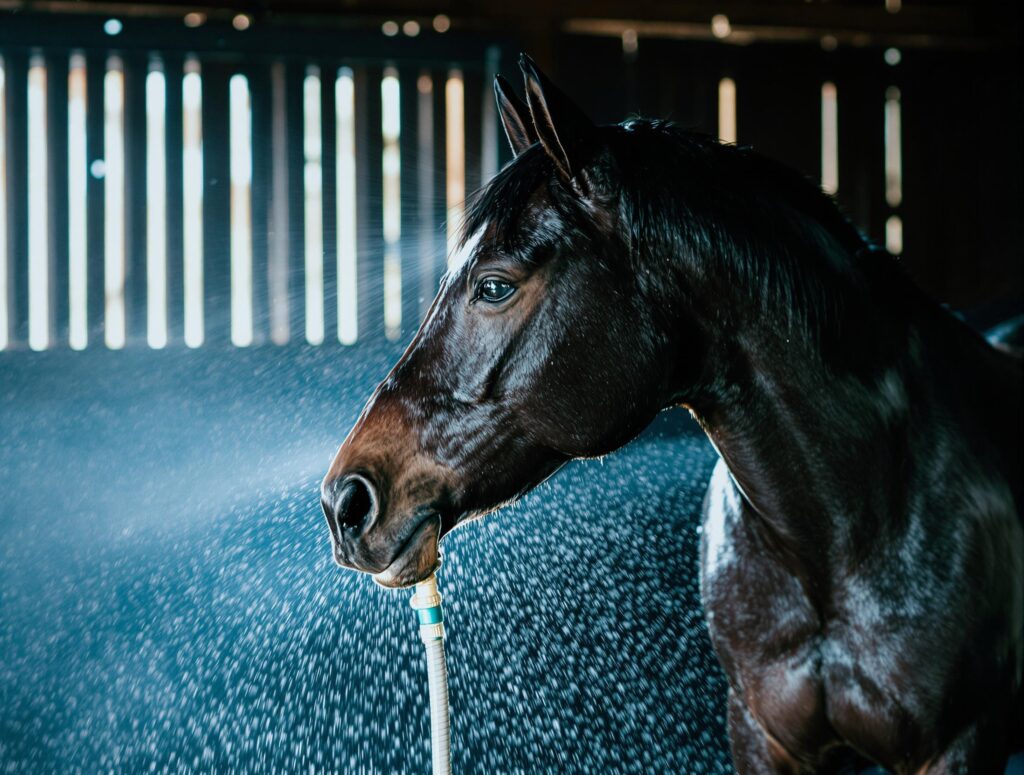
- Mist or spray the horse with cool water
- Place the horse in front of a fan if possible
Supportive products for cooling and recovery may be found in the Horse First Aid and Wound Care category at 1800PetMeds.
Preventing Heatstroke In Horses
Although any horse can suffer from heatstroke when exposed to extreme heat or overexertion, certain horses face a higher risk. Foals, overweight horses, and horses older than four years may have greater difficulty regulating body temperature.
Horses generate significant body heat while chewing and digesting feed, which can make them more prone to overheating for several hours after eating. To reduce this risk
- Feed your horse three to four hours before exercise
- Wait at least two hours after strenuous activity before feeding
- Provide frequent access to fresh water before, during, and after rides
Electrolyte supplementation during periods of heavy sweating may also help maintain hydration and mineral balance. Many owners use products from the Horse Vitamins and Supplements category to support overall health during demanding weather conditions.
Horse Heat Stroke Precautions On The Road
If you must trailer your horse during the summer months, plan your travel before or after the hottest part of the day. The hottest hours typically fall between 10 AM and 4 PM, although this can vary depending on location and weather conditions.
Once stopped, never leave your horse unattended in the trailer. Just like a parked car, a trailer can quickly exceed 130 degrees Fahrenheit, creating dangerous conditions within minutes.
Proper planning, hydration, and careful monitoring can help ensure your horse stays safe and comfortable during hot summer travel.