Horses have the largest eyes of all land mammals. Combined with their active outdoor lifestyle, it is no wonder they are prone to eye issues. Those big, beautiful eyes are especially vulnerable to infection, injury, and irritation.
When your horse greets you with swelling in one or both eyes, it is crucial to distinguish between a mild, acute issue and something that could pose a serious risk to their vision. Here are some indicators to watch for and steps you can take to protect your horse’s eye health.
Why Horses Get Swollen Eyes
In the springtime, conjunctivitis tends to occur more frequently in horses. Conjunctivitis, also known as pink eye, is an infection of the mucous membrane surrounding the eye or the inner eyelids. Along with swelling, you may notice whitish or yellowish discharge. The eye itself should appear clear and free of cloudiness.
As pink eye can be a sign of another issue, such as a corneal ulcer, it is important to see your veterinarian for treatment. Your vet will usually prescribe antibiotic ointment or eye drops to soothe irritation and eliminate the infection.
You may also notice swelling if your horse has a condition that directly affects the eye itself. Common eye conditions that can cause swelling include:
- Corneal ulcers
- Uveitis
- Foreign bodies in the eye
- Blunt force trauma
These problems may also occur alongside symptoms such as squinting, light sensitivity, spasms, excessive tearing, or a bloodshot sclera.
If your veterinarian prescribes medication, products found in the horse prescription medications category or horse eye and ear care category at 1800PetMeds may be part of the recommended treatment plan.
When To Call Your Veterinarian
Any time your horse has an eye issue, it is important to seek veterinary help. Even acute issues like pink eye can cause permanent damage if left untreated.
Before contacting your veterinarian, take note of the following:
- Whether symptoms affect one eye or both
- Presence of swelling, tearing, or discharge
- Sensitivity to light or squinting
- Other symptoms such as fever, lethargy, hives, or loss of appetite
Your veterinarian may use a fluorescein stain to look for injuries to the cornea that may not be obvious during an initial exam. They may also swab the eye to perform a culture and check for infection.
Always follow your veterinarian’s aftercare instructions carefully and administer any prescribed medications exactly as directed.
Preventing Eye Issues In Horses
Prevention plays an important role in protecting your horse’s eye health. Taking simple precautions around the barn and pasture can help reduce the risk of irritation and injury.
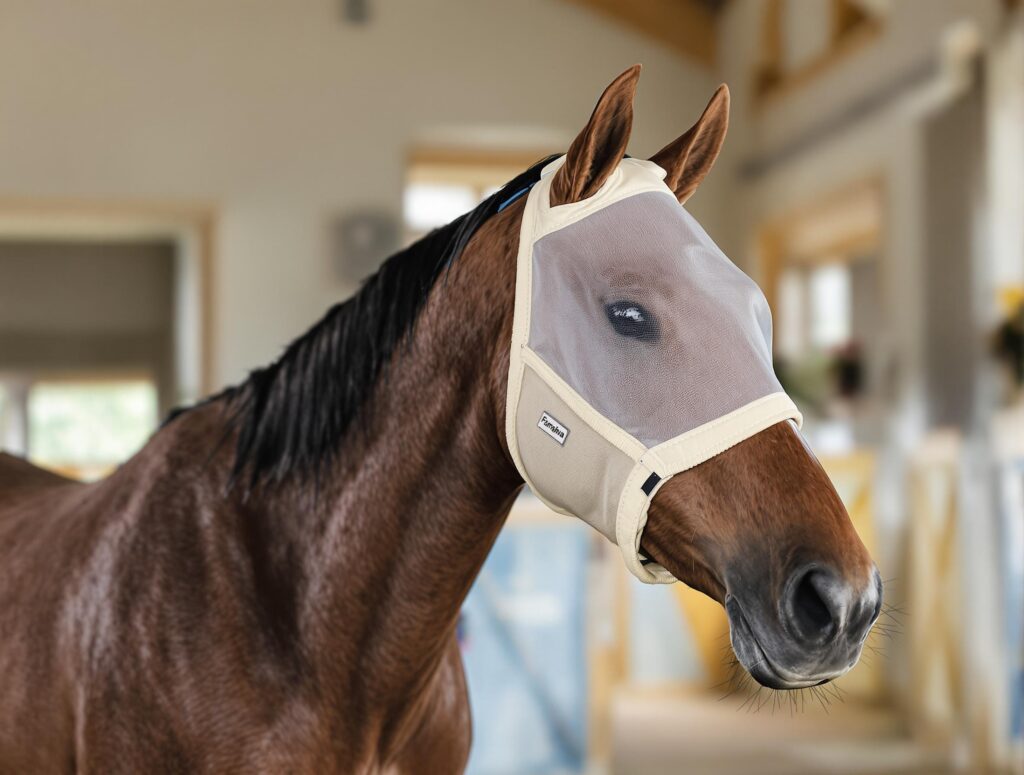
During the spring and summer months, a fly mask is a helpful way to protect your horse’s eyes from flies as well as pollen and debris. Many horse owners also use products found in the horse supplies category at 1800PetMeds to help reduce insect irritation.
For horses prone to mild eye irritation caused by allergies, your veterinarian may recommend flushing the eyes with saline solution during high pollen days.
Because conjunctivitis may be caused by contagious viruses or bacteria, horses with pink eye should be isolated to avoid spreading infection through direct contact with other horses.
You can also reduce the risk of injuries by regularly checking stables and turnout areas for hazards such as:
- Protruding nails
- Sharp hooks
- Broken boards
- Overgrown branches
If your horse tends to rub against doors, posts, or trees, installing a scratching post can provide a safer place for them to scratch an itch without risking eye injury.
Finally, examine your horse’s eyes regularly so they become comfortable with gentle handling. Practicing low-stress handling techniques and offering treats can help prepare your horse to accept medical care more easily in the future.
Regular observation, proper protection, and prompt veterinary care can help ensure your horse’s eyes stay healthy and comfortable year-round.