With winter in full force, your horse’s skin and coat care is more important than ever. A healthy winter coat helps your horse stay warm, while their skin acts as a protective barrier against infection. Dry, cracked skin or a matted coat can make it more difficult for them to thrive in cold weather. Supporting your horse with the right grooming routine and quality horse grooming supplies can help maintain optimal skin and coat health all season long.
Your Horse’s Winter Coat
Your horse’s winter coat starts to grow in as the days get shorter and their exposure to daylight diminishes. In some regions, this process begins as early as September. By the time the winter solstice arrives around December 22, your horse’s winter coat will have fully grown in and will eventually begin to shed as daylight increases again.
This winter coat is thicker and longer than your horse’s summer coat. When your horse is cold, they experience piloerection, just like people. Piloerection occurs when small muscles at the base of the hair follicles contract, causing the hair to stand up. In horses, this creates a fluffy barrier against the cold that helps retain body heat.
Blanketing your horse before December 22 can impede the growth of its winter coat. However, you may still decide to blanket earlier if:
- You live in a very cold climate
- Your horse does not have access to shelter
- Your horse is clipped or has difficulty maintaining weight
- They otherwise show signs of being too cold
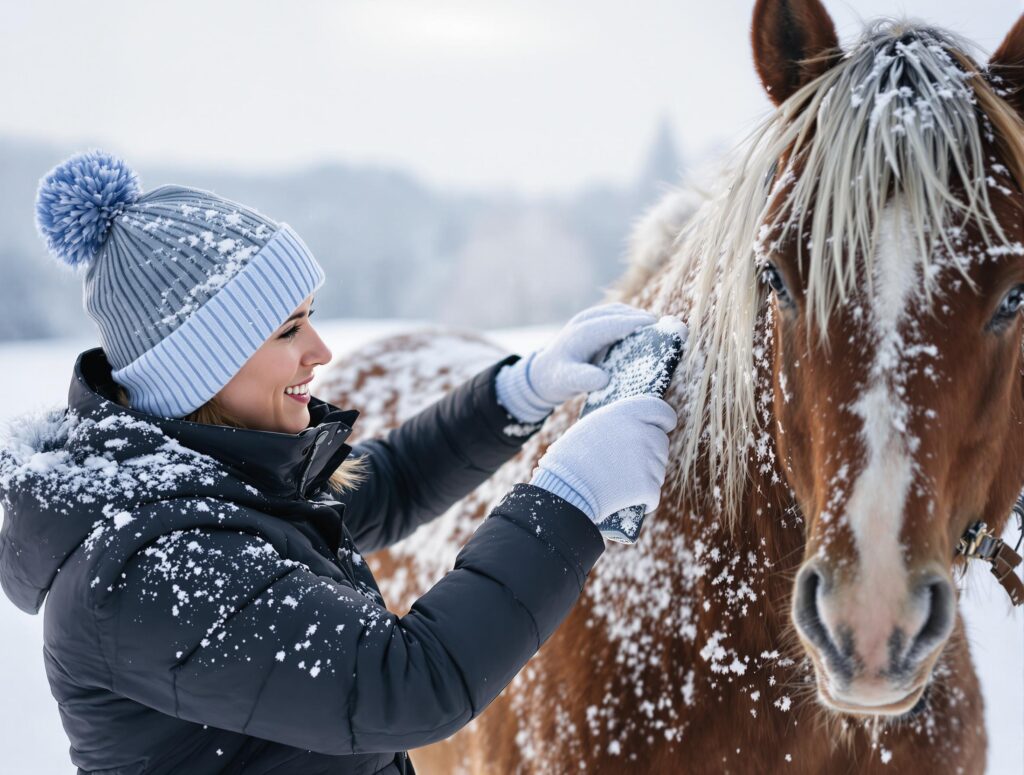
That thick winter coat can become matted or collect mud, buildup, and debris, especially during the coldest months when it may be too cold to bathe your horse. To help keep your horse’s coat clean and free of mats, brush them daily with a curry comb and other essential horse supplies.
Brushing your horse:
- Frees dirt and debris
- Loosens tangles
- Stimulates circulation
- Distributes natural oils throughout the coat
Daily grooming not only keeps the coat healthy but also allows you to check for skin issues that may be hidden beneath thick winter hair.
Winter Skin Care for Horses
During the winter, humidity levels drop, and moisture on your horse’s skin evaporates more quickly, leaving them vulnerable to dryness. You may notice dandruff in your horse’s coat, and they may seem itchier than usual.
At the same time, your horse’s dense winter coat can trap moisture against the skin. Prolonged dampness from snow, rain, or muddy conditions can lead to rain rot, while excess moisture creates an ideal environment for bacteria and fungi. External parasites such as lice and mites are also more common in winter months.
Consistent grooming helps air out trapped moisture and debris while supporting overall skin health. When it is too cold for a full bath, waterless shampoos can help freshen the coat without soaking your horse. For irritated areas, soothing conditioning sprays and medicated topical treatments found in horse skin and coat care products may provide relief and support healing.
To nourish your horse’s skin and coat from the inside out, consider adding omega-3 fatty acids and other targeted nutrients from high-quality horse vitamins and supplements. Proper nutrition plays a key role in maintaining a shiny coat and resilient skin during harsh winter conditions.
With consistent grooming, balanced nutrition, and proactive care, you can help ensure your horse’s skin and coat remain healthy and protective throughout the winter season.