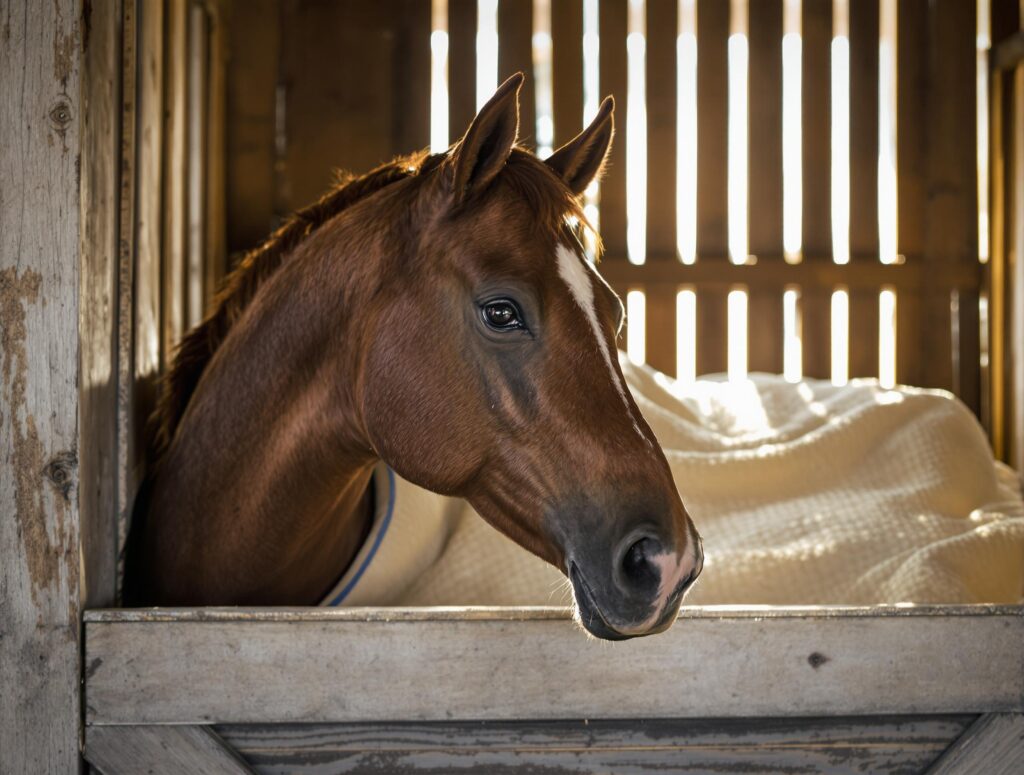
As the winter chill sets in, you might be wondering how you can keep your horse warm in the winter.
Though you probably start to bundle yourself up by mid-autumn, your horse is unlikely to need help staying warm until later in the year.
Horses are efficient at maintaining their body temperature as outside temperatures drop. Most develop a winter coat that traps body heat and resists moisture. Their winter coat continues to grow in until the winter solstice, near the end of December.
For healthy horses, there is usually no need to use a blanket until after the winter solstice, when the winter coat begins to fall out, and the summer coat starts to come in. Blanketing too soon can impede your horse’s natural adaptations, such as their ability to grow out a thick winter coat.
Does Your Horse Need A Blanket?
Some horses do need a blanket earlier in the year.
Very young and very old horses may not develop a thick winter coat, may not build up enough body fat, and may have more trouble maintaining their body temperature.
If your horse has been clipped, they may need a blanket. It is best to keep your horse unclipped so they can grow out their winter coat, but this may not be ideal if your horse must be clipped for showing or grooming purposes.
A horse that has been imported from an area with a warm climate during the winter season may not have had time to develop a proper winter coat.
Severe winter weather can bring a chill to healthy horses with thick winter coats, too. When the outside temperature drops below 5 degrees Fahrenheit, or the wind chill is at or under 5 degrees, a blanket can be useful. Browse cold-weather care to help protect your horse from harsh conditions.
Horses that may benefit from blanketing include:
- Very young horses
- Senior horses
- Horses that have been body clipped
- Horses with low body weight
- Horses adjusting to a warm climate
Eating Hay Keeps Your Horse Warm
Make sure your horse has 24-hour access to quality hay all winter long. The muscles needed to chew and digest hay generate body heat, which helps your horse stay warm naturally. Horses need about 25 percent higher energy intake during cold winter months.
You will also want to make sure your horse develops and maintains a layer of healthy body fat for insulation. Supporting overall wellness with products from 1800PetMeds.com can help your horse stay in peak condition throughout the season.
Keep Your Horse Dry In Winter
Excessive sweating can dampen your horse’s winter coat and hinder their ability to stay warm.
Make sure to dry your horse off if they sweat during exercise. Also watch for sweating if your horse is blanketed, in a stable with limited ventilation, or if you have multiple horses sharing body heat in an enclosed space.
Winter rain and sleet can also make your horse too wet to stay warm. You may want to put a coat or blanket on your horse when they are turned out if you are expecting wet precipitation. Snow, however, is usually not a problem.
In addition to proper blanketing and nutrition, maintaining your horse’s overall health is essential during colder months. Routine care products, including dewormers and wellness support, are available in the Horse Dewormers category to help keep your horse healthy year-round.