
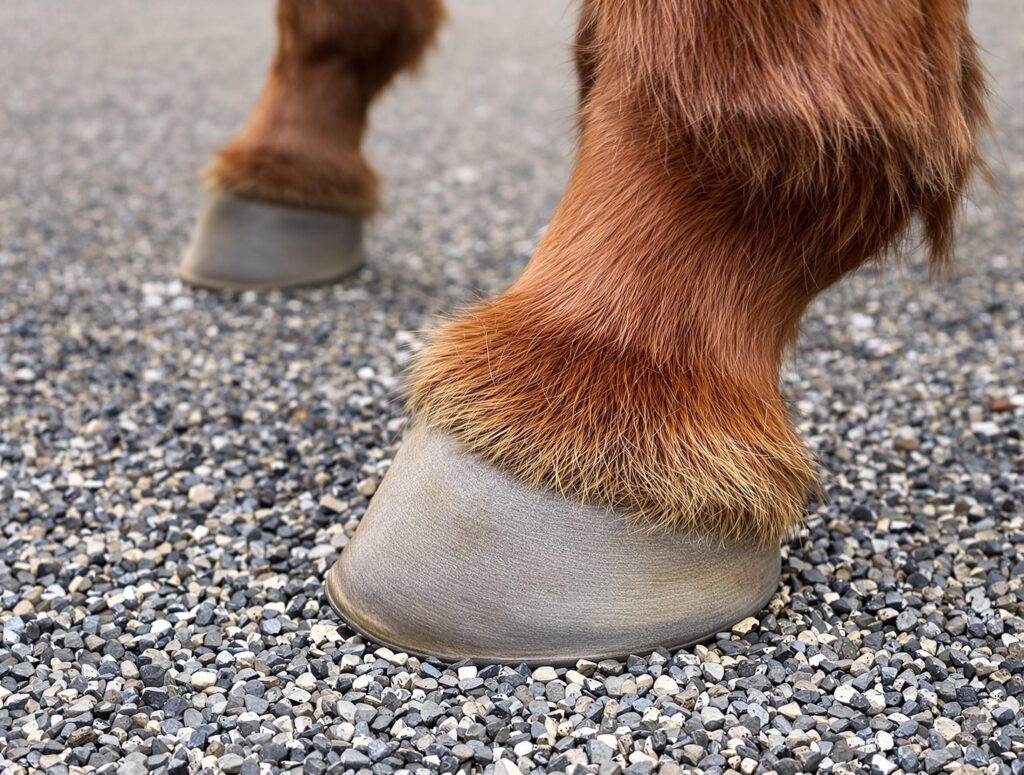
If you pick and inspect your horse’s hooves before and after riding, you may occasionally notice chips or cracks in the hoof wall. The hoof wall is much like a fingernail or toenail. Made up of keratin, it protects the delicate inner structures of your horse’s hooves from hard surfaces, moisture, and infection.
Most of the time, small, superficial chips and cracks in the hoof wall are cosmetic and require no treatment. However, they may indicate that your horse’s hooves are exposed to too much or too little moisture, or they may simply be the result of a minor injury.
Types Of Hoof Cracks
A superficial, vertical crack that starts close to the ground is called a grass crack. A grass crack normally is not painful and does not cause lameness.
A vertical crack that starts at the coronary band is called a sand crack. They are typically caused by excessive stress or traumatic injury at the coronary band and can sometimes cause lameness.
Horizontal cracks are typically caused by an abscess that bursts at the coronary band, creating a gap that has grown into the hoof wall. Though the previous injury may have caused lameness, the resulting crack is usually benign.
Depending on the depth, location, and severity of the crack, your veterinarian or farrier may need to patch, wire together, or cut out the crack to aid stability while it grows out. Regular hoof inspections and supportive care products available in the horse hoof care category may help maintain hoof condition while the crack heals.
Treating And Preventing Hoof Cracks In Horses
For superficial cracks, you can condition the affected hoof to help prevent it from worsening and to help prevent infection while you wait for it to grow out. Hooves grow about three-eighths of an inch per month.
Check on hoof cracks often to ensure they are not getting worse and that no infection is present. If you notice any of the following symptoms, call your veterinarian and your farrier as soon as possible:
- Bleeding from the crack
- Increased pulse in the affected hoof
- Odor coming from the hoof
- Radiating warmth
- Lameness
Avoid exposure to excessive moisture. Make sure your horse’s stall floor is clean and dry, and avoid turning them out when the ground is wet or muddy. Conversely, lack of exercise can also contribute to cracks due to decreased blood flow to the hoof. Many horse owners also support hoof health with supplements and conditioners from the vitamins and supplements category.
Feeding To Prevent Hoof Cracks
Certain vitamins and minerals are essential to the growth of strong, healthy hooves. Protein, biotin, and omega-3 fatty acids all contribute to a strong hoof wall. Nutritional support products found in the vitamins and supplements category can help fortify your horse’s diet and make up for any nutritional gaps that may affect hoof integrity.
Some horses are more prone to hoof cracks than others, despite quality nutrition and diligent care. Genetics, metabolic issues, and abnormal conformation can all affect healthy hoof growth.