
Key takeaways:
- Stay informed about foods harmful to cats, such as onions, garlic, and chocolate, to prevent accidental consumption.
- Recognize symptoms of food poisoning in cats, including vomiting, lethargy, and drooling, and seek immediate veterinary help.
- Implement preventive measures like secure food storage and dedicated feeding areas to protect cats from ingesting toxic substances.
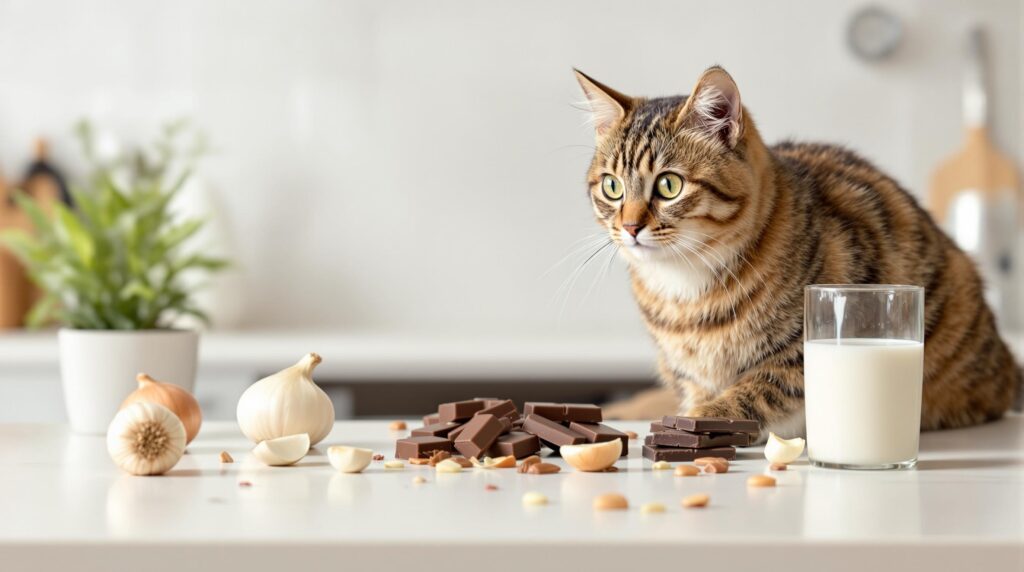
Some of our everyday foods can be dangerous for cats because their bodies process substances differently from ours. In fact, foods like onions, garlic, chocolate, and alcohol can have toxic effects, even in small amounts.
Cats have a specialized digestive system built for a meat-based diet. This makes them especially sensitive to foods outside of that natural menu. Ingredients that seem harmless to us can lead to serious complications in cats. Knowing which foods to avoid is important for keeping your cat healthy. PetHealthMD helps you understand these risks, so you can confidently support your cat’s diet and overall well-being with your veterinarian.
Common Foods That Are Toxic to Cats
While cats can eat some human food, many everyday foods that are safe for humans can be toxic to cats because their bodies process ingredients differently. Here’s a guide to toxic foods for cats, grouped by type.
Plant-Based Toxins
- Onions, garlic, chives, leeks (allium family): Damage red blood cells and can cause life-threatening anemia.
- Grapes and raisins: May cause sudden kidney failure. No amount is safe.
- Raw bread dough: Expands in the stomach and produces alcohol, both of which are toxic.
- Avocado: Contains persin, which can cause gastrointestinal upset.
- Macadamia nuts: May cause vomiting, tremors, and weakness.
- Green tomatoes and raw potatoes: Contain solanine, a toxin harmful to cats.
- Rhubarb leaves: Can cause severe kidney issues and other toxic effects.
Animal-Based Toxins
- Raw meat, fish, and eggs: May harbor harmful bacteria; raw fish depletes thiamine, essential for nerve health.
- Bones (cooked or raw): Can splinter and cause choking or internal injuries.
- Fat trimmings: Can lead to pancreatitis, a painful inflammation of the pancreas.
Common Household Toxins
- Chocolate: Contains theobromine and caffeine, both extremely harmful.
- Coffee and tea: Caffeine is toxic even in small amounts.
- Sugar-free products with xylitol: Can cause dangerous drops in blood sugar and liver failure.
- Alcohol: Even a tiny amount can be life-threatening.
- Salt (in large amounts): Causes vomiting, tremors, or seizures.
Dairy Products
- Milk, cream, cheese: Many adult cats are lactose intolerant. While not strictly toxic, these can cause digestive upset like diarrhea or vomiting.
For more on feline nutrition, explore our Cat Food and Nutrition category for trusted options.
Symptoms of Food Poisoning in Cats
When cats ingest something toxic, symptoms can appear quickly. Call your veterinarian immediately if your cat shows any sudden changes in behavior or health. Common signs include:
- Unusual body language: Lying flat or hiding.
- Digestive upset: Vomiting, diarrhea, or drooling.
- Loss of appetite or thirst: Refusing food or water.
- Lethargy: Sleeping more than usual or low energy.
- Changes in breathing or gums: Pale or bluish gums, shallow breathing.
- Coordination issues: Wobbling, tremors, or confusion.
Food-related toxins can spread quickly in a cat’s system. When in doubt, don’t wait—call your veterinarian.
What to Do If Your Cat Eats Something Toxic
Being prepared can save valuable time. Keep a pet first-aid kit ready and follow these steps.
- Stay calm: Cats sense stress, so remain composed.
- Secure the substance: Collect the food or packaging to show your vet.
- Call your veterinarian immediately: Have these contacts saved.
- Your vet’s emergency line
- ASPCA Animal Poison Control Center: 888-426-4435
- Your vet’s emergency line
- Keep your cat calm and contained: Move them to a quiet area.
- Prepare for transport: Use a secure carrier if your vet advises a visit.
- Document details: Note the time and substance consumed and any symptoms.
For added peace of mind, consider products from the Cat Health and Wellness collection to support your cat’s recovery and overall safety.
How to Create a Safe Home Environment for Your Cat
Cats are naturally curious, so small changes in how you store and prepare food can make a big difference. Try these strategies:
- Keep food out of reach: Store toxic foods in sealed containers or high cabinets.
- Establish a separate feeding space: Keep your cat’s food area away from human meal prep zones.
- Involve the family: Teach everyone how to store snacks and leftovers safely.
- Use sealed storage: Store onions, garlic, and baked goods in airtight containers.
- Secure the trash: Choose a sturdy bin with a tight lid and clean spills right away.
For additional pet safety items, explore Cat Supplies to keep your home feline-friendly.
Frequently Asked Questions About Toxic Foods for Cats
Can cats develop food sensitivities or allergies to non-toxic foods?
Yes. Cats can develop sensitivities to ingredients like beef, dairy, or fish. Symptoms include itching, vomiting, or diarrhea. Ask your vet about an elimination diet.
Are there safe human foods for cats?
Plain cooked chicken or turkey, a little pumpkin, or some blueberries may be safe treats in moderation. Always confirm with your veterinarian first.
Can houseplants poison cats?
Yes. Common plants like lilies, poinsettias, philodendrons, and aloe vera are toxic to cats. Keep them out of reach.
What should I do if I’m unsure whether a food is safe?
If uncertain, avoid offering it. Check trusted resources or ask your vet before feeding anything new.
Are kittens more vulnerable to toxins than adult cats?
Yes. Kittens are smaller and still developing, so even tiny amounts of toxins can be dangerous.
Keep Your Cat Safe and Healthy
Keeping your cat safe from toxic foods starts with awareness and simple precautions. Secure storage, dedicated feeding spaces, and regular vet guidance can make all the difference.
For trusted nutrition, wellness products, and safety solutions, visit the Cat Supplies category at 1800PetMeds.com to help your cat live a long, healthy, and happy life.