Your horse’s vision is the primary way they take in their surroundings and navigate their environment. Loss of eyesight is one of the most common reasons for the premature end of a horse’s riding, working, or competitive career.
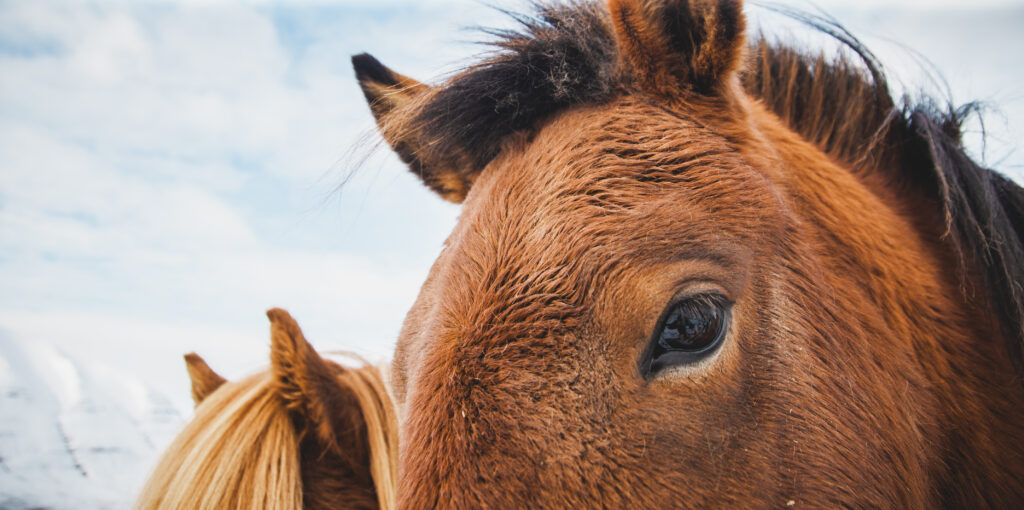
Squinting, watery eyes, swelling, redness, discoloration to any part of the eye, and sensitivity to sunlight are all signs that your horse needs to be seen by your equine veterinarian. Eye issues should always be taken seriously, as even a seemingly simple infection or superficial injury can lead to complications and loss of vision. Watch out for symptoms of these five common eye problems in horses.
1. Eyelid Laceration
The placement of your horse’s eyes on each side of their head makes them particularly vulnerable to eyelid lacerations. As they scratch an itch or brush up against rough or sharp surfaces, they can tear their eyelid, leaving their eye vulnerable to infection. What’s more, what may look like a small, superficial eyelid injury may also affect the cornea. Eyelid tears should be considered an emergency and may require stitches. With treatment, they typically heal without further complication.
2. Corneal Ulcer
The cornea is the transparent outer layer of your horse’s eye that allows them to see clearly. A corneal ulcer is a painful scratch or abrasion on the cornea. A superficial scratch may clear up on its own in a week or two. However, in some cases the scratch can develop a bacterial or fungal infection, or it may worsen if your horse rubs their eye.
Symptoms of Corneal Ulcers in Horses
If your horse has a corneal ulcer, they may experience:
- Increased sensitivity to light
- Squinting, with the pupil of the affected eye appearing small
- Watery discharge from the eye
- Signs of pain, including attempts to rub at the eye
Call your veterinarian immediately upon noticing any eye-related symptoms. Do not use any over-the-counter treatments or drops unless under the guidance of your vet. Your veterinarian can dye the cornea to determine the severity of the ulcer and prescribe a treatment to prevent infection and speed up healing.
3. Moon Blindness (Equine Recurrent Uveitis)
Equine recurrent uveitis, or moon blindness, is the most common cause of vision loss in horses. During an episode, the middle layer of the eye becomes inflamed, causing tearing, pain, redness, and swelling. An episode may last a few days, but in some horses, recurring episodes lead to glaucoma or cataracts, and eventually blindness.
The initial onset is often mistaken for irritation or mild injury to the cornea. Your veterinarian can confirm the diagnosis and may prescribe steroids or other treatments to help reduce inflammation and vision loss.
4. Cataracts
Cataracts are cloudy or hazy areas in the eye caused by the breakdown of proteins in the lens. Though not painful, cataracts impair your horse’s vision and may eventually cause blindness. Cataracts in foals are typically caused by a congenital defect. In older horses, they are typically caused by equine recurrent uveitis.
5. Glaucoma
Glaucoma describes damage to the optic nerve associated with abnormally high pressure in the eye. The initial symptoms are usually subtle and tend to go unnoticed.
Symptoms of Glaucoma in Horses
- Slight redness and enlargement of the eyeball in early stages
- Dilated pupils
- More pronounced swelling and redness as the disease progresses
- Discoloration of the cornea
Caught early, optic pressure can be managed to slow the progression and prevent vision loss.
When to See Your Veterinarian
As eye problems in horses can have very similar symptoms, it is important to see your veterinarian for a diagnosis before attempting treatment. Shop horse eye care medications and treatments at 1800PetMeds to be prepared for your veterinarian’s recommendations.