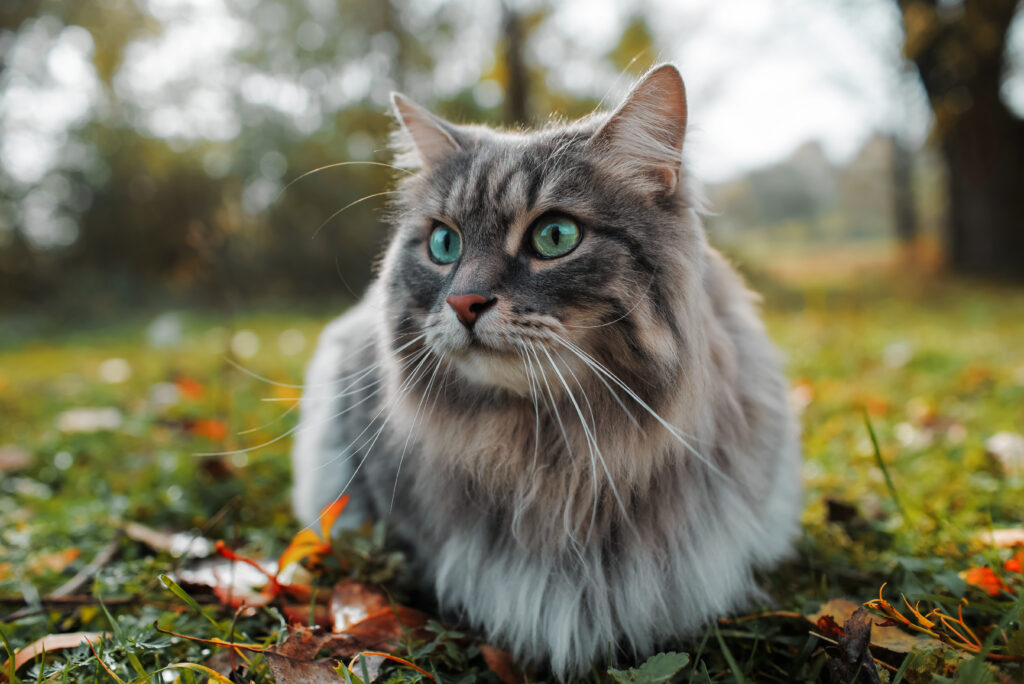
Is your cat a purring bundle of sunshine? Or are their feelings more mysterious? Cats bring boundless joy into our lives, but those that are less vocal can leave us wondering if they feel the same.
As it turns out, many cats purr very quietly — or not at all — but may express their happiness through subtle behavioral cues. In honor of Happy Cat Month, here are ten signs to look for to tell if your cat is happy.
10 Signs That Your Cat Is Happy
1. Your Cat Is Easy to Find
When your cat is happy and secure in their home environment, they won’t often feel the need to hide. They may playfully hide in boxes and bags, but most of the time, they’ll sprawl out in the open, confident, happy, and unafraid. If looking for your cat is a daily game of “Where’s Waldo?”, it could be a sign that they’re shy or anxious and need help coming out of their shell. Cats that are usually confident but have suddenly become uncharacteristically elusive may be feeling sick or in pain, and should be seen by your vet as soon as possible.
2. Your Cat Loves to Knead or “Make Biscuits”
Does your cat rhythmically knead at blankets, pillows, or even you? This is a comforting behavior that some cats carry over from their early kittenhood, when they would knead at their mother’s teat to stimulate milk production. Some cats still suckle while they happily knead at an imaginary mammary. This is a sure sign that your presence has put your cat in a nostalgically blissful state of mind, like a tiny kitten with a tummy full of milk.
3. Your Cat Has a Healthy Sleep-Wake Cycle
Cats can sleep anywhere from 12 to 20 hours per 24-hour day, but not all at once. Our feline family members are not nocturnal nor diurnal, but crepuscular, meaning they’re most active at dawn and dusk. Throughout the day, cats have cyclical waking periods. The four-phase cycle is as follows: hunt, eat, groom, sleep, repeat. While your cat’s sleep needs will change throughout their lifetime, a happy cat will nap between plenty of active periods throughout the day.
4. They Have Good Litter Box Manners
Normal litter box use is a good sign that your cat is thriving. A happy, healthy cat uses their litter box and covers up their waste to avoid attracting unnecessary attention from predators — and, conveniently, to keep excessive odor at bay. When cats feel insecure, especially when they’re not getting along with other members of their household, they may leave their waste uncovered. This can be a way of marking their territory. Poor litter box hygiene and urinating or defecating outside the litter box can also indicate a painful health issue like a urinary tract infection, which should be checked out by your vet as soon as possible.
5. Your Cat Slow-Blinks at You
Cats communicate to other cats — as well as their humans — that they’re content and relaxed by narrowing their eyes and slowly blinking. In the wild, cats have to be on high alert at all times, and will only snooze around those they trust. Research even shows that cats respond when we slow-blink back, as though to say, “It feels safe to relax with you.”
6. Your Cat Is All About Self-Care
Cats are meticulous self-groomers, but their self-care can take a hit when they’re preoccupied with stress, anxiety, pain, or illness. A happy cat will keep their coat shiny and well-groomed. Cats that are not thriving tend to look greasy, crusty, or unkempt. Excessive grooming can also be a sign of stress or a health issue, especially if it leads to hair loss and skin irritation.
7. Their Tail Holds a Happy Curve
A happy cat will have their tail relaxed most of the time, but when they’re feeling especially cheery, they’ll bring it up high, with a slight curve at the end. You’ll often see this happy, question-mark-shaped tail when your cat greets you, as though to say, “Hi, human! Where have you been?”
8. Your Cat Rubs Their Face on Everything
Your cat has scent glands on their face that go into action when they rub against vertical surfaces, other cats, and even you — giving you happy headbutts or weaving through your legs. “Bunting” is a happy greeting between cats as well as their favorite humans, and it’s also a way to mark their territory. When your cat rubs their face against surfaces in your home, it’s as though they’re putting up a sign that says, “home sweet home!”
9. Your Cat Is Curious, but Not Destructive
Cats are naturally curious about their surroundings and may scratch, chew, and bat at just about anything. It’s healthy and natural for cats to scratch surfaces to stretch, sharpen their claws, and mark their territory, and it’s normal for them to play with and chew on objects. Overly destructive habits can be a sign that your cat is bored and may need more appropriate toys, scratching surfaces, and most importantly, one-on-one playtime with you.
10. Your Cat Shows Off Their Belly
Does your cat flop over on their back, showing you their fluffy belly? Cats may roll over to scratch an itch on their back, sprawl out, and relax. They’ll only expose their soft, vulnerable belly around those they trust. But while a select few cats love belly rubs, most aren’t fans. Touching your cat’s sensitive belly can be overstimulating — a sure way to flip their switch from relaxed to ready to pounce. If you can’t resist rubbing that fluffy belly, be warned: that belly-up position is perfect for striking with all four sets of claws.
What If My Cat Isn’t Happy?
Is your cat showing very few of the above signs, or has there been a sudden, unexplained change in their behavior? Once an underlying health issue has been ruled out with your veterinarian, you can assess whether your cat may be feeling stressed.
Changes in your household, difficulties getting along with other pets or human family members, separation anxiety, excessive noise, boredom, and lack of mental stimulation are some of the reasons a cat may be unhappy. Keep in mind that life changes — especially if your cat has been newly adopted — can take weeks or even months for your cat to adapt to.
How to Improve Your Cat’s Mental Health
You can work toward better mental health for your cat by:
- Providing at least an hour of play each day, split into short sessions
- Making sure they have plenty of toys and scratching surfaces
- Setting up vertical spaces such as shelves, window perches, and cat supplies like cat trees
Calming aids for cats — such as Feliway calming sprays and diffusers, calming treats, and prescription anxiety medication — are all powerful options that can improve your cat’s mental health and quality of life. If you need help determining whether your cat is happy or struggling with stress or anxiety, talk to a vet today.
Every pet deserves to live a long, happy, healthy life.