
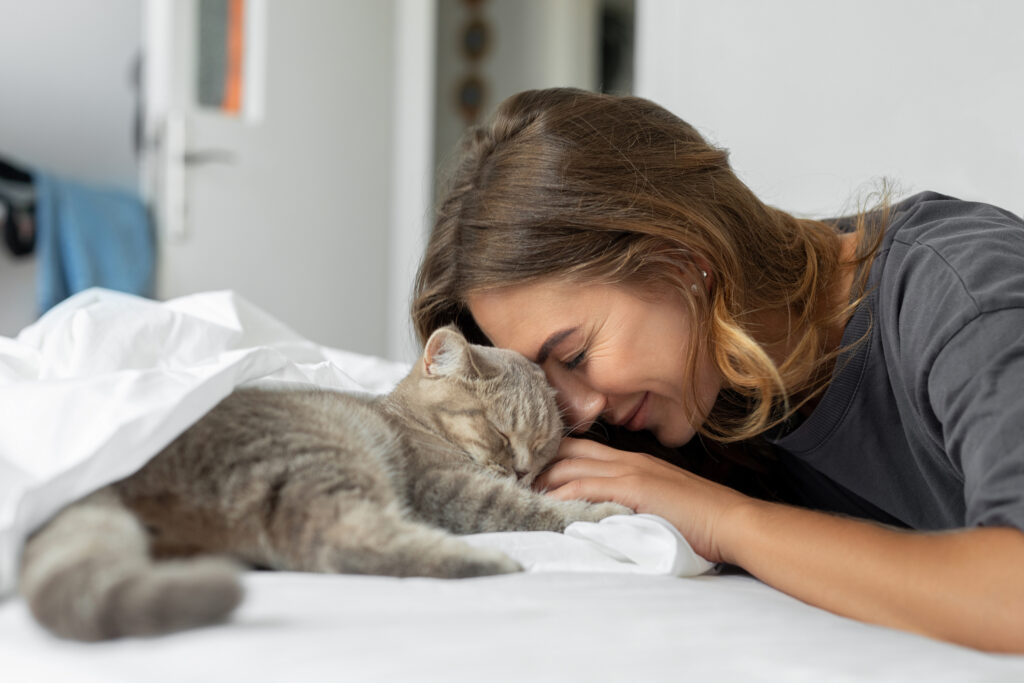
Understanding a Cat’s Sleep Cycle
Does your cat nap throughout the day, only to lose their marbles at the crack of dawn? While a cat’s sleep cycle may seem sporadic, there’s a simple trick to understanding—and even changing—their sleep schedule.
Why Are Cats Crepuscular?
Cats are neither diurnal nor nocturnal. Instead, they are crepuscular, meaning they are most active at dawn and dusk.
These low-light hours are perfect for hunting. Wild cats take advantage of this time to stalk prey while avoiding competition from nocturnal predators. Cats have around six to eight times more rods (light receptors) in their eyes compared to humans. They also have tapetums, reflective layers at the back of each eye that amplify low light and help them see well in the dark. This reflective layer is what makes your cat’s eyes appear to glow in flash photos.
Your cat’s natural crepuscular rhythm explains why they might get the zoomies before bedtime or start meowing for breakfast long before your alarm goes off.
How Much Do Cats Sleep in a Day?
Cats sleep anywhere from 16 to 20 hours per day. Kittens and senior cats tend to sleep more, while young adults rest a bit less.
Cats are polyphasic sleepers, meaning they nap in short bursts instead of long stretches like humans. Each nap lasts about 60 to 80 minutes, followed by a period of activity. On average, your cat may take 12 to 20 naps every day.
If you’re shopping for ways to support healthy cat rest and comfort, explore our Cat Beds & Furniture category on 1800PetMeds.
Understanding Your Cat’s Daily Routine
How does your cat decide when it’s time for a nap? They often follow a natural cycle: sleep, play, eat, groom, repeat.
When cats wake up, they experience bursts of energy—a remnant of their wild ancestors’ hunting instincts. After expending energy through play or feeding, most cats groom themselves. Grooming helps remove food particles, keeps their fur clean, and also acts as a soothing activity that helps them drift off to sleep again.
How to Help Your Cat Sleep Through the Night
If your cat keeps you up at night, you can adjust their activity and sleep cycle to align more closely with your own.
For cats that become active at dawn, blackout curtains can help prevent early morning light from waking them. You can also simulate the “hunt” portion of their natural cycle before bedtime. Play with your cat for about fifteen minutes, then serve a small meal right before you want them to settle for the night.
Your cat may still wake during the night, but providing quiet, soft toys for nocturnal play can help them stay occupied without disturbing you. If they persist in waking you for food, consider using an automatic cat feeder or puzzle feeder to satisfy their grazing instincts.
Why Is My Cat Sleeping More Than Usual?
It’s normal for your cat’s sleep schedule to shift over time. Kittens may sleep extra during growth spurts, while adult cats sleep less as they become more active. Factors like feeding schedules, daylight savings, and seasonal changes can also affect their sleep habits.
Senior cats tend to sleep more as they age, but excessive sleep shouldn’t be dismissed as normal aging. Nighttime wakefulness and vocalization can be signs of feline cognitive dysfunction. If your cat suddenly sleeps much more than usual, it may signal illness or pain. Because cats hide symptoms well, consult your veterinarian to rule out underlying health issues.
For additional wellness support, browse Cat Health & Wellness products to help your feline friend feel their best.