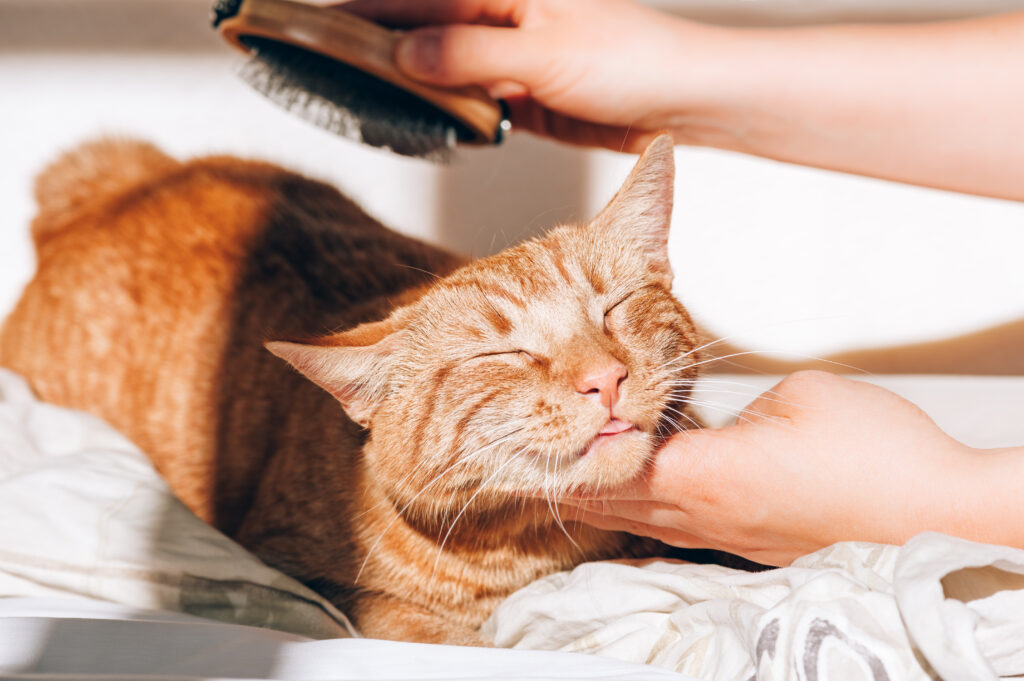
Has your cat been licking their days away? While the average cat spends about two hours of their waking day grooming themselves, excessive grooming can quickly become an issue. A cat’s rough, barbed tongue can cause hair loss, skin irritation, and even wounds in areas they have overgroomed.
Learn about the five most common causes of overgrooming in cats and what you can do to limit destructive overgrooming.
1. Anxiety
Grooming isn’t just a way for your cat to keep their coat clean and shiny — it’s also a relaxing act of self-care. Many cats overgroom as a way to self-soothe in stressful situations or environments. If your cat is coping with a change in routine, a new family member, the loss of a family member, or other potentially stressful events, it could lead to overgrooming.
To help treat stress-related overgrooming, try cat anxiety aids like anxiety relief chews or Feliway. If symptoms persist, your veterinarian may recommend medication.
2. Itchy Skin
Your cat’s rough tongue is likely perfect for scratching an itch. But when your cat is suffering from pruritus, or itchy skin, constant itching can lead to overgrooming. In turn, overgrooming can leave the skin raw, moist, and prone to infection, which can lead to even more itching.
To stop the itch-groom-scratch cycle, you’ll need to treat whatever’s causing the itch. Possible causes include:
- A sensitivity to an ingredient in your cat’s food
- An environmental allergy, such as dust or pollen
- Fleas or mites
- An autoimmune disorder
It may help to change your cat’s food and start using itch relief products for cats. For itch that persists, see your veterinarian for diagnosis and treatment.
3. Pain
Cats are notorious for hiding signs of pain. Sometimes, overgrooming is one of the only signs that your cat is hurting. Grooming is often a cat’s way of massaging an achy or painful area on their body. Depending on the affected area, overgrooming can be attributed to a urinary tract infection, gastric upset, osteoarthritis, a muscle sprain, or another ache or pain.
4. Hypersensitivity
Cats can develop a condition called feline hyperesthesia, in which the skin becomes ultra-sensitive for unknown reasons. This condition is not yet well understood. It is sometimes referred to as “twitch cat syndrome” because of the way the skin along the spine can appear to ripple or twitch. The condition may be triggered by seizures, stress, nerve damage, or even obsessive-compulsive tendencies. As a result, the cat may groom excessively, especially at the base of the tail.
5. Boredom
Some cats overgroom because they’re bored and understimulated. If your veterinarian has ruled out an underlying medical issue, your cat may need more attention, exercise, and entertainment. You can help reduce boredom grooming by making sure your cat gets at least 30 minutes of playtime each day.
The following enrichment options can help your cat stay entertained when you’re not around:
- Interactive toys and puzzle feeders
- Vertical space, such as shelves and cat trees and furniture
- Hiding nooks, like boxes, cat houses, and tunnels