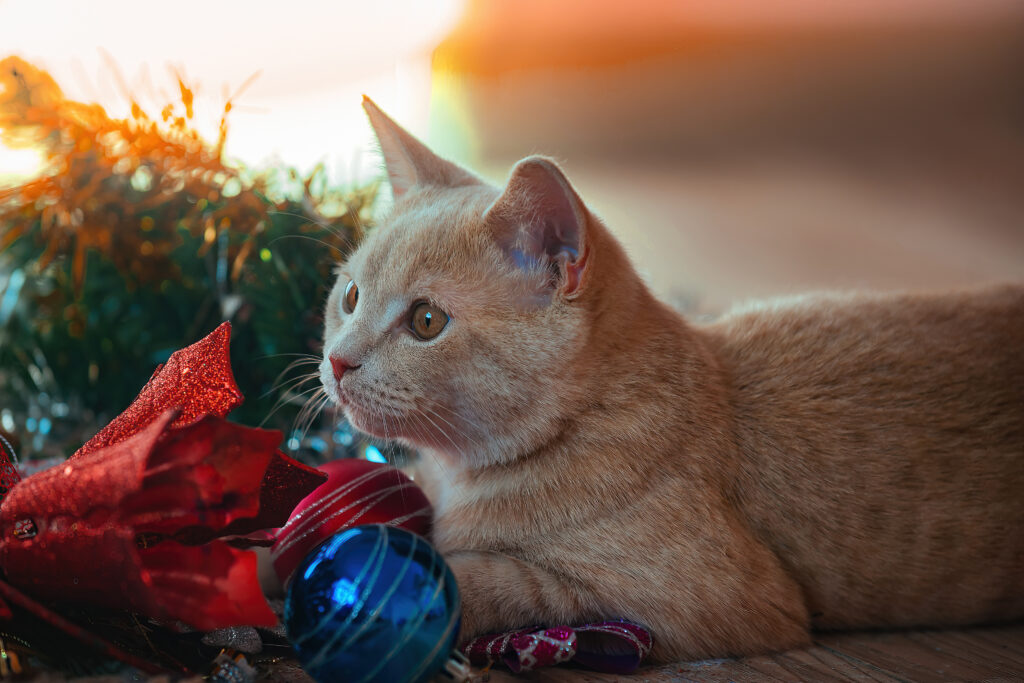
Around Christmastime, you may buy poinsettias for yourself or receive them as holiday gifts. Many pet parents have heard that the red and green plants are highly toxic to animals and may have banned them from their households entirely. Good news! Poinsettia plants do not pose a serious danger to cats, dogs, or horses. It’s relatively safe to keep poinsettias in your home even if you have pets, but there are a few things you should know about these festive plants.
What Makes Poinsettias Mildly Toxic?
The poinsettia plant is a member of the Euphorbiaceae, or “spurge,” family. Spurges also include the cassava, with its edible roots, and the castor oil plant, which is used to make laxatives and topical ointments for dry skin.
Like most plants in the spurge family, poinsettia plants ooze a milky sap when the leaves or stem are cut or bitten. The bitter-tasting sap helps defend the plant against herbivores. Though it does not taste good, it is fortunately not fatally toxic to dogs, horses, or cats.
What Happens When Cats or Dogs Eat Poinsettia Leaves?
It’s important to note that the red, white, or pink “petals” on the poinsettia are not actually flower petals. They are petal-like leaves, or bracts, that change color in response to limited light conditions in winter. The bright colors help attract pollinators to the tiny yellow flower buds in the center of the bracts.
When your pet nibbles on the red or white bracts that surround the flower buds, or the green lower leaves, they will get a taste of bitter, milky sap. The sap contains mild toxins that can irritate your pet’s mouth and gastric system if chewed or ingested. It also contains rubber particles, which can affect pets with a latex allergy, though this is uncommon.
What to Do If Your Pet Eats Poinsettia Leaves
If your dog, cat, or horse eats poinsettia leaves, they may experience symptoms of mild toxicity and irritation. You may notice:
- Drooling and vomiting that passes within a few minutes to a few hours
- Redness, itching, or swelling on the skin if your pet brushes up against a torn or bitten plant
Symptoms are normally self-limiting, so your pet is unlikely to need medical care. You can give your pet water or treats to help wash down the bitter taste of the sap. If your pet gets sap on their fur, wipe it away with a damp cloth so they do not ingest it while grooming themselves. Skin irritation from contact with the sap should also resolve on its own without much intervention.
How to Keep Pets Away From Poinsettias
Though poinsettias are bitter-tasting and normally do not cause any serious harm to your pets, you may still want to keep them out of reach. If your curious pet will not leave your plants alone, try one of these strategies:
- Apply double-sided tape around the planter. Pets dislike the sticky feeling on their paws.
- Keep the pot in a hanging planter so they cannot reach it.
- Give your pet their own houseplants to nibble on. Wheat grass, oat grass, and barley are easy to grow in small pots indoors. Cats and dogs love to nibble on these types of grass, and they are a healthy source of dietary fiber.