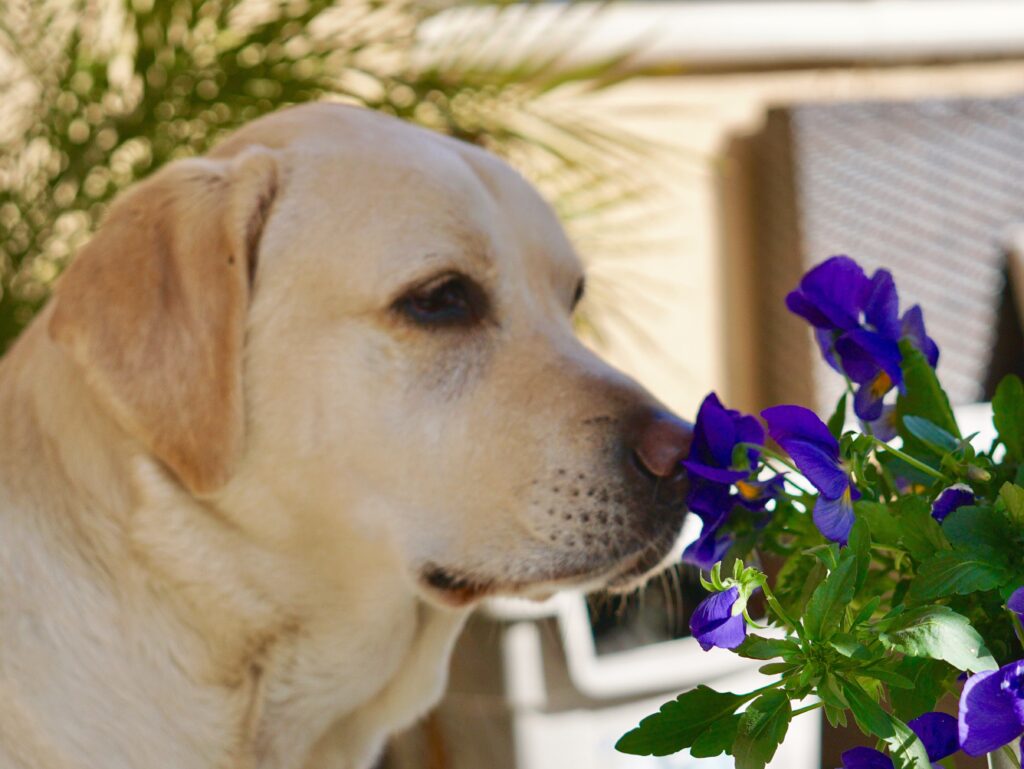
You may have noticed that certain scents can lift your mood, help you relax, and even trigger comforting childhood memories. Cats and dogs, whose sense of smell is many times more potent than ours, may be even more powerfully affected by soothing aromas. Holistic and integrative veterinarians have been exploring the use of aromatherapy to aid pets that suffer from anxiety, pain, respiratory issues, and other conditions.
How to Use Essential Oils for Aromatherapy in Pets
Take great care when choosing essential oils to use on and around your pets. Blends designated for humans may contain ingredients that are toxic to animals, even if they are not identified on the packaging. Some products may contain harmful fillers and contaminants. Only use high-quality products that have been third-party tested for purity, and stick to blends that are designed for pets, like ThunderEssence calming spray or a lavender-scented pet shampoo. Keep in mind that not all products designed for dogs are safe for cats, and vice versa.
Lavender and chamomile oils are among the most popular in both human and animal use. They are safe for both cats and dogs. However, they can cause skin irritation in sensitive individuals, especially if applied to damaged or irritated skin, or when diffused around pets with respiratory issues.
You can use pet-friendly essential oils in a diffuser while your pets are under supervision. Follow these guidelines for safe diffusion:
- Only diffuse oils in intervals of 30–60 minutes, with 30–60 minutes of break time between intervals.
- Diffuse in a well-ventilated space.
- Make sure your pets have the option to leave the room if they find the scents irritating.
If you don’t have a diffuser, or you would like to use aromatherapy on the go — for example, in the waiting room at your next vet appointment — you can apply oils to fabrics. Just a drop on your pet’s bandana, a blanket in their carrier, or on their bed is enough to help them relax. Keep in mind that the scent seems much more potent to your pet. Less is more!
Using Aromatherapy for Pet Pain Relief
When it comes to pain, essential oils typically come into play when mixed with a carrier oil and massaged into the affected area. Research studies are inconclusive as to whether the relaxing scents of essential oils have a measurable effect on pain, or whether the massage itself deserves credit for the relief. Some studies have had promising results.
Since essential oils have the potential for pain relief and are low in both risk and cost, it may be worthwhile to add aromatherapy massages to your pet’s pain management program. For an aromatherapy massage:
- Mix a pet-friendly essential oil with a pet-safe carrier oil such as coconut, vegetable, or olive oil.
- Use about 1 drop of essential oil for every 50 drops of carrier oil.
- For best results, look into animal acupressure points and TTouch therapy techniques.
Essential Oils That Are Harmful to Pets
Only a few essential oils are known to be safe for pets:
- Safe for both cats and dogs: Lavender, chamomile, and frankincense.
- Safe for dogs only (toxic to cats): Citrus oils such as lemon and orange, as well as peppermint — whether applied topically or diffused.
- Toxic to both cats and dogs: Tea tree oil, one of the most popular oils in human products, is toxic to cats and dogs, especially if applied at full strength. However, it is safely used in concentrations below 2% in therapeutic pet shampoo, where it has powerful antiseptic properties that help treat skin conditions and infections.
When in doubt, ask your holistic or integrative veterinarian for guidance. If your pet ingests a product that may be toxic to them, seek veterinary care or contact ASPCA Animal Poison Control at (888) 426-4435.