Does your cat nap throughout the day, only to lose their marbles at the crack of dawn? While a cat’s sleep cycle may seem sporadic, there’s a simple trick to understanding — and even changing — their sleep schedule.
Cats Are Crepuscular, Not Nocturnal
Cats are neither diurnal nor nocturnal. Instead, they are crepuscular. Crepuscular creatures are most active at dawn and dusk.
Dawn and dusk, when the sun is just below the horizon, create low-lighting conditions that are perfect for hunting. Wild cats can be inconspicuous to prey and avoid competing with nocturnal predators. Cats have around six to eight times more rods, or light receptors, in their eyes compared to humans.
Cats also have tapetums — reflective layers at the back of each eye — that amplify low light, helping them see well in the dark. Your cat’s tapetums are what can make their eyes appear to glow in the dark, especially in flash photos.
Your cat’s innate crepuscular tendencies are likely why your cat may get the zoomies a few hours before bedtime. This is also why your cat may start meowing for breakfast long before your alarm goes off.
How Many Hours Do Cats Sleep Per Day?
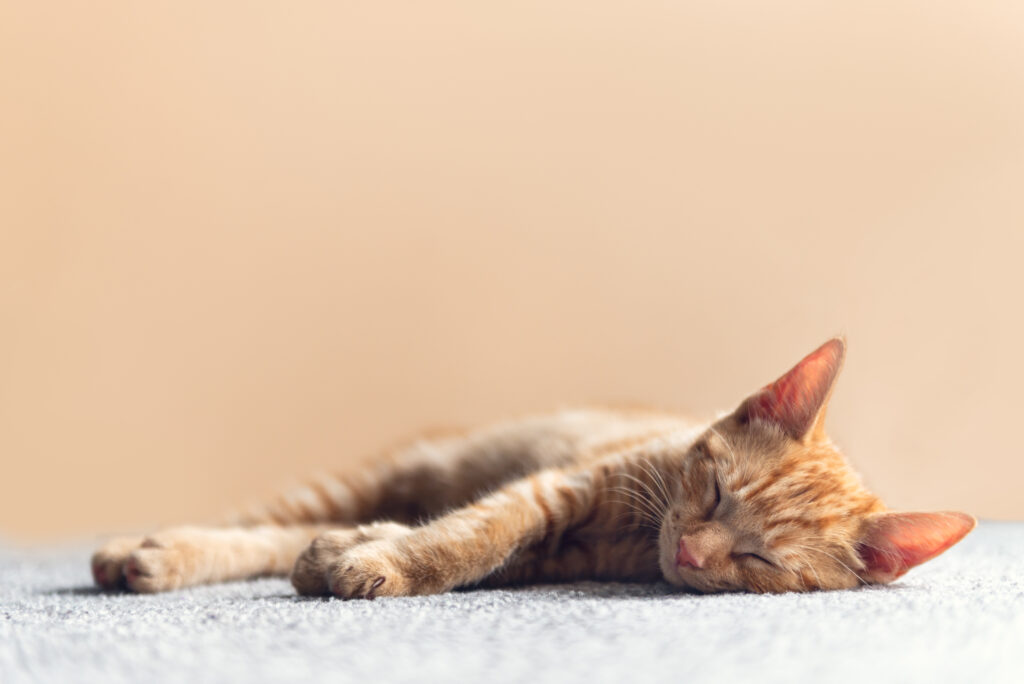
Cats sleep anywhere from 16 to 20 hours per day. Kittens and senior cats tend to sleep more, while young adult cats sleep a little less.
Your cat is a polyphasic sleeper, meaning they don’t sleep for long stretches of time like humans do. Instead, they sleep for around 60 to 80 minutes at a time between active periods. That means your cat takes at least 12 and as many as 20 naps throughout the day.
Understanding Your Cat’s Sleep and Activity Cycle
How does your cat decide when it’s time for a nap? They simply follow their internal to-do list, which goes something like this: sleep, play, eat, groom, repeat.
Upon waking, you might notice that your cat goes from zero to full speed, ready to get into mischief. A wild cat would use this burst of energy to hunt their next meal. Wild cats typically hunt small prey and eat several times throughout the day, and domestic cats are the same — preferring to graze on their cat food rather than eat large meals.
After eating, most cats groom themselves. Grooming serves the purpose of removing food particles and keeping the fur clean, but it is also a soothing activity that helps your cat doze off again.
How to Get Your Cat to Sleep Through the Night
If your cat keeps you up at night, you can modify their activity and sleep cycle to better align with yours.
- Block early light. For cats that become active at dawn, blackout curtains can help prevent early morning light from triggering their wake cycle.
- Simulate the hunt before bed. Play with your cat for about 15 minutes before bedtime, then serve a small meal just before you’d like your cat to settle down for the night.
- Provide quiet nighttime enrichment. Your cat will likely still wake up a few times during the night, but scattering soft, quiet toys can keep them occupied without disturbing you.
- Try a puzzle feeder or automatic feeder. If your cat is insistent on completing the “eat” part of their cycle throughout the night, an automatic cat feeder can dispense small meals on a schedule without waking you.
One common myth about cats is that they find it unusual when humans sleep for eight hours at a stretch — and that they wake us up throughout the night to make sure we’re still alive. Thankfully, there is no solid evidence this is true. It is much more likely that your cat simply wants you to wake up to play and eat.
When Your Cat Sleeps More Than Usual
It is normal to notice changes in your cat’s activity level and sleep schedule throughout their lifetime.
- Kittens may seem especially sleepy during growth spurts, though they will likely sleep less as they grow into young adult cats.
- Adult cats can be affected by changes in feeding schedule, daylight saving time, and seasonal shifts.
- Senior cats tend to sleep more as they age, but excessive sleeping should not be dismissed as a normal sign of slowing down. Nighttime wakefulness and vocalization are also common symptoms of feline cognitive dysfunction in senior cats.
If your cat of any age is suddenly sleeping more than usual, it could be a sign that they are feeling unwell. Cats often do not show obvious signs of being sick or in pain, so unexplained changes should be evaluated by your veterinarian as soon as possible. Supporting your cat’s overall wellbeing with cat health and wellness products — including vitamins and supplements — can also play a role in keeping them healthy and active throughout every stage of life.