Cats are creatures of habit, and they love sticking to their daily routines, especially when it comes to meal times and cuddles. But when it’s time for a routine checkup at the vet, most cats wish the reminder postcard would get lost in the mail.
From convincing your cat to get into the carrier to hoping they’ll behave for the vet, wellness appointments can be stressful for both you and your feline family member. That might be why, according to the AVMA, fewer than 50% of cat parents see their vet annually, compared to over 90% of dog parents.
Even though it’s tempting to skip your cat’s annual wellness visit, it’s well worth the drama. In honor of Take Your Cat To The Vet Day on August 22, learn how often your cat should go to the vet and why regular wellness visits are crucial to your cat’s health and longevity.
Why Cats Need Annual Vet Visits
The typical healthy adult cat should go to the vet at least once a year for a wellness checkup.
Even if your cat seems perfectly healthy, a wellness checkup is essential. Cats are notorious for hiding signs of pain or illness. Early diagnosis is key to successfully treating many diseases and helping your cat live a long, healthy life.
Vet visit tip: Leave your cat’s carrier on the floor for at least a week leading up to their appointment. Place a blanket inside and leave the door open so they can explore it as they please.
What Happens at an Annual Wellness Exam?
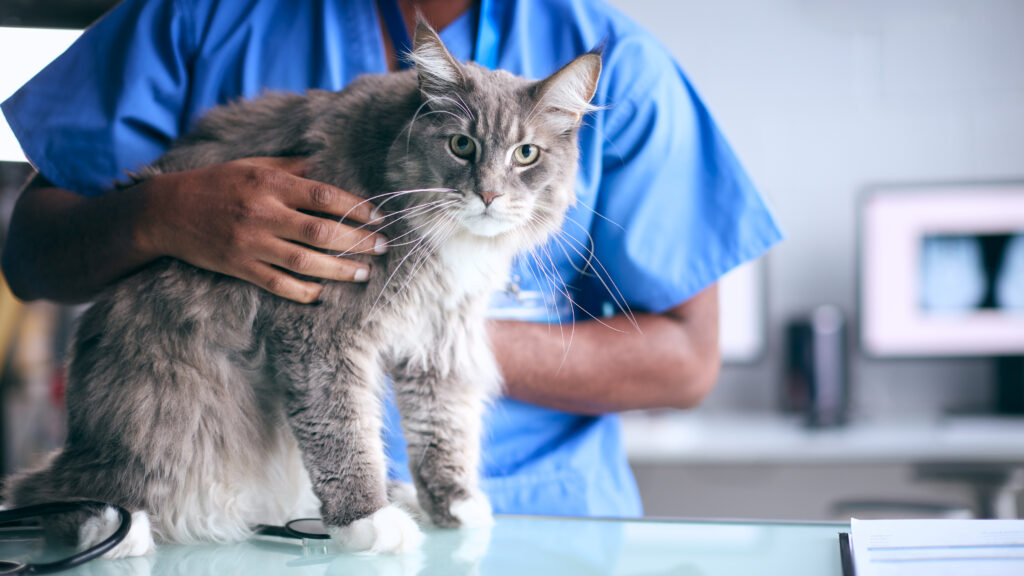
At your cat’s annual wellness exam, your veterinarian will ask you questions about their diet, appetite, litterbox habits, and behavior. This is a great time to bring up any concerns you might have about your cat’s health.
During the exam, your veterinarian will:
- Check your cat’s heart and respiratory rate
- Look into your cat’s eyes and ears
- Check their teeth and mouth
- Take their temperature
- Feel for swollen lymph nodes, lumps, bumps, discharge, swelling, and other abnormalities
Blood Work
Your cat may also have their blood drawn for blood work.
- Complete blood count (CBC): Assesses your cat’s red and white blood cells. Abnormalities can indicate infection, illness, or anemia.
- Blood chemistry profile: Assesses chemicals in your cat’s blood that can indicate changes in kidney or liver function, dehydration, or diabetes.
If needed, your veterinarian may also order specific diagnostic tests for feline leukemia, feline AIDS, diabetes, heartworm, or thyroid issues.
Fecal and Urine Tests
You’ll likely be asked to bring a stool sample for your cat’s annual fecal test, which checks for intestinal parasites and worms. You might also need to bring a urine sample to test for urinary tract infections, bladder stones, or diabetes. Browse cat health and wellness products at 1800PetMeds to support your cat’s overall health between vet visits.
When Do Kittens Need To Go To The Vet?
If you’ve recently adopted a new kitten, you’ll need to see your vet several times during their first year of life.
You should see your veterinarian within a few days of adopting your kitten, or when they’re about eight weeks old — whichever comes first. Your veterinarian will examine your kitten to ensure they are developing properly and meeting their growth milestones.
Kitten Vaccinations
Kittens need core vaccinations to protect them against serious, potentially fatal infections. Your veterinarian will administer a three-in-one combination vaccine that protects against feline rhinotracheitis, feline calicivirus, and feline panleukopenia (FVRCP).
- Your kitten should get their first FVRCP vaccine at about 6–8 weeks of age, then a booster every 3–4 weeks until they’re 16 weeks (four months) old.
- At around 16 weeks, your kitten will receive their first rabies vaccine.
- At about one year of age, your kitten will need FVRCP and rabies boosters, which will then be administered every three years.
Depending on your kitten’s risk of exposure, your veterinarian may recommend additional vaccinations such as feline leukemia virus (FeLV), Chlamydia felis, and Bordetella bronchiseptica (kennel cough).
Spaying and Neutering
Your kitten can be spayed or neutered as young as 6–8 weeks of age, or you and your veterinarian may decide to schedule the procedure when they’re around 4–6 months old.
Why Senior Cats Need Checkups Every Six Months
Senior cats should begin twice-annual wellness checkups by the time they’re seven years old. Seeing the vet every six months is essential to catching chronic illnesses early and slowing the progression of degenerative conditions.
Even if your senior cat has not shown any signs of slowing down, wellness checkups and routine blood work are essential. It’s common for cats to not show signs of illness until the late stages of disease.
For example, chronic kidney disease (CKD) affects up to 40% of cats over ten years old and more than 80% of cats after age 15. It does not cause any noticeable symptoms until the kidneys have sustained serious damage. With early diagnosis and treatment, however, chronic illnesses in senior cats can be very manageable. Supporting your aging cat with cat vitamins and supplements can also help maintain their quality of life between vet appointments.
Your Cat’s Wellness Visit Checklist
Ready to schedule your cat’s next wellness visit? Here’s a rundown of what you’ll need to do before and during the appointment:
- Collect a fecal sample. Your cat’s fecal sample should be no more than 24 hours old. Your vet’s office may provide a sample container, or you can place it in a plastic bag.
- Ask about your cat’s weight. Your cat will be weighed during their visit. If needed, ask whether your cat is at a healthy body condition score. Your veterinarian may recommend a weight control cat food if your cat needs to lose weight or gains excess weight easily.
- Obtain or renew a prescription for heartworm preventative. Heartworm is not treatable in cats, but can be prevented with a prescription heartworm medication.
- Get your cat microchipped, or make sure their existing microchip information is up to date, to increase their chances of returning home if they ever get lost.
- Bring up any questions or concerns, including changes in appetite, feeding or care advice, behavioral changes, or any new lumps or bumps.
Every pet deserves to live a long, happy, healthy life.