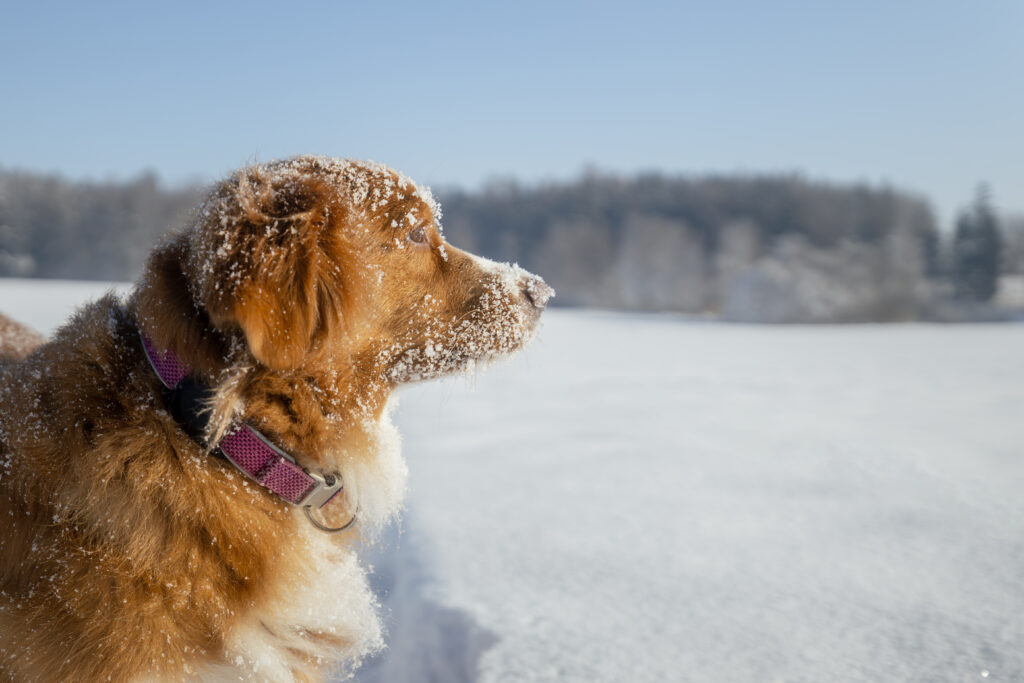
When your neighborhood is blanketed in snow, it’s the best time of the year to take your dog for a scenic walk. Though the sidewalks may be scattered with rock salt or bright blue deicing crystals, which can be harmful to pets, that doesn’t have to stop you and your dog from getting out this winter. Here’s what you should know to keep your dog safe around ice melt salt.
Why Is Ice Melt Salt Dangerous for Dogs?
Commercial deicing products are usually made up of a blend of different ingredients that vary between brands. The good news is that the most popular brands of ice melt salt commonly used by homeowners and landscapers tend to be free of toxic chemicals, so they’re generally safe for the environment as well as pets. The most common ingredients used in deicing salts are:
- Rock salt (sodium chloride)
- Calcium chloride
- Magnesium chloride
- Potassium chloride
These are all types of salts commonly used in food production and can be used to make supplements for people who have low levels of minerals in their blood. In short, they’re nontoxic when consumed in trace amounts. However, deicing salt can still be harmful to paws.
How Salt Damages Paw Pads
When your dog walks over deicing products, the salt can draw moisture from their paw pads, leaving their skin dry and cracked, which may even cause bleeding. Cracked paw pads become extremely painful when exposed to salt. Your dog’s natural response to the pain and irritation on their paw pads is to lick the affected skin. As they lick their paws, they can consume small amounts of deicing salts.
The Risk of Salt Poisoning
If your dog consumes enough excess minerals, they may be at risk for salt poisoning. Mild salt poisoning can cause dehydration, vomiting, and diarrhea. In large amounts, consuming too much salt can cause cell damage, seizures, kidney failure, and death. Fortunately, it’s unlikely for dogs to consume high amounts of deicing salts simply by licking their paws.
How to Protect Your Dog’s Paws Before Winter Walks
Dog Booties
You can purchase dog boots and supplies to protect all four of your dog’s paws. Dog booties come in many styles, with Velcro straps, elastic, and even suspenders to keep them from falling off. Most dogs get used to them quickly. Just make sure you put them on immediately before taking your dog outside. That way, your dog will be preoccupied by the scents and sights of the outdoors, which will help distract them from the strange feeling of wearing boots.
Paw Balm
Paw balm is a good alternative to dog booties. Paw Rescue contains a combination of organic oils and waxes that form a barrier between your dog’s paw pads and deicing salts. Simply apply it immediately before the walk and your pup’s paws are protected.
Choosing Your Route Wisely
It’s best to avoid walking over visible deicing salt whenever you can. Your dog’s paws have a high concentration of blood vessels to keep them from freezing, so it’s generally safe for them to walk on fresh, clean snow during short walks.
After-Walk Paw Care
When you come inside from a walk, clean your dog’s paws to remove any ice balls, moisture, and salt residue. You can use rags, warm water, and dog shampoo and grooming products to wash your dog’s paws. Pawz Daily Paw Wipes are a great option because they contain aloe vera to moisturize dry paws in the winter. Then, apply another layer of paw balm to help lock in moisture.
The dry winter air can also lead to painful, cracked paw pads. Supplementing your dog’s diet with an omega-3 fatty acid supplement can help keep their skin healthy throughout the winter months.