When it comes to keeping horses hydrated, most owners think of hot summer days and long rides under the sun. But winter dehydration in horses is actually rampant during the cold months, when troughs freeze over and lush pastures have gone dry. Maintaining your horse’s health and wellness through proper hydration is one of the most important things you can do during winter.
What Happens When Your Horse Gets Dehydrated?
Dehydration is the number one risk factor for colic during the winter. Dehydration combined with winter’s dry hay diet commonly leads to impaction colic, which can sometimes be life-threatening. Horses need to drink about 10 to 12 gallons of water per day, making consistent access to fresh water critical year-round.
How to Test for Dehydration in Horses
If you suspect your horse may be dehydrated, you can perform the “skin tent test,” similar to how you might test for dehydration in humans and other animals. Gently pull up a fold of skin just above your horse’s shoulder blades with your thumb and forefinger. A hydrated horse’s skin will be elastic, snapping back into place almost immediately. If the horse is dehydrated, the skin will wrinkle and may take up to five seconds to sink back down.
Signs Your Horse May Be Chronically Dehydrated
A dehydrated horse may display several warning signs, including:
- Stiffness or reduced performance
- Tiring out more quickly than usual
- Pale gums, rather than a healthy shade of pink
- Hard, dry manure
If you notice these symptoms, consult your veterinarian. In some cases, horse digestive care medications may be needed to address complications like impaction colic.
Can Horses Eat Snow to Stay Hydrated?
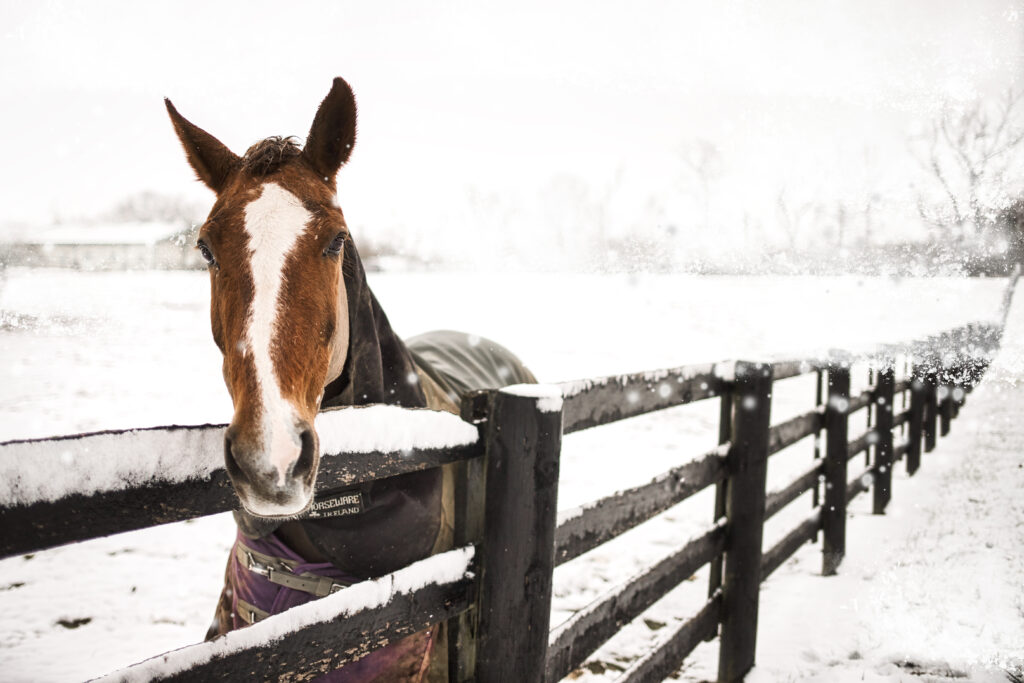
You may catch your horse eating snow from time to time, but snow will not provide adequate hydration. Even when the ground is covered in fresh snow, you will need to make sure your horse has access to fresh, unfrozen water.
Water expands when it freezes, so your horse would have to eat a large amount of snow to replenish moisture in their body. What’s more, your horse’s body will need to work harder to melt the snow and warm it to body temperature, using up energy your horse needs to stay warm.
How to Keep Horses Hydrated in the Winter
Use a Water Trough Heater
One of the biggest reasons horses do not drink enough water in the winter is because their trough may be very cold, if not frozen. Horses will drink more when their water is at a moderate temperature, and they may not drink at all if their water trough has frozen over. It is best to use a heating element in your horse’s water trough to keep it at a drinkable temperature. Studies suggest that horses drink more water when it is warm — around 90 degrees Fahrenheit — rather than when it is just above freezing.
Provide a Salt Lick and Electrolyte Supplements
Your horse should also have constant access to a natural salt lick. Salt licks help supplement electrolytes and trigger your horse’s thirst response. Flavorings in water, such as electrolyte additives or sweet feed, can sometimes encourage drinking, but fresh, clear water should also be available at all times. Browse horse supplies and supplements to find electrolyte products that may help support your horse’s hydration this winter.