The days are getting shorter, and riding season is coming to an end. Even though your horse has natural ways of coping with cold weather, they may still need some help staying warm and healthy. Preparing early can help prevent health problems and keep your horse comfortable throughout the colder months. Here is what you can do to get your horse ready for winter.
Feeding Your Horse In The Winter
Your horse’s digestive process helps them maintain body heat. Because of this, they will need more calories in the winter to stay warm. The average horse needs about 25 percent higher energy intake during the coldest months, though this can vary depending on age, activity level, time spent outside, and how well the horse tolerates the cold.
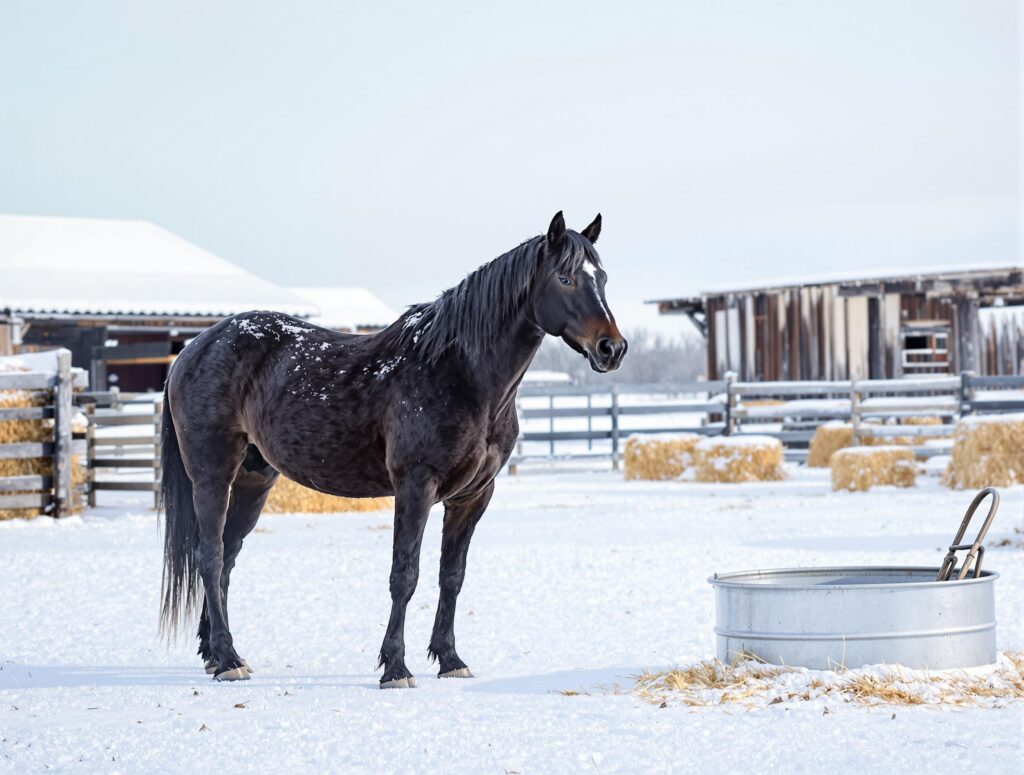
Your horse will need at least 1.5 to 3 percent of their body weight in forage each day. They should also have access to a salt block and fresh water at all times. If your horse’s trough tends to freeze over during the winter, consider using a trough heater so they always have access to water.
Providing proper nutrition and digestive support can also help horses maintain weight and overall wellness during the colder months. Explore equine supplements and digestive support products at 1800PetMeds.
Winter Hoof Care
During the winter months, your horse’s hooves typically grow more slowly. You may notice that visits from the farrier are not needed quite as often.
Even so, your horse may still be vulnerable to weather-related hoof issues. Exposure to moisture can cause the hoof to expand and contract. This can allow bacteria to enter the hoof capsule and may sometimes lead to an abscess.
When your horse encounters snow, it may melt and refreeze between the soles of their hooves and the shoes, forming ice balls. Anti-snowball rim pads create a barrier that pushes ice out before it can build up.
Supporting hoof health year-round is important for preventing infections and maintaining strong hooves. You can browse hoof care products for horses at 1800PetMeds.
If you do not plan to ride your horse as much in the winter, you may consider letting them go barefoot. This can give their hooves a break and may help prevent ice balls from forming.
Should I Blanket My Horse In The Winter?
The start of winter is a good time to make sure your horse’s blankets still fit properly and that they were not damaged in storage by mold, mildew, mice, or moths.
Your horse’s winter coat will grow in until around December 22, after which the days gradually begin to get longer again. Daylight length plays a major role in coat growth. If you blanket your horse early in the season, their coat may not grow in as thickly. Even so, some horses may still benefit from blanketing earlier in the season.
Certain horses need extra protection from the cold. Older horses may have more difficulty regulating their body temperature. Hard keepers may not have enough body fat to stay warm. Horses with clipped coats will also require a blanket. You should also be prepared to blanket your horse if temperatures drop significantly or severe weather moves in.
If your horse develops skin irritation, dryness, or winter-related skin issues while wearing blankets, topical care products may help soothe and protect their skin. See equine skin and coat care products at 1800PetMeds.
Preparing your horse before temperatures drop can help them stay healthy, comfortable, and well-conditioned throughout the winter season.