Horses can suddenly fall ill or get injured at unexpected times, whether you are riding on a trail, out on the road for a competition, or even just around the stable. Armed with a fully furnished first aid kit and a basic understanding of equine first aid, you can be prepared for minor injuries, acute illnesses, and medical emergencies. You might even save your horse’s life one day.
Keep your horse’s first aid kit in a cool, dry place in the barn. You may also want to keep a more compact version for travel, so you are prepared wherever you go. Many horse owners also keep supplies from the horse supplies category on hand to quickly restock essential items.
What You Will Need To Take Your Horse’s Temperature
A healthy horse’s temperature is about 99 to 101.5 degrees Fahrenheit, though it is normal to see a slightly higher number immediately after exercise. A temperature of 102 degrees or higher indicates a fever.
Oral and rectal thermometers are one and the same. A thermometer designed for humans will also work for your horse.
Along with your horse’s dedicated thermometer, make sure to store the following items in your kit:
- Small tube of Vaseline or other lubricant
- Latex gloves
- Alcohol pads to sterilize the thermometer before and after use
Taking Your Horse’s Pulse
It is a good idea to take your horse’s pulse from time to time to get to know their normal resting heart rate. A normal resting heart rate for a horse is about 40 beats per minute. Athletic horses tend to have a slower resting heart rate.
An increased heart rate is normal after exercise and should return to normal after a few minutes. An unexpectedly high heart rate can indicate dehydration, heat stroke, infection, stress, a respiratory problem, or a heart issue.
A stethoscope makes it easier to check your horse’s pulse. You can also use a stethoscope to check for gut sounds. Your horse’s intestines are always at work digesting forage. A decrease in normal gut sounds can indicate dehydration, while more intense sounds that resemble a rushing faucet can indicate diarrhea or colic. If digestive problems occur, supplies from the horse digestive health category may help support your horse while you contact your veterinarian.
Horse First Aid For Wounds
Horses are prone to getting nicks and cuts on sharp edges and branches around the stable and on the trails. Keep supplies on hand so you can clean and wrap wounds to stop bleeding and prevent infection until your veterinarian can see your horse for additional care if needed. Many wound care products can be found in the horse wound care category.
Common first aid products to include in your kit include:
- HemaBlock Powder to help stop bleeding, even on larger wounds
- NFZ Wound Dressing to help prevent infection
- Ichthammol ointment, which has anti-inflammatory and antibacterial properties, and can be used as a drawing salve
- Self-adhering bandaging tape, such as Vetrap, for securing bandages
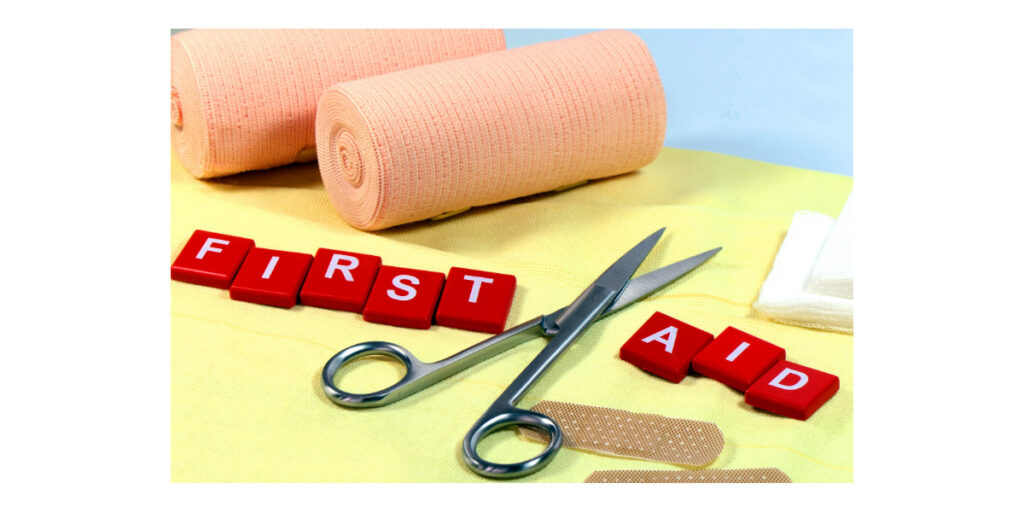
It is also a good idea to keep a selection of bandages and gauze to wrap wounds on different areas of your horse’s body. Sanitary pads or diapers can also be used as a padded, absorbent covering for leg and hoof wounds.
Scissors with a blunt end can be used to cut bandages and can also help remove strings, weeds, or other debris your horse might become tangled in.
Quick Checklist Of Horse First Aid Kit Essentials
Use this checklist to make sure your equine first aid kit is fully stocked and ready for emergencies.
- Weight tape for estimating body weight when administering medications
- Over-the-counter NSAIDs and antihistamines
- Extra halter and lead rope
- Digital thermometer
- Vaseline or lubricant
- Latex gloves
- Alcohol wipes
- Stethoscope
- Scissors or pocket knife
- Tweezers for removing ticks and thorns
- Wound disinfectant ointment
- Gauze, bandages, and wound padding
- Self-adhesive bandaging tape
- Eye wash or saline solution for rinsing wounds and flushing debris from the eyes
- Compact equine first aid guidebook
- Important phone numbers, including your veterinarian’s regular and emergency contact numbers
Keeping these supplies organized and easily accessible can make a major difference when your horse needs immediate care.